HK and Cult Film News's Fan Box

Sunday, March 8, 2026

FRIDAY THE 13TH - THE SERIES: THE FIRST SEASON -- DVD Review by Porfle


Originally posted on 11/5/12


Here's the original prologue that used to begin each episode of "Friday the 13th - The Series":  "Lewis Vendredi made a deal with the devil to sell cursed antiques. But he broke the pact, and it cost him his soul. Now, his niece Micki, and her cousin Ryan have inherited the store... and with it, the curse. Now they must get everything back and the real terror begins."

For some reason this prologue is omitted from the 6-disc DVD set FRIDAY THE 13TH - THE SERIES: THE FIRST SEASON, but I figured it would be a good way to start my synopsis.  In the first episode, veteran character actor R.G. Armstrong plays Uncle Lewis, whose sudden relocation to Hell leaves Micki and Ryan as proprietors of his antique store, Curious Goods.  Lewis' former partner, a sage old sorceror named Jack, shows up and warns the two that all the cursed items that have been sold from the store will cause untold death and destruction if they don't track them all down and lock them in the vault downstairs. 

After witnessing some supernatural shenanigans firsthand, it doesn't take long for our heroes to get over their initial "yeah, right" attitude and dedicate themselves to this monumental task.

The main characters are likable and fun.  First, there's Robey ("Louise" when she's at home) as Micki, the fiery redhead who's lots of fun to look at.  Micki sacrifices her upcoming marriage to some Mr. Perfect-type to become a cursed antique tracker-downer, because she knows people will die if she doesn't.  Then there's her cousin Ryan (John D. LeMay), who comes off as a bit of a doofus at first--in fact, I thought he was going to be the bumbling comedy-relief until his character began to develop considerably as the season went on. 

Not unlike Mulder and Scully, or Steed and Mrs. Peel, Micki and Ryan have a lighthearted relationship that can also have its serious and dramatic moments.  At times, their characters are given a surprising amount of depth and often suffer sizeable personal tragedies.  Rounding things off is Chris Wiggins as their mentor, Jack, whose wisdom and knowledge of the black arts are indispensible. 

The thing that makes this unlikely trio of do-gooders so endearing is that they aren't professionals--they risk their lives in every episode out of concern for others.  (All together now:  "Awwwww...")

To me, the series has that distinctive look of 80s low-budget Canadian cinema, like RABID or one of the SCANNERS movies.  I've heard complaints about the picture quality, and indeed much of the photography is somewhat muted and murky.  But this is true mainly of the earlier episodes, and as the season progresses so does the look of the series (although the video FX are consistently fake-looking).  The same can also be said for the stories themselves, which start out a little on the hokey side and then keep getting better and better. 

For example, episode 4, "Cup of Time", is delightfully cheesy.  Familiar B-movie babe Hilary Shepherd plays a rock star whose youthful appearance depends on a teacup that emits leafy tendrils which suck the lifeforce from anyone who drinks from it.  We see decadent punk rocker-types standing in line for one of her concerts, but when we hear her sing it's so typically 80s spandex-glitter-pop awful you'll wonder why these fans aren't lobbing molotov cocktails at her. 

Another "more cheese, please" episode is "Shadow Boxer", in which a pair of evil boxing gloves helps a down-and-out palooka by enabling his bobbin' and weavin' shadow to run around beating people to death.

Things really start getting good when David Cronenberg steps in to direct "Faith Healer", starring SCANNERS alumnus Robert Silverman as a man with a horrible disease looking for someone with the power to cure it.  That someone, unfortunately, gets his power from a cursed glove that must be recharged by, you guessed it, sucking the lifeforce from some hapless victim.  Along the way Cronenberg gets to indulge his fondness for "body horror" with some grisly makeup effects.

"Scarecrow" is a nifty Halloween-tinged episode that plays like a creepy low-budget movie, with a wonderfully sinister, eye-rolling performance by Patricia Phillips as a woman who eliminates her smalltown enemies with the help of a scythe-wielding scarecrow.  In one scene, the scarecrow lops off some poor old lady's head and we actually see it bobbling on the floor, her face still contorted in terror.  Pretty cool for a TV show!  Like many other episodes, "Scarecrow" is like a mini version of the cheap 80s horror flicks that many of us remember so fondly.

"Vanity's Mirror" is a delightful anti-Carrie story about a really vile high school geek-girl who uses her cursed item, an antique gold compact that makes any female irresistible to men, to lure various tormentors to horrible, gory deaths.  Eventually, she steals her beautiful sister's boyfriend from her and orders him to beat and then string up the hapless lass before whisking her away to the prom!  Awesome.

I could go on about how good various episodes are, but for me, the two-part "Quilt of Hathor" is the highlight.  Amidst a stark, snowy setting, we meet an ultra-strict religious community known as the Penetites who eschew technology and live much like they did back in the old Salem witchhunt days.  Scott Paulin (THE RIGHT STUFF) plays their leader, Reverend Josiah, who is, by law, required to take a wife.  But his prospective brides keep dying off thanks to a homely woman who has the hots for him and possesses a quilt which allows her to kill people by dreaming their violent deaths. 

Micki and Ryan go undercover with the Penetites and try to recover the quilt, but in the process Ryan falls in love with Reverend Josiah's daughter and ends up in a death duel with the jealous geek-boy to whom she's betrothed.  The set-up for this fight looks just like something out of the wackier side of STAR TREK--I almost expected to hear someone say "One thousand quatloos on the newcomer!"  During this richly atmospheric double-episode, several people suffer an unpleasant demise before the suspenseful finale.

Besides those already mentioned, some other interesting guest stars pop up here and there.  The first episode features the DAWN OF THE DEAD remake's Sarah Polley as a little girl.  In "Cup of Time" we also get to see what Lisa Jakub (Randy Quaid's daughter in INDEPENDENCE DAY) looked like as a wee tyke.  One of the victims of anti-Carrie in "Vanity's Mirror" is an older Zack Ward, who was A CHRISTMAS STORY's memorable bully Scut Farkus.  Ray Walston plays a renowned comic book artist in "Tales of the Undead." 

Other notable guest stars include Carrie Snodgress, Cliff Gorman, Gary Frank, Val Avery, David Proval, and Michael Constantine (as Ryan's estranged father in the emotional episode "Pipe Dream.")  Oh, and R.G. Armstrong's "Uncle Lewis" character may have died in the first episode, but that's hardly the last we see of his evil, cackling mug.

Back in the 80s when FRIDAY THE 13TH: THE SERIES was new, I never watched it because of its association with the Jason movies, which I've always regarded as junk.  But thanks to this season one DVD collection, I've discovered it to be a highly worthwhile horror series that's loads of fun to watch.


Read our review of "Friday the 13th: The Final Season"


Share/Save/Bookmark

Saturday, March 7, 2026

"You're Hurting Me!!!" (video)


"You're hurting me!!!"

Definitely one of the most often used lines in movie and TV history. 

We collected as many examples as we could find, but there are doubtless many more of them out there. 


Video by Porfle Popnecker. I neither own nor claim any rights to this material. Just having some fun with it. Thanks for watching!


Share/Save/Bookmark

Friday, March 6, 2026

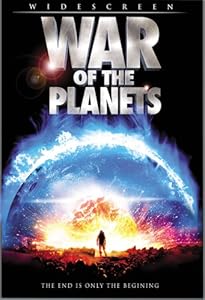
WAR OF THE PLANETS -- Movie Review by Porfle


(NOTE: Since this review was first posted at Bumscorner.com in 2005, the film has undergone more name changes--from its original title of TERRARIUM to WAR OF THE PLANETS and, in the U.K., LOST VOYAGER and EXODUS.)


"What's it doing?  WHAT'S IT DOING?"
"It's devouring her, Robert."

After crash-landing on an unknown planet, a crew of space colonists awaken from suspended animation to find that a hairy, carniverous beast has entered the crippled ship and is breaking into their cryo-chambers one by one, dragging them away.  Unable to move until their bodies overcome the effects of their 15-year sleep, they are little more than a human buffet.  Or, as one of the characters aptly puts it:  "We're the goodies behind the glass."

Thus begins WAR OF THE PLANETS (2004), an extremely low-budget thriller (shot on 16mm) written and directed by Mike Conway, who also photographed, edited, and scored in addition to playing one of the astronauts.  The credits are filled with various other Conways and also reveal that several of the lead actors took part in set construction, camerawork, still photography, etc.  Sheila Conway, who plays "Nicole", doubled as one of the mysterious aliens that also inhabit the planet.

The beast, who resembles a man in a Halloween gorilla costume, returns every five hours or so for a fresh victim.  The helpless astronauts struggle to revitalize their long-dormant bodies between attacks by doing isometric exercises as each character takes advantage of the opportunity to fill us in on their backstories, which are pretty standard -- the captain lost his family while gaining the stars, Nicole's dreams were the ticket out of her small hometown, Kim entered the space program after "an overdose, a suicide attempt, and a stint in the psyche ward..."  (Okay, maybe they're not all that standard.) 

During these scenes the cast gets to act from the neck up a la Richard Dreyfuss in WHOSE LIFE IS IT, ANYWAY?, with varying degrees of skill.  None of them are really bad, though -- the performances range from passable to pretty good, and the characters are likable enough to sustain interest.

When the creature inevitably returns, there is a fair amount of suspense as the crew waits to see who is next on the menu.  Noticing that the first three victims have been women, and figuring that a colony bereft of females might be at a bit of a disadvantage in the procreation department, some of the men valiantly start thrashing around and hollering to attract attention to themselves.  

But suicidal Kim will have none of that, and screams:  "Leave him alone, Sasquatch!  Come and get me, you hairy bastard!" and "It's me you want, you son of a bitch!"  I won't reveal what happens next, but let's face it -- if you find yourself in a monster movie, perhaps those are not the best things to say to the monster.

Eventually, however, the survivors finally regain their motor skills and manage to put a locked door between themselves and the voracious beast.  Later they are able to subdue him as well, at the cost of more lives -- but an autopsy reveals that he hasn't been eating them after all.  So why did he abduct them one by one?  Where has he been taking them? 

The mystery deepens when the astronauts venture from the ship to discover that it is surrounded by an impenetrable glasslike barrier, and their night-vision goggles reveal strange alien beings creeping around in the darkness beyond.  The most likely conclusion reached by the captain and what's left of his crew is that they are the subjects of some ghastly experiment -- but at this point, the only thing they know for sure is that they must somehow escape from the barrier and strike back at the aliens with whatever means they have available. 

Obviously, it's reasonable to assume that a movie called WAR OF THE PLANETS might contain elements similar to films like WAR OF THE WORLDS or BATTLE OF THE PLANETS, with entire civilizations waging spectacular war against one another, but what it all boils down to in the end is this small skirmish between the space colonists and the aliens in a remote location near Las Vegas.  (The original title was TERRARIUM.) 

The filmmakers do their best with a very low budget (originally $27,000, but with added special effects reportedly donated free of charge by former STAR TREK:VOYAGER and BABYLON 5 visual effects artists who became fans of the movie during a two-week run at a Las Vegas theater!), and despite the cardboard sets, videogame-level special effects, an uneven cast of volunteer actors, and some unintentionally amusing dialogue ("Your hair looks the same whether it has cryo-fluid in it or not" "That's what they tell me"), it's sort of a fun movie to watch if you're in the right mood. But I'd suggest renting WAR OF THE PLANETS before adding it to your permanent DVD collection or presenting it to that special someone on their birthday.  It's no ROCKETSHIP XM.

Buy it at Amazon.com

Here's our two-part interview with Mike Conway:
Part One
Part Two


Share/Save/Bookmark

Thursday, March 5, 2026

Pippi Longstocking Says A Cuss Word ("Pippi On The Run", 1970) (video)


To watch this video on YouTube, click here.


Video by Porfle Popnecker. I neither own nor claim any rights to this material. Just having some fun with it. Thanks for watching!


Share/Save/Bookmark

Wednesday, March 4, 2026

The "Crawling Toward The Camera" DVD Cover Pose (video)


Video by Porfle Popnecker. Maria's photo by Dmytro Konstantynov. I neither own nor claim any rights to this material just having some fun with it. Thanks for watching!
Share/Save/Bookmark

Tuesday, March 3, 2026

Dick Van Dyke's Mystifying Child-Clones ("Cold Turkey", 1971) (video)


Song: "Goodnight and I Wish" by Altered Images

Video by Porfle Popnecker.  I neither own nor claim any rights to this material. Just having some fun with it. Thanks for watching!


Share/Save/Bookmark

Monday, March 2, 2026

Blade Runner (1982): Original "Happy Ending" Without Voiceover (video)


Those of us who first saw "Blade Runner" via the "International Cut" recall the end scene with Deckard and Rachel riding off into the sunset to a reprise of Vangelis' beautiful love theme.

While fond of this idyllic ending, I still found it to be marred by that version's clumsy, pedestrian attempt at a film noir voiceover which insisted on telling us what we were seeing ("Gaff had been there...and let her live").

Here, in all its splendor, is that scene without the needless voiceover.


Video by Porfle Popnecker. I neither own nor claim any rights to this material. Just having some fun with it. Thanks for watching!


Share/Save/Bookmark

Sunday, March 1, 2026

THE BEST OF BOGART COLLECTION (The Maltese Falcon/ Casablanca/ The Treasure of the Sierra Madre/ The African Queen) -- Blu-ray Review by Porfle


 Originally posted on 3/28/14


When I made a list of my top 100 favorite actors a few years ago, the first three positions were pretty much a lock.  Number one, of course, was John Wayne.  Two--well, I'm a Bruce Willis fan from all the way back to "Moonlighting", and I even liked "Armageddon." 

But as for number three, there's only one actor who could knock either of them out of their slots at my slightest whim, and that's Bogart.  He invented cool, refined it, and perfected it to such a degree that nobody else could ever be quite that cool again. 

Now, Warner Home Video has brought four of Bogart's greatest and most varied performances together on Blu-ray with THE BEST OF BOGART COLLECTION, a four-disc set which contains "The Maltese Falcon" (1941), "Casablanca" (1942), "The Treasure of the Sierra Madre" (1948), and "The African Queen" (1951). 

Humphrey DeForest Bogart looked like he'd been around the block a few times and could take care of himself in a tough scrape, unlike a lot of the pretty-boy leading men who populated movie marquees then and now.  Which is ironic, since he started out as a male ingenue in film roles that were pure fluff. 

This prompted him to keep returning to his native New York and the stage, where he eventually landed the role of escaped killer Duke Mantee in the play "The Petrified Forest."  When this was slated to become a film, star Leslie Howard insisted that Bogart be cast as Mantee, and his chilling, tough-as-nails performance made him a movie star in the Warner Brothers gangster vein.

Bogart's screen persona wavered between no-nonsense good guy and fearsome bad guy, with sometimes a little of both.  If need be, he could also portray either a frightening psycho or a pathetic failure.  As an actor with a much broader range than one might first suspect, he could make any of these personas both convincing and compelling, with a nuance and intensity that few actors can ever achieve.  And there was something about that unforgettable face which seemed to express everything his character was thinking and feeling. 

One of the finest actors in the history of the medium, Humphrey Bogart's filmography contains several of the greatest movies ever made.  The best of these comprise quite a selection of Hollywood filmmaking at its peak as both an art form and a means of pure escapist entertainment.  


THE MALTESE FALCON (1941)

The first great "film noir" set the standard both storywise and in its impeccably exquisite visuals.  First-time director John Huston does a masterful job orchestrating his actors and crew to create a visual experience which is consistently involving and often dazzling. 

The film, shot mostly on interior sets, was brought in on budget and ahead of schedule despite Huston requesting an extra day of rehearsal for the film's climactic sequence, which takes place entirely within a single hotel room with almost all members of the main cast.  The complex character interactions and the way the tangled plot is meticulously resolved during this scene makes for some of the most breathlessly riveting cinema ever filmed.

Huston uses clever direction and camera movements to keep things from getting claustrophobic, and never once lets the pace drag.  His screenplay follows Dashiell Hammett's novel almost to the letter (the two earlier, inferior adaptations, 1931's "Dangerous Female" and the comedic "Satan Met a Lady" in 1936, didn't), and crackles with scintillating dialogue, intriguing plot twists, and relentlessly building suspense. 

Hammett's celebrated anti-hero Sam Spade is the perfect noir detective--brash, resourceful, self-assured, keenly intelligent, streetwise, tough but not infallible, and opportunistic.  He does have a moral code, one not easily compromised, and a motto that is rigidly enforced: "Never play the sap for anyone." 

The first person to try and use him is quintessential femme fatale Brigid O'Shaughnessy (exquisitely  played by Mary Astor), who hires San Francisco private detective Spade and his partner Miles Archer (Jerome Cowan) to locate her missing sister along with a mystery man named Floyd Thursby.  When both Archer and Thursby turn up dead, it appears there's more to Brigid's story than she's letting on. 


Before long Spade discovers that she's after a priceless treasure known as the Maltese Falcon, for which she's in fierce competition against  "the Fat Man" Kaspar Gutman (Sydney Greenstreet) and the wily, effeminate Joel Cairo (Peter Lorre).  Spade must spar with these conniving characters while fending off police detectives Dundy and Polhaus (Barton MacLane, Ward Bond), who suspect him in the murders although the more genial Polhaus tends to side with Sam.  All in all, these actors comprise one of the finest casts ever assembled for a film.  (Look for John Huston's father Walter in a quick cameo as a fatally wounded ship's captain.)

Huston delights in working with these masterful performers as any artist deftly employs his chosen medium.  The dialogue scenes between Bogart and Greenstreet are a verbal delight (Gutman constantly admits his glowing admiration for the crafty Spade), while the utter dishonesty underlying Spade's love affair with Brigid gives it an air of perversion. 

Lorre's Joel Cairo, both dangerously scheming and amusingly fussy, is always fun to watch.  I love the scene in which Spade disarms and manhandles Cairo, whose main concern is expressed with the heated accusation "Look what you did to my shirt!"

Even young character actor Elisha Cook, Jr. gets to shine in the plum role of Gutman's "gunsel" Wilmer Cook, a callow trench-coated hood hiding his cowardice behind guns and tough talk.  (Dwight Frye played the part in the 1931 version.)  The ever-sharper Spade delights in yanking Wilmer's chain, and in one incredible closeup we see fat, glistening tears suspended in each of the young killer's eyes as he's overcome with burning frustration and impotent rage (another bravura touch by Huston).


But it's Bogart's show, and his performance is a pure delight.  We know Spade's a stand-up guy, yet the moment his partner's murdered he has the signs around the office changed from "Spade and Archer" to "Samuel Spade."  He's even having an affair with Archer's wife, Iva (Gladys George), but loses interest once he meets Miss O'Shaughnessy.  Yet we know he's an okay guy as long as his faithful gal Friday, Effie (Lee Patrick), still secretly loves him. 

In one delightful moment, after storming out of a tense encounter with Gutman and Wilmer in the Fat Man's swanky hotel room, Spade smiles when he realizes that his hand is shaking and his palms sweating.  Spade may be brave, but he still gets scared, a fact which both amuses and excites him.

This vintage detective yarn sizzles with suspense and excitement for viewers who are able to plug themselves into its high-voltage current.  For me, it took several viewings before I finally began to appreciate just what a finely-rendered thing of beauty it truly is.  Others (as some IMDb comments would indicate) seem to take a strange kind of pride in remaining immune to its charms, believing that such classics are revered by many simply because they're "old." 

But if it doesn't hit you right away, just keep watching and remain open to it.  Sooner or later, hopefully, THE MALTESE FALCON will weave its magic spell over you.  Like the rare and unique artifact of the title, it's "the stuff dreams are made of.

1080p High Definition 1.33:1, DTS-HD Master Audio: English 1.0, Dolby Digital: Espanol 1.0
Subtitles in English, French, and Spanish.

Special Features:

·         Commentary by Bogart Biographer Eric Lax
·         Featurette The Maltese Falcon: One Magnificent Bird
·         Breakdowns of 1941: Studio Blooper Reel
·         Makeup Tests
·         Becoming Attractions: The Trailers of Humphrey Bogart
·         Warner Night at the Movies
·         1941 Short Subjects Gallery
·         Audio-Only Bonus: 3 Radio Show Adaptions
·         Vintage art card


CASABLANCA (1942)

This is one of those films which we can now look back on as an undisputed classic in which everything seems to come together perfectly.  At the time, however, it was regarded by the studio as just another production, whose script, based on the unproduced play "Everyone Comes to Rick's", was being written on the fly and didn't even have a proper ending worked out until shortly before it was shot.

The story takes place in 1942 in the Vichy-controlled Moroccan city of Casablanca, which overflows with refugees desperately struggling to gain passage to America and elsewhere in the free world to escape Nazi encroachment in Europe .  Exiled American (and ex-freedom fighter) Rick Blaine, played to perfection by Bogart , runs a nightclub called "Rick's Café Américain" in which many of these people meet to buy and sell the hope for freedom. 

Also on hand is Rick's friend, Captain Louis Renault (THE INVISIBLE MAN's Claude Rains in one of his best performances), the head of the local police and an opportunist of the first order whose greatest pleasure is accepting bribes both monetary and sexual.  Renault openly admires Rick's similarly self-serving qualities and even displays a platonic crush on him ("If I were a woman, and I were not around, I should be in love with Rick," he admits). 

We wonder how Renault would react if Rick started reverting back to his old, noble self, especially in the presence of the vile German officer Major Heinrich Strasser (Conrad Veidt, THE CABINET OF DR. CALIGARI,  THE MAN WHO LAUGHS), newly-arrived and on the trail of famed Czech resistance leader Victor Laszlo (Paul Henried). 

While Rick starts out as an anti-hero, he gradually and without really meaning to becomes more heroic as the story progresses.  Early on, Peter Lorre's oily Ugarte--who recently killed some German soldiers to attain two letters of transit to sell in Casablanca--begs Rick for help before he's captured ("Hide me, Rick!  Hide me!").  Rick's terse response: "I stick my neck out for nobody." 


And indeed, Rick seems grudgingly content to sit out the current world war as manager of his bustling nightclub until one night, when an old flame named Ilsa (the utterly radiant Ingrid Bergman) comes through the front door with her husband, none other than Victor Laszlo.  Rick, once an idealistic crusader himself but now cynical and disillusioned, has never forgiven Ilsa for inexplicably running out on him during the fall of Paris, at the height of their love affair--not knowing that Laszlo, whom they both thought dead, had turned up alive.

When Rick obtains the two letters of transit from Ugarte, he has the means of whisking Ilsa back to America with him and resuming their love affair while leaving Laszlo behind to carry on alone and devastated.  But will he do something so selfish and immoral?  Or regain his soul and commit the supreme act of sacrifice for the sake not only of Ilsa and her husband but of the free world itself?

This is the dilemma which gives CASABLANCA much of its power to effect us emotionally while simmering with a growing suspense.  As a film, everything clicks-- Michael Curtiz' sharp direction, the gorgeous black-and-white photography, great performances by a stellar cast, a powerful musical score by Max Steiner, and a story that's always totally engaging. 

Action and romance are perfectly balanced and compliment each other, while comedic touches abound, especially from the delightfully corruptible Renault,  the antics of Rick's eccentric staff (including S.Z. Sakall), and a fez-topped Sydney Greenstreet (again) as a competing club owner who wants to acquire Rick's place along with his loyal piano-playing band leader Sam (Dooley Wilson, who croons the classic "As Time Goes By"). 

But when Laszlo exhorts Sam and his band to strike up a stirring rendition of "La Marseillaise" in response to Strasser and his fellow German officers belting out "Die Wacht am Rhein", the move (which Rick okays with a subtle nod of his head) not only stirs the patriotic fervor of everyone else in the club but may bring the viewer to tears as well.  (Steiner uses this same anthem as a fanfare for his own musical credit during the main titles.)


The climax of the film takes place at the airport, a focal point for dreams of freedom throughout the story.  Rick now literally holds the ticket to a new life with Ilsa, who will join him if he asks her to.  Yet his newly reawakened sense of duty to humanity now fights for precedence.  Meanwhile Renault, his own duty to Strasser  putting him at odds with his friend, awaits Rick's decision. 

When the plane fires up its engines, Steiner's music swells, and there comes a stunning, perfectly-edited series of  closeups of Bogart,  Bergman, and Henried which generate a dramatic tension few films could ever attain.  It's pure, undiluted Hollywood magic at its most sublime, and the resolution which follows couldn't be more perfect.  CASABLANCA is an intricate jigsaw puzzle of seemingly disparate pieces which fit together to form a beautiful picture.

1080p High Definition 1.33:1, Dolby Digital: English 1.0, Francais 1.0 & Espanol 1.0
Subtitles in English, French, and Spanish.

Special Features:

·         Commentary by Roger Ebert
·         Commentary by Historian Rudy Behlmer
·         Introduction by Lauren Bacall
·         Additional Scenes & Outtakes
·         Scoring Session Outtakes
·         Bacall on Bogart
·         You Must Remember This: A Tribute to Casablanca
·         Featurette As Time Goes By: The Children Remember
·         Production Research Gallery
·         Homage Cartoon Carrotblanca
·         Who Hold Tomorrow? : Premiere Episode From 1955 Warner Bros. Presents TV Series Adaptation of Casablanca
·         Audio-Only Bonus: Radio Production with the Movie’s 3 Key Stars
·         Theatrical Trailers
·         Vintage art card


THE TREASURE OF THE SIERRA MADRE (1948)

With this epic outdoor action-drama, based on a novel by enigmatic writer B. Traven,  Bogart once again joined with director John Huston and his father Walter for a grueling tale of the devastating effects of greed on average men.  During the film's arduous shoot in the wilds of Mexico, any hint of Hollywood glamour would soon become a distant memory. 

As Fred C. Dobbs, Bogart loses himself in one of his grittiest and least sympathetic roles.  Dobbs is an American stuck in a small Mexican town with no job or money, wandering the streets and begging for pesos.  (The younger Huston has a funny cameo as a well-to-do man Dobbs keeps hitting up for change.)  Dobbs will fling water in the face of a small boy (Robert Blake) pestering him to buy a lottery ticket, yet we sense a modicum of decency somewhere beneath his gruff exterior. 

This early sequence of him trudging his way through life, getting bad haircuts, chasing after prostitutes, etc. lets us sit back and watch Bogart at work creating one of his finest characters.  Dobbs hooks up with a fellow American named Curtin (Tim Holt) for a job in which they're cheated out of their pay by a crooked foreman (Barton MacLane of THE MALTESE FALCON) whom they beat senseless after he attacks them in a bar.  (This well-choreographed fight scene is brutally effective.)  Then, after meeting grizzled old prospector Howard (Walter Huston) in a flophouse, they take his advice and set out to find gold in the mountains of the Mexican desert. 

Walter Huston enjoyed recounting the story of how he told his son John that if he ever became a filmmaker to "write me a good part."   The old gold-hunter Howard is that part, a role the elder Huston,  sans dentures, inhabits so fully that he almost manages to steal the picture right out from under Bogart.  (He would go on to win an Oscar for it.)  Howard is a goodnatured, level-headed old man, and we believe him when he warns of the evil effects gold can have on weak-willed men.  


Dobbs blusters against such talk, thinking himself above any negative influences.  Yet without missing a beat, he will fulfill each of Howard's admonitions one by one as the lure of gold transforms him into a paranoid,  resentful,  and ultimately dangerous man.  By the time he's gone over the deep end, he's a frightening character, convinced in his mindless desperation that everyone's out to get him and that he's justified in whatever heinous act he may commit to protect himself and his newfound fortune.

When Dobbs and Curtin finally find themselves locked in a life-or-death battle of wills in the middle of the desert, the film almost takes on the eerie inevitability of a horror movie.  The only thing that undercuts it, along with much of the rest of the film, is one of Max Steiner's worst musical themes--a loping, folksy motif that  I find jarringly out of place.

In addition to being a fascinating character study,  TREASURE is a terrific action-adventure.  Alfonso Bedoya is unforgettable as the ruthless Mexican bandit Gold Hat,  whose gang attacks our heroes' train during their trip into the mountains and then later stumbles upon their mining camp, leading to a blazing gunfight.  Gold Hat may be a monster, but Bedoya manages to make him funny, especially with his immortal response to Dobbs' question "If you're federales, where are your badges?"

"Badges? We ain’t got no badges...we don’t need no badges...I don’t have to show you any stinking badges!"


Tim Holt is solid in the less flashy role  of sturdy, dependable Curtin, who shares Howard's dismay at Dobbs' growing instability.  Walter Huston is a delight in a truly wonderful performance--he even gets to break the fourth wall and give us a sly look during one sequence in which he's being given the royal treatment by a tribe of Indians after doing them a good turn.  We don't even hold it against Howard when he votes along with the others to execute another man, Cody (Bruce Bennett), who tries to horn in on their find. 

But it's Bogart, as a man susceptible to bouts of pure, wild-eyed insanity, who makes the film as truly memorable as it is.  No matter how low he sinks and what horrible things he does, we always remember the relatively decent guy he was before gold changed him, and feel some remorse for what he's become.  And just like Dobbs, I'd like to think gold wouldn't make me act that way--but who knows?

1080p High Definition 1.33:1, DTS-HD Master Audio: English 1.0, Dolby Digital: Francais 1.0 & Espanol 1.0 (Both Castilian and Latin)
Subtitles in English, French, and Spanish.

Special Features:

·         Commentary by Bogart Biographer Eric Lax
·         Discovering Treasure: The Story of The Treasure of the Sierra Madre
·         Documentary Profile John Huston
·         Warner Night at the Movies
·         1948 Short Subjects Gallery: Leonard Maltin Introduction, Newsreel, 2 Classic Cartoons, Comedy Short, Theatrical Trailers.
·         Audio-Only Bonus: Radio Show with the Movie’s Original Stars
·         Vintage art card


THE AFRICAN QUEEN (1951)

Here's the story of two people you'll want to get  to know very much--Humphrey Bogart as Charlie Allnut, a goodnaturedly uncouth little man who runs a tiny supply boat up and down the river in German East Africa in 1914,  and Katharine Hepburn as Miss Rose Sayer, a Christian missionary who, along with her brother Reverend Samuel Sayer (Robert Morley), brings God's word to the natives until German soldiers burn down the church and village, kill her brother,and leave her all alone in the jungle.

Director John Huston deftly blends comedy with tragedy in the opening scenes.  Shortly before their horrific encounter with the German military, the Sayers invite Charlie to tea during a supply stop.  He hasn't eaten in awhile, so his stomach starts making the most impolite growling noises to which Rose and her brother react with growing dismay until finally Charlie explains brightly, "Ain't a thing I can do about it!" 

Charlie returns later to bury the brother and take Rose away in his boat, the "African Queen".  But her first thought is to somehow aid in her country's war effort by whatever means available.  Hearing of a German gunboat, the "Louisa", which is terrorizing the countryside from a large lake somewhere downriver, she hatches a scheme in which Charlie will devise a couple of torpedos out of compressed gas bottles and they will then ram the Louisa with the torpedos sticking out of the African Queen's bow. 

Humoring her for the time being--and not realizing that he has begun something he won't be able to back out of--he later mocks Miss Sayer's request in a grumbling approximation of her prim accent: "Can you make a torpedo?  Then do so, Mr. Allnut." 


This belly-laugh moment, courtesy of Bogart's irresistibly natural, likable performance as the ragtag river rat, is just the beginning of what will be a rip-roaring adventure, a tender romance, and a gut-busting comedy.  The independent production, filmed mostly on location in Africa in lush Technicolor, is one of John Huston's warmest and most heartfelt films.  This is due in large part to the chemistry between the two stars and Huston's ability as a master director to showcase them at their best.

Miss Rose Sayer is naturally brave and resourceful, which helps make up for her naivete' and inexperience with life in general.  She adapts quickly and becomes instantly addicted to the thrill of adventure as a substitute for sexual intimacy (her first excursion down the rapids leaves her as though she'd just had her first sexual release).  Learning to handle Allnut's boat is symbolic of her growing familiarity with the man himself  while he, in turn, finds himself suddenly yearning to bring out the inner woman behind the straight-laced exterior. 

Allnut is one of Bogart's funniest and most uninhibited characters--his emotional honesty and expressiveness are at their peak here.  Often a single look on his face will convey more thought and emotion than many actors can manage with an entire speech.  Hepburn is ideally cast as the initially very proper, timid spinster who gradually lets her hair down (literally) and begins to appreciate the more sensual and even carnal aspects of life as her love for Charlie Allnut blossoms toward fruition.


Their journey down the river is a series of funny and romantic vignettes interspersed with moments of harrowing danger which are excitingly staged.  The rapids are a major obstacle, as are mosquitoes, leeches, and, in one suspenseful sequence, German bullets.  Through it all, Rose's indefatigable attitude brings out the best in Charlie, and together they give each other something to live for even when things are at their worst.

Huston's technical skills are dazzling throughout the film.  The location photography is not only stunning but often amazing as well, as when we see a number of large alligators diving off the bank into the water right after Bogart has moved out of the frame--all in a single shot.   The process shots are as well integrated into the action as possible for the time and, for me at least, proved little distraction.  Allan Gray's musical score is another of the film's many pleasures. 

The story reaches its triumphant conclusion aboard the German gunboat, where our unlikely hero and heroine reach the end of their journey in fine style.  Like SHANE, which is tied with KING KONG (1933) as my favorite movie of all time, there are scenes throughout THE AFRICAN QUEEN which bring me to the verge of tears.   Not because these scenes are particularly sad, or particularly happy, but simply because they're quite disarmingly beautiful. 

1080p High Definition, Dolby Digital: English 1.0, Francais 1.0 & Espanol 1.0.
Subtitles in English, French, and Spanish.

Special Features:

·         Embracing Chaos: Making The African Queen
·         Vintage art card


Own it on Blu-ray:

Official WB Shop Link
Official Facebook
Official You Tube Videos

Images shown are not stills from the actual Blu-ray discs
Street Date: March 25, 2014

Share/Save/Bookmark

Saturday, February 28, 2026

Was "Star Trek: The Motion Picture" Inspired By "Lost In Space"? (video)


Star Trek's "V'ger" and Lost In Space's "Mr. Nobody" aren't that different.

In both stories, an all-powerful being yearning to evolve...

...achieves transcendence through love.

Both are reborn as newly self-aware space-dwelling energy beings.


("Lost In Space" Season 1 Episode 7 "My Friend Mr. Nobody", 1965)

I neither own nor claim any rights to this material.  Just having some fun with it.  Thanks for watching!

Share/Save/Bookmark

Friday, February 27, 2026

Was "You Only Live Twice" Inspired By "Lost In Space"? (video)


The Jupiter 16 space capsule hijack scene in the James Bond film "You Only Live Twice" (1967)…

...bears a strong similarity to the Jupiter 2 hijack scene...

...in "Lost In Space" Season 1: Episode 2 "The Derelict" (1965).

(Watch them both and see if you agree.)

Coincidence? Or inspiration?


I neither own nor claim any rights to this material.  Just having some fun with it.  Thanks for watching!


Share/Save/Bookmark

Thursday, February 26, 2026

Did "Dr. Goldfoot" Beat "Bullitt" To The Car Chase? (video)


"Bullitt" (1968) is well known for its harrowing car chase through San Francisco...

...racing up and down those steep hills...

...and especially those dizzying point-of-view camera shots.

But another movie beat "Bullitt" to all of that by three years...

..."Dr. Goldfoot and the Bikini Machine" (1965)!


I neither own nor claim any rights to this material.  Just having some fun with it.  Thanks for watching!


Share/Save/Bookmark

Wednesday, February 25, 2026

MARS NEEDS WOMEN (1967) -- Movie Review by Porfle


Originally posted on 7/10/21


Currently watching: MARS NEEDS WOMEN (1967) starring Tommy Kirk and Yvonne Craig. As the sensationalistic title suggests, the plot hinges upon a group of five Martians on a mission to Earth, where they must choose prime female specimens to take back to their home planet in order to help replenish their dying race.

Tommy Kirk, who had played another Martian named Go-Go a few years earlier in the American-International teen comedy PAJAMA PARTY, stars as Dop, leader of the mission, who jeopardizes the whole thing by falling in love with his target, the lovely Dr. Marjorie Bolen, played by the lovely Yvonne Craig (TV's "Batgirl").

The film is produced, written, and directed by Texas-based filmmaker and former 20th-Century Fox bit player Larry Buchanan, who specialized in bringing in profitable made-for-TV movies on very low budgets via his production company Azalea Pictures. 


Some of his other films include such classic bad-movie fare as ZONTAR: THE THING FROM VENUS, CURSE OF THE SWAMP CREATURE, and IN THE YEAR 2889.

It was these films that first made me aware of the wonders of bad filmmaking as a kid, when even at a young age I recognized the cheapness and ineptitude of these films yet felt a strangely inexplicable fondness for them.

MARS NEEDS WOMEN continues the Azalea Pictures tradition of less is less, with extremely limited spaceship effects and alien costumes that consist of rubber scuba suits with little radios with antennae glued over the ears.  The Martians land (off-camera) in an abandoned refrigeration factory where their human female captives can be deep-frozen for the trip back to the red planet.


The rest of the film takes place in various locations in Houston and Dallas, including the Cotton Bowl (where one Martian chooses a beaming Homecoming queen as his kidnap victim), Love Field (where another Martian unceremoniously steals a car), and the Collins Radio Antenna Building which serves as a NASA decoding center where cryptic messages from Mars are translated into English.

The most interesting abduction, from my point of view anyway, is the one which takes place in a sleazy strip club where a performer billed in the credits as "Bubbles" Cash dances at length under the intense scrutiny of a lucky Martian.

Despite this, much of the film consists of boring characters having dull conversations in rooms, along with reams of military stock footage.  Things do pick up now and then, such as when one Martian obtains needed currency by robbing a filling station and another breaks into a men's apparel store to steal business suits in order to help the mission team blend in.


The scenes with Tommy Kirk and Yvonne Craig give the film its closest semblance to something worth watching, since both are professional enough to carry off their dialogue with some conviction as their characters gradually become infatuated with each other.

I like the scene where they visit a planetarium and, when the taped monologue about Mars malfunctions, Tommy amazes both Yvonne and a group of visiting school children with his impassioned soliloquy about his beloved home planet.

Technically, MARS NEEDS WOMEN fluctuates between bottom-rung TV episode production values and what could only be described as home-movie-level filming, with inferior dubbing and editing as well. 


Still, one must remember that Buchanan was bringing this movie in on a rock-bottom budget and, thus, succeeded in creating something both mildly watchable and ultimately profitable.

Despite a rather solemn air and not a trace of self-aware mockery, MARS NEEDS WOMEN is of interest solely for its amusing "so bad it's good" appeal to those who can actually find such a thing appealing.  Others will be baffled as to why anyone would stick around for more than a minute of it.


Share/Save/Bookmark

Tuesday, February 24, 2026

Elizabeth Montgomery's Cameo In "How To Stuff A Wild Bikini" (1965) (video)


Elizabeth Montgomery is best known for her role as Samantha the suburban  witch in the long-running 60s-era television series "Bewitched."

Her then-husband William Asher, who produced and directed many of that show's episodes, also directed most of the original "beach party" movies...

...hence Elizabeth Montgomery's amusing cameo in "How to Stuff a Wild Bikini" (1965.)


Video by Porfle Popnecker. I neither own nor claim any rights to this material. Just having some fun with it. Thanks for watching!


Share/Save/Bookmark

Monday, February 23, 2026

Haunting Main Title Theme From "WUTHERING HEIGHTS" (Michel Legrand,1970) (video)


Timothy Dalton and Anna Caulder-Marshall play tragic lovers Heathcliff and Cathy...

...in this moody 1970 adaptation of the classic Emily Brontë novel.

The film's beautiful cinematography is complimented...

...by one of composer Michel Legrand's most haunting and evocative love themes.

And we've put together a montage of scenes from the film to go with it.


I neither own nor claim any rights to this material.  Just having some fun with it.  Thanks for watching!


Share/Save/Bookmark

Sunday, February 22, 2026

IT'S A BIKINI WORLD (1967) -- Movie Review by Porfle


Originally posted on 5/31/21


Currently rewatching: IT'S A BIKINI WORLD (1967), a late entry in the "beach party" genre and one of several imitations of the official American-International Pictures series with Frankie and Annette.

Already-established AIP beach movie stars Deborah Walley (BEACH BLANKET BINGO) and Tommy Kirk (PAJAMA PARTY) are the Frankie and Annette equivalents here, with Deborah playing independent girl Delilah hitting the beach for summer vacation, and Tommy as local lothario Mike, who takes one look and decides to add her to his stable of bikini babes.

Finding her less than receptive to his manly charms and overhearing her desire for a more intellectual type, Mike dons a pair of glasses and disguises himself as his imaginary nerdy twin brother Herbert. 


Delilah takes an instant liking to the mild-mannered bookworm and all is well...until, of course, Mike inevitably falls for Delilah and must figure out how to reveal his true identity to her.

The film begins with an awesome main titles sequence in which scenes of teens frolicking on the beach are freeze-framed and transformed into comic-book art. Production values are just a tad chintzier than the AIP's, but locations and photography are pretty much on par.

Energetic performances add to the film's breezy ambience, as does a sprightly Mike Curb score. (This, despite Walley and Kirk reportedly hating the film and considering it a low point in their careers.) The romantic complications are always played lightly and for laughs, and several colorful action scenes are brisk and fun.


These consist of a series of races held as publicity stunts by beatnik enterpreneur Daddy (the great Sid Haig channeling "Big Daddy" Roth) to promote his lines of brand-name surfboards, skateboards, and even race cars. Delilah, with training by Herbert, competes in each against the arrogant Mike, unaware that he and Herbert are one and the same.

This series of races keeps the film moving at a fast pace when not focusing on the odd love triangle between Delilah, Mike, and Herbert. There are also several scenes taking place in Daddy's monster-themed nightclub, complete with music by the likes of Eric Burdon and the Animals, The Toys, The Gentrys, and The Castaways.

Without an established cast of characters, we don't get the feeling of comradery that exists among the AIP beach party gang. In fact, the only other teen characters we meet are Mike's not-so-bright friend Woody (played amiably by "Monster Mash" legend Bobby "Boris" Pickett) and his girlfriend Pebbles (Suzie Kaye, WEST SIDE STORY, CLAMBAKE).


Popping up here and there in the cast are Jim Begg (THE GHOST AND MR. CHICKEN), Carolyn Brandt (RAT PFINK A BOO BOO), and Lori Williams of FASTER PUSSYCAT! KILL! KILL! fame.

Scenes from Roger Corman's AIP horror flick ATTACK OF THE CRAB MONSTERS also pop up during a movie theater scene (with Woody acting as the clueless third wheel during Herbert and Delilah's movie date) due to the fact that AIP picked this movie up for distribution from the smaller company Trans American Films.

Of note is the fact that this film eschews the official series' tendency toward total cartoony farce and surrealism, as well as characters suddenly breaking out into song.


It presents instead a more traditional sitcom-style comedy which, despite its exaggerated characters and situations, might actually take place in the real world.

Direction is capably handled by co-writer Stephanie Rothman, who would go on to helm such exploitation staples as THE STUDENT NURSES, TERMINAL ISLAND, and THE WORKING GIRLS.

Surprisingly fun for such a lightweight "beach party" clone, IT'S A BIKINI WORLD should satisfy those with a soft spot for the Frankie and Annette beach pictures which had pretty much run their course. While certainly a lesser effort, it's a pleasantly amusing diversion nevertheless.


Share/Save/Bookmark

Saturday, February 21, 2026

SKI PARTY (1965) -- Movie Review by Porfle


Originally posted on 5/22/21


Currently rewatching: SKI PARTY (1965). By this time, American-International were starting to see the writing in the sand, and, even though they still had a couple of "beach party" movies left in them, started trying to branch out into other areas of interest for ticket-buying teens.

Hence, this weird hybrid of beach-pic elements but with sand and surfing replaced by snow and skiing. This time we start off with our fun-loving teens still in college, on the verge of winter break and just roiling with hormones looking for somewhere to go and something to do.

Frankie Avalon is no longer make-out king "Frankie", but instead plays strike-out king "Todd", who, along with equally inept Craig ("Dobie Gillis" star Dwayne Hickman), spends every waking hour frantically trying to get to first base with the most romance-averse girls in the universe, Linda (Deborah Walley) and Barbara (a pre-Batgirl Yvonne Craig).


I mean, these girls are pathologically repelled by anything even slightly resembling hugging and kissing, to such a degree that they make Annette Funicello's "Dee-Dee" look like a raving nymphomaniac. (Which, in her brief cameo as a teacher, she sorta is, since we find her smooching away with a student at the drive-in.)

In one scene, the girls get together in their room for cocoa, pillow-fighting, and other girl-type stuff while enjoying a spirited discussion of all the things they've done to boys who tried to get next to them (one guy ended up with one arm, and another with a parole officer). And through it all, Linda and Barbara remain in a constant state of fuming indignance toward the guys for no apparent reason whatsoever.

Lucky for them, Todd and Craig are so irrationally devoted to winning these resolutely platonic party poopers as steady girlfriends that they follow them on a ski club field trip to the snowy slopes, despite not being able to ski.


This results in the usual sight gags about flying out-of-control down steep mountains on skis or sleds, screaming for their lives, as we cringe at the memory of various real-life celebrities who have done the same thing but with fatal results.

But that's nothing compared to some of the film's more cartoony gags, such as Todd attempting to win a ski jump contest by donning a scuba suit under his clothes and filling it with bottled helium until he's bloated like a weather balloon and drifting helplessly over the stunned crowd.  Helpful pal Craig shoots him down with a starter pistol and Todd goes spewing all over the place as the helium escapes.

I won't even try to explain why, but a major plotline involves the boys disguising themselves as girls, "Some Like It Hot" style, and pretending to be Jane and Nora from England while looking about as much like actual females as Aldo Ray in drag.


As anyone who's seen "Some Like It Hot" can guess, the school's #1 makeout king, blonde pretty-boy Freddie (Aron Kincaid, who could pass for Joy Harmon's twin brother) falls madly in love with Nora, with the usual comic complications. I almost expected a reprise of the old "Nobody's perfect" gag at the end.

Certain surefire elements from the beach movies are served up again to help things along, including bikinis (thanks to the ski lodge's big heated pool), a comical old fogie (Robert Q. Lewis as a psychologically maladjusted activity director slash chaperone), and the voluptuous Bobbi Shaw, this time given actual dialogue as a Swedish ski instructor who has Todd's heart (and other parts of his body) all a-flutter. 


Also served up are the usual bland songs, which Frankie and Deborah (and the ever-bland Hondells) try their best to croon some life into. Thankfully, however, we're treated to a couple of bonafide Top 40 legends, with Lesley Gore singing "Sunshine, Lollipops, and Rainbows" on the bus to the lodge and James Brown (back in his pompadour days) and the Famous Flames performing the classic "I Feel Good" in front of the fireplace.

The film manages yet another cartoony chase sequence and ends up, strangely enough, right back on the beach for a happy fadeout. (Did you expect any other kind?) SKI PARTY is just as dumb as it sounds, but if you watch it in the right frame of mind, it's the kind of harmless fun that goes down easy.


(Note: At the end of the closing credits we're told to be on the lookout for a follow-up entitled "Cruise Party." Since I don't believe such a film exists, it seems American-International may have intended to continue their teen-movie series with variations on the "Party" theme, but the plan didn't work out.)


Share/Save/Bookmark

Friday, February 20, 2026

PAJAMA PARTY (1964) -- Movie Review by Porfle


Originally posted on 6/7/21


Currently rewatching: If you ever wondered what a cinematic insane asylum would look like, search no farther than PAJAMA PARTY (1964).  

The fourth entry in American-International's "Beach Party" series, it takes everything from the previous films, adds a bunch of bad-sitcom-level situations, strips away any logic, dignity, and sense it may have had, and dumps it all in an industrial-strength cuisinart with no lid.

This time, the beach is barely an afterthought--we get a couple of scenes of our youthful protagonists cavorting in the sand, playing volleyball, dancing along with a dynamic young Toni Basil (who would spend the rest of the 60s in such films as VILLAGE OF THE GIANTS and EASY RIDER), and grooving to the poppy song stylings of Donna Loren.


After that, the gang hang out around the swimming pool of a big old mansion belonging to Aunt Wendy (Elsa Lanchester, the BRIDE OF FRANKENSTEIN herself) and getting ready for the big titular (so to speak) pajama party.

The mansion next door, as it turns out, houses con man J. Sinister Hulk (Jesse White, known to most boomers as the Maytag repairman) and his henchpersons Buster Keaton (as wacky Indian, Chief Rotten Eagle), gorgeous Bobbi Shaw in her trademark fur-lined gold lame' bikini, and a simpering toady named Fleegle (Ben Lessy), who are scheming to steal a hidden fortune in cash from their neighbor, Aunt Wendy.

But as if that weren't enough, Tommy Kirk (VILLAGE OF THE GIANTS, IT'S A BIKINI WORLD) stars as Go Go, a Martian sent to Earth to scout things out in preparation for an invasion. As fate would have it, he not only starts to like the life of an Earth teen, but also falls head over heels for everyone's beach bunny sweetheart, Annette. 


Still hanging in there from the first three films are motorcycle gang the Rats, led by the vain but totally incompetent Eric Von Zipper (Harvey Lembeck), who still can't stand the idea of these surf bums invading their beach or its environs. If you thought they were funny before, you'll continue to enjoy their usual antics and wait expectantly for Lembeck to utter his immortal line: "Why me? Why me all the time?"

If that sounds like a lot of plot for a simple teen movie, it is. Everything is dumped into a pot to boil with the various plotlines bubbling randomly to the surface, with editing that looks like film footage was chopped into pieces, tossed like a salad, and then stuck together by a nearsighted chimp.

All of which is to say that PAJAMA PARTY should appeal to those who enjoyed the undiluted silliness of the first three films but were put off by the occasional brief moments of sanity. Here, the constant clash between all the doggedly farcical plotlines results in an epic concentration of pure cinematic stupid that assails the viewer with an exhilarating abandon.


This includes what may be the wackiest chase sequence in the entire series--and that's saying a lot--which includes, of course, Von Zipper and his gang. The result is something that makes Looney Toons look like British drawing room drama. A few minutes in, and I'd forgotten who was chasing whom, and why, and it didn't matter.

The final segment of the film depicts what happens when poolside pajama party, bungling burglary, and impending invasion from Mars all come together to the music of generic rock 'n' roll band The Nooney Rickett Four. The Rats show up (naturally) in red long johns, just in time to engage the pajama set in a riotous free-for-all brawl that's mostly in fast-motion with lots of cartoon sound effects.

Many of the familiar background players (such as dancing dervish Candy Johnson) are back, with the addition of the aforementioned Toni Basil and future comedy legend Teri Garr. The highlight of the film for me is the presence of the incomparable Susan Hart in various states of...well, being Susan Hart. (Just for the record, she looks better in a red nightie than anybody else, ever.)


Hollywood icon Dorothy Lamour gets to sing one of the film's many awful songs, while Don Rickles and a certain young teen idol we all know and love appear in cameos as Martians.

Oddly, the returning stars play completely different characters than before. Annette is no longer "Dee Dee" but is now "Connie", and Jody McCrea, previously known as "Deadhead", is now Connie's beefcake boyfriend, "Big Lunk", who is so obsessed with volleyball that he drives Connie into the arms of neophyte Earth visitor Tommy Kirk.

It's difficult for mere words to convey just how...well, stupid all of this is. It's actually quite a staggering achievement in stupid, one which I found impressive even as I winced and cringed my way through it. Granted, I love this kind of stuff. But to watch PAJAMA PARTY is to gorge one's self on pure, concentrated stupid the way you might eat an entire gooey cheesecake with a spoon in one sitting. 


Share/Save/Bookmark

Thursday, February 19, 2026

HOW TO STUFF A WILD BIKINI -- DVD Review by Porfle


Originally posted on 6/8/19


I've always loved the American-International "Beach Party" series, and I always will. This gives you a good idea of the overall tenor of my assessment of HOW TO STUFF A WILD BIKINI (Olive Films, 1965). As for WHY I love these movies so much, well...err...uhh...

To be honest, a lot of people will hate this movie and others like it, and, as far as they're concerned, rightfully so. It's a supremely silly slapstick sex farce with the lowest teen denominator in mind, and it was made to shower undiscerning audiences with brightly-colored pop culture confetti made up of whatever seemed like it might appeal to them, including girls in bikinis, bikes, surfing, jangly rock 'n' roll, cartoonish action, really corny jokes, and cameo appearances by faces familiar to both the younger and older generations.

All of which is why I find these movies to be such irresistible fun--because that's all they try to be, and in their own stupefying way, they succeed.  It helps if you're a fan of Frankie Avalon and Annette Funicello (I am), two of the most appealing young stars of the 60s, and enjoy occasionally turning off your mind, relaxing, and floating downstream. It is not dying, even though some might feel that way about it.


This time, Frankie's serving six weeks of naval reserve duty in Tahiti, separating him from Annette and tempting him to indulge in the local "social scene." Even so, he expects Annette (as "Dee Dee") to be faithful to him back there in Malibu, so he enlists the help of witch doctor Bwana Chicky Baby (none other than the venerable Buster Keaton, whose assistants include the beautiful Irene Tsu and Bobbi Shaw) to help him keep an eye on her with the help of a magical pelican. 

Bwana Chicky Baby also plans to divert the beach boys' attention away from Annette by creating the perfect woman, who appears to everyone first as an empty leopard skin bikini. The great John Ashley (HOW TO MAKE A MONSTER, FRANKENSTEIN'S DAUGHTER), an American-International mainstay doing beach duty for the studio, then gets to croon the title song before the bikini is suddenly filled by the gorgeous Cassandra (Beverly Adams).

In short order, a nattily-dressed Mickey Rooney and Dwayne Hickman show up as big business types looking for the "girl next door" to accompany Dwayne in a motorcycle race which Mickey hopes will improve the image of cyclists (an image that Eric Von Zipper and his bumbling biker gang do their best to sully when they show up and Eric falls in love with Cassandra).


Dwayne, against Mickey's wishes, falls for Annette, who plays hard to get as usual while the magic pelican keeps watch over their activities for the absent Frankie.  And thus the film's main action is established with lots of romantic complications and slapstick nonsense until the big bike race, which turns the final quarter of the film into a live-action cartoon that's like a cross between "Wacky Races" and "Road Runner."

This is the seventh film in A-I's "Beach Party" series (if you count "Pajama Party" and "Ski Party") and by this time the concept was starting to wind down. The next related films would be SERGEANT DEADHEAD and DR. GOLDFOOT AND THE BIKINI MACHINE, then one more "bikini" movie, the financial flop THE GHOST IN THE INVISIBLE BIKINI. After that, the emphasis would be on stock car racing with FIREBALL 500 and THUNDER ALLEY. 

But there's still fun to be had with this formula if it strikes your fancy as it does mine. Annette is just as appealing a fantasy girlfriend as ever, and gets to sing a couple of songs (one with The Kingsmen as her backup band) while fending off Dwayne Hickman's romantic overtures.


Rooney seems to be having a good time spoofing HOW TO SUCCEED IN BUSINESS WITHOUT REALLY TRYING (his character's name, J. Peachmont Keane, is a variation of that play's J. Pierpont Finch). He even participates in some of the many musical numbers that keep cropping up at the darndest times.

Most of the silliness comes from Harvey Lembeck's familiar Eric Von Zipper and his gang of "stupids", with "Seinfeld" regular Len "Uncle Leo" Lesser turning up as their cohort in crime, the evil North Dakota Pete.  The bike race finale throws any semblance of coherence or sanity to the winds, making the old Looney Tunes cartoons look like models of adult sophistication in comparison.

In addition to the great Keaton and Rooney, the film offers supporting roles and cameos from the likes of Brian Donlevy as Rooney's boss B.D. "Big Deal" McPherson and director William Asher's wife at the time, "Bewitched" star Elizabeth Montgomery, as (what else?) a witch. Frankie, by this time, was demanding more money and is relegated to just a few "Tahiti" scenes.  Annette, bless her heart, is just as wonderful as ever.


Will Dwayne and Annette win the big race instead of the devious Von Zipper and Cassandra?  Will Annette finally forget her vow to stay faithful to the unfaithful Frankie and give in to Dwayne's advances? Will the rest of the boys (including Jody McCrea's "Bonehead") forget hypnotic Cassandra and return their attention to the rest of the jealousy-inflamed girls? Will John Ashley sing another awful song? Will Mickey Rooney finish doing whatever it is that he's doing?

If you couldn't care less, there are probably a lot of other people who feel exactly the same way you do. I don't care that much myself, but as a lifelong beach movie lover, I sure do have a great time watching movies like HOW TO STUFF A WILD BIKINI anyway. It's the ultimate in light entertainment, and if you take it lightly enough, the rational part of your brain will enjoy the vacation.   


Release date: June 25, 2019

Rated : NR (Not Rated)
Region Code : Region 1/A
Languages : English (captions optional)
Video : 2:35:1 Aspect Ratio; COLOR
Runtime : 93 minutes
Year : 1965
Bonus: Trailer


Share/Save/Bookmark