HK and Cult Film News's Fan Box

Showing posts with label black and white. Show all posts

Monday, May 4, 2026

GOTO, ISLE OF LOVE -- DVD Review by Porfle


Originally posted on 4/29/17


Polish artist Walerian Borowczyk began his film career with bizarre animated shorts and features, then applied his unique artistic sensibilities to live-action film with the amazing GOTO, ISLE OF LOVE, aka "Goto, l'île d'amour" (Olive Films, 1969).

I'm going to go out on a limb here and guess that this film was one of David Lynch's influences when he conceived his cult classic ERASERHEAD.  While GOTO isn't as overtly surreal as Lynch's work, it's so unremittingly odd, pictorially beautiful (in a perverse way, despite being a stark study in ugliness and decay), and meticulously rendered in gorgeous, finely-etched black-and-white that it exudes an almost intoxicating dreamlike quality during each moment it's on the screen.

Goto is an island where, due to some natural catastrophe, 90% of the population has been wiped out and the survivors exist in an almost primitive state in which they must make do with the crumbling remnants of their former civilization.  The people are governed by a military dictator named Goto (Pierre Brasseur) and live in the walled ruins of a fortress which, in better days, would have been condemned and demolished.


The story is fairly simple.  Petty criminal Grozo (Guy Saint-Jean) is pardoned by Goto and given three important responsibilities--taking care of Goto's beloved dogs, shining his and his beautiful wife Glossia's boots (a task Grozo savors since he's desperately in love with Glossia), and killing flies via several elaborate fly traps that he distributes daily around the heavily-infested fortress. 

Complications arise when Grozo discovers that Glossia (Ligia Branice) is having an affair with her horseback riding instructor, Gono (Jean-Pierre Andréani), with whom she plans to escape the island in a rowboat.  Grozo then puts his cunning little criminal mind to work to hatch a plan that will somehow rid him of both Goto and Gono so that he can weasel his way into the good graces of the henceforth unattainable Queen. 

While the story is an engaging one, what fascinates us about GOTO is the way Borowczyk executes it all as an artist creating a work of cinematic beauty out of the ordinary and at times repellant, the way a sculptor might use a scrap metal heap as raw material in welding together a makeshift masterpiece.
 

Each scene is filmed in formal, proscenium-arch wide shots dotted with cartoonishly-edited inserts, some in startling full color for emphasis (as when Grozo fantasizes about Glossia's boots or feeds the dogs luxuriously bloody hunks of raw meat).  Stark lighting eliminates all shadows, giving everything a blanched, almost too-real look.  Yet even without the shadows and wild camera angles, the visuals are somewhat reminiscent of German expressionism. 

Paint-peeling ruin and crumbling brick walls are the eternal backdrop of these people's lives, brightened only by rare artifacts which survived the catastrophe.  Scraps of fine clothing and other items are bartered for goods and services, even in the island's brothel where no money changes hands. 

The prostitutes are seen bathing communally in a nude scene quite titillating for 1969, as Grozo indulges himself while dreaming that he is with Glossia. They, along with some lovely shots of horses and a visit to the seaside (the boundary of Glossia's prison from which she yearns to escape), are the only respite from the film's grim tableaux of stagnant despair.


Inhabiting this world are characters all of whom are either rumpled military buffoons or destitute peasants risking extreme penalties (including the guillotine) to pilfer rotting apples that have fallen from the Governor's trees. Grozo himself is an engaging though ratlike little anti-hero, Glossia a flawed diamond in the roughest rough.  Even Goto has enough good qualities for us to empathize with him as more than just a tinhorn tyrant.  

Fortunately, GOTO isn't as depressing as it sounds since Borowczyk's bone-dry, deadpan sense of humor and keen mastery of the absurd keep us engaged in the most delightful and darkly enchanting ways throughout this otherwise hopelessly bleak tale. 

At times it's as though we're seeing the kind of distressingly odd world that illustrator John Tenniel created for "Alice in Wonderland" come to life, as strange and inescapable as a nightmare yet perversely compelling as well.


The DVD from Olive Films has an aspect ratio of l.66:1 with mono French sound and English subtitles.  Extras consist of the film's trailer, an introduction by artist and Turner Prize nominee Craigle Horsfield, and the lengthy featurette "The Concentration Universe: Goto, Isle of Love" featuring interviews with actor Jean-Pierre Andréani ("Gono") and several key crewmembers from the film.

GOTO, ISLE OF LOVE never fully engages us emotionally--it's just too odd, in both wonderful yet strangely off-putting ways--but we care when the story takes a classically tragic turn and ends on a haunting note.  Most of all, however, I enjoyed it as a stunning work of pure, joyful cinematic art.  Watching it is like creeping through a nightmare gallery in which the artist's fevered subconscious visions have achieved crude substance.



Share/Save/Bookmark

Saturday, April 25, 2026

Porfle's Trivia Quiz #14: "KING KONG" (1933) (video)


KING KONG (1933) is arguably the greatest giant monster movie of all time.

Question #1: What does Ann Darrow (Fay Wray) call the ship's monkey?

A. Ziggy
B. Iggy
C. Wiggy
D. Biggy
E. Izzy

Question #2: What does Carl Denham (Robert Armstrong) say is "scarce" on the island?

A. Booze
B. Dames
C. Jazz
D. Blondes
E. Crooners

Question #3: What does Kong do with the first woman he grabs in New York?

A. Eats her
B. Steps on her
C. Puts her down
D. Drops her
E. Carries her away

Question #4: What does Carl Denham (Robert Armstrong) say "killed the Beast"?

A. Desire
B. Bullets
C. Beauty
D. Heartbreak
E. Greed


I neither own nor claim any rights to this material.  Just having some fun with it. Thanks for watching!


Share/Save/Bookmark

Thursday, April 23, 2026

THE MUMMY (1932) -- Movie Review by Porfle


Originally posted on 3/5/17


THE MUMMY (1932) stars Boris Karloff, receiving sole over-the-title billing here only a year after FRANKENSTEIN plucked him from relative obscurity.

He plays Im-ho-tep, an Egyptian high priest who was mummified alive for the sacrilege of trying to use the Scroll of Thoth to bring his dead Princess Ankh-es-en-amon back to life.

Thousands of years later his tomb is discovered by archeologists led by Sir Joseph Whemple (Arthur Byron), and when a junior member of the team reads aloud from the Scroll of Thoth, the mummified Im-ho-tep returns to life in one of the creepiest and coolest scenes in the Golden Age of Horror. 

The poor assistant is driven stark raving mad when the crumbling corpse emerges from his sarcophagus, grabs the scroll, and shuffles off to Buffalo (or its Egyptian equivalent, anyway), bestowing screen immortality upon the actor, Bramwell Fletcher, playing the unfortunate lad who would later die laughing in an insane asylum.


Jack Pierce's makeup job on Karloff here is magnificent, but after one really great close-up (a dummy is used in the wide shots), we never get to see it again.

For the rest of the film Karloff appears sans wrappings (but with another fine, densely-wrinkled makeup job by Pierce) under the guise of the fez-headed Ardeth Bay, a mysterious Egyptian who shows up years later to lead the archeological team of Whemple's son Frank (David Manners) straight to the tomb of Princess Ankh-es-en-amon.

With the recovery of her mummy and the Scroll of Thoth, Ardeth Bay plans to bring his ancient princess back to life--until he discovers that her soul has been reincarnated in the body of young Helen Grosvenor (the fascinatingly-eccentric actress Zita Johann), whom he now begins to lure into his sinister clutches.


Sir Joseph Whemple and his son Frank discover Bay's intentions and try to foil them, with the help of a wise old expert in the Egyptian occult named Dr. Muller (Edward Van Sloan).

Unlike FRANKENSTEIN and THE WOLF MAN, there was no basis in literature or folklore for the character of the living mummy. In fact, the original script by Nina Wilcox Putnam was based on the life of French mystic Cagliostro, who claimed to have been several centuries old.

But due to the sensation caused by the discovery of King Tut's tomb, the script was changed to take advantage of the public's mummy-mania at the time and present Karloff as the undying Im-ho-tep.

It was also heavily influenced by the previous year's DRACULA with Bela Lugosi, containing many of the same story elements right down to the almost-identical characters played by Edward Van Sloan and David Manners, and the replacement of the crucifix with an Egyptian ankh as a talisman against evil.


The cinematographer on DRACULA and a major influence on its look (especially in the early scenes in Dracula's castle) was German filmmaker Karl Freund, and THE MUMMY marked his first official stint in the director's chair.

He gave the film its beautifully somber, almost expressionistic look and a deliberately-paced restraint that make it--as it has been called--a "tone poem" of horror as opposed to the more lurid and over-the-top offerings in the genre.

Today, unfortunately, many viewers find it too slow and boring to sit through. But those whose attention spans encompass an old-style form of storytelling that offers a wealth of exquisite subtlety and mood over visceral sensation, not to mention a great performance by Karloff, will most likely find THE MUMMY to be one of the finest horror films ever made.


Read our overview of the entire original Universal Mummy series

THE MUMMY (1932)
http://hkfilmnews.blogspot.com/2017/03/the-mummy-1932-movie-review-by-porfle.html

THE MUMMY'S HAND (1940)
http://hkfilmnews.blogspot.com/2017/03/the-mummys-hand-1940-movie-review-by.html

THE MUMMY'S TOMB (1942)
http://hkfilmnews.blogspot.com/2017/03/the-mummys-tomb-1942-movie-review-by.html

THE MUMMY'S GHOST (1944)
http://hkfilmnews.blogspot.com/2017/03/the-mummys-ghost-1944-movie-review-by.html

THE MUMMY'S CURSE (1944)
http://hkfilmnews.blogspot.com/2017/03/the-mummys-curse-1944-movie-review-by.html


Share/Save/Bookmark

Wednesday, April 22, 2026

ISLAND OF LOST SOULS (1932) -- Movie Review by Porfle


Originally posted on 4/10/21

 
Currently rewatching: ISLAND OF LOST SOULS (1932). One of the most grotesque and truly horrifying films of the Golden Age of Horror. 
 
Paramount set out to match Universal after that studio's previous year's successes with "Dracula" and "Frankenstein" by adapting another classic novel, H.G. Wells' "The Island of Dr. Moreau", and ended up creating a film so dark and so shocking that it has lost little if any of its power. 
 
Erle C. Kenton ("House of Frankenstein", "House of Dracula") proves once more that he was hardly just a hack director by making this a lavishly decadent, often nightmarish viewing experience.


Edward Parker (Richard Arlen) survives a shipwreck only to end up on the uncharted island of mad scientist Dr. Moreau (Charles Laughton at his best) who, through his techniques of accelerated evolution, transforms animals into tortured, pathetic animal/human hybrids.
 
These creatures are terrifying thanks to convincing performances (not the least of which being Bela Lugosi as a wolf man who acts as the keeper of the law taught to them by their cruel master Moreau (thou shalt not run on all fours, thou shalt not eat meat, thou shalt not spill blood, etc.) and a makeup department that had a field day creating a host of some of the screen's most frightening visages.
 
Things get even weirder when Moreau decides to test just how much of a woman his Panther Woman (the exotic Kathleen Burke) really is by introducing her to Arlen in a scene that practically oozes with pheromones. 


The film crackles with menace as the jungle surrounding Moreau's house is always crawling with the most wretched of creatures who are constantly on the verge of fully reverting to savagery and descending upon the island's human inhabitants.
 
When this finally occurs during the exciting finale, Moreau finds himself in danger of discovering why his "House of Pain" (the manimals' name for his laboratory) is a place of such terror and dread.
 
Leila Hyams and Paul Hurst also appear as Parker's bride-to-be and a captain who brings her to the island in search of her love. Arlen's a likable hero and Kathleen Burke both fascinating and heartbreaking in her character's yearning to be loved as a human female.


Laughton, of course, feasts upon the jungle scenery as a brazenly warped narcissist who revels in his own perversions and awaits the day he can return to shock the daylights out of those who have doubted and exiled him. 
 
As such, he shares a trait or two with ISLAND OF LOST SOULS itself, a film that shocks and horrifies its audience with giddy and almost human delight.
 
 
(NOTE: Thanks to Mark French for the heads up.) 


Share/Save/Bookmark

Sunday, March 29, 2026

The Infamous Jump Cut in "Night of the Living Dead" (1968) (video)


In George Romero's classic 1968 zombie thriller, "Night of the Living Dead", there's a glaring jump cut...

...where several minutes of dialogue have been removed.

It comes right in the middle of a shot.

Here is one suggestion for eliminating the jump cut.


Video by Porfle Popnecker. I neither own nor claim any rights to this material.  Just having some fun with it.  Thanks for watching!


Share/Save/Bookmark

Sunday, October 5, 2025

ALICE IN WONDERLAND (BBC-TV, 1966) -- DVD Review by Porfle


    Amazon.com: Alice in Wonderland (1966)(DVD) : Peter Sellers, John Gielgud,  Michael Redgrave, Wilfrid Brambell, Peter Cook, Alan Bennett, John Bird,  Leo McKern, Anne-Marie Mallik, Jonathan Miller, Cecil M. Hepworth, Elias  Koopman, Cecil
 
 
Originally posted on 3/14/10
 
 
A reimagining--or rather, unimagining--of Lewis Carroll's fantasy masterpiece, the 1966 TV production of ALICE IN WONDERLAND seems to be one of the most strangely ill-conceived artifacts ever to emerge from the BBC. While Carroll's story is designed to appeal to both children and adults, this version is about as kid-friendly as an Ingmar Bergman movie.

It starts out very nicely with Alice and her sister being properly dressed by their nurse for a lovely walk in the countryside. Sitting amidst the swaying grass to soak up some sun, the sister quietly reads as Alice succumbs to sleep. When she awakens, she's alone--until she spots a smartly-dressed figure checking his watch and hurrying along as though late. The White Rabbit, you ask? Nope, it's Wilfrid Brambell, who played Paul McCartney's very clean grandfather in A HARD DAY'S NIGHT. He's called "The White Rabbit", but we're given no indication as to why. It's here we discover that one of the conceits of this production is that none of the actors portraying non-human characters are costumed to resemble them. Why? I don't know...go ask Alice, I guess.

Anyway, Alice follows him into a drainage pipe that leads her into a large, airy building with white drapes billowing over tall windows. As she creeps down its spacious corridors we enjoy the only truly atmospheric part of her adventure. The familiar routine with Alice changing her size in order to fit through the doorway into Wonderland is also well-handled. It's here, though, that Alice begins to encounter the largely uninteresting weirdos that inhabit this joyless world. An uninspired jab at organized religion has them flocking like chickens after a spaced-out priest while spastically crossing themselves. Like much of the film, it reduces Carroll's droll satire to bug-eyed burlesque.


Familiar vignettes from the book are stocked with name actors either having a lark or showing up for the paycheck. The celebrated tea party features Peter Cook hamming it up as the Mad Hatter and Michael Gough portraying the March Hare as some middle-aged British guy, which is rather depressing. Peter Sellers makes scant impression as the King of Hearts, while Sir John Gielgud's Mock Turtle and Malcolm Muggeridge's Gryphon mutter and mince along the seashore as though they'd missed their meds. (Only Leo McKern as the Duchess manages to create a truly amusing character.) I can understand director Jonathan Miller's intent to emphasize the nightmarish qualities of the story, but whatever delight is inherent in the original text itself is largely overcome by the utter joylessness and willfully obtuse direction of these scenes.

Pretty young Anne-Marie Mallik may have been a good actress but you wouldn't know it from this, since she's been directed to respond to everything going on around her by reciting her lines in a petulant monotone while staring off expressionless into space. Her Alice is just as inscrutably peculiar as any of the creatures she meets on her listless sojourn through pastoral settings and dreary interiors that could hardly be described as a "wonderland" of any sort. She seems, in fact, to have wandered onto the grounds of an insane asylum, or perhaps to have just been committed to it herself.


The pop sensibilities of the mid-60s era seem to have had an unfortunate influence here--it's as though someone noticed what a "trip" Carroll's story was and thought it would be interesting to play it up as a mystical mind-trip (complete with a droning sitar score by Ravi Shankar), which dates this adaptation badly. Seeing groups of oddly-dressed people prancing about the English countryside like aimlessly frivolous fools reminded me of similar scenes in the Beatles' misguided MAGICAL MYSTERY TOUR. It wouldn't surprise me if this served as one of the inspirations for that failed effort in mindless psychedelia.

The DVD from BBC Warner is in 4.3 fullscreen and original mono, with English subtitles. Besides a brief photo gallery, a look at Ravi Shankar scoring the film, and a director's commentary, the extras menu features two very good reasons for seeking out this DVD. One is the original 1903 silent version of ALICE IN WONDERLAND, a fascinating eight-minute peek back at an ancient film whose entrancing images cling desperately to the ravaged nitrate print which seems to deteriorate as we're watching it. The second is Dennis Potter's excellent feature-length biopic of Lewis Carroll, ALICE (1965), which explores the stammering, painfully odd young writer's obsession with the young Alice Liddell and boasts a brilliant performance by George Baker.


Just as it's drained of color by the moody, almost noirish black-and-white 35mm film photography (which I liked very much), this ALICE IN WONDERLAND adaptation is almost entirely drained of magic as well. In its place is a dreary art-film opaqueness that ill serves Lewis Carroll's enchanting prose by resembling an uneasy cross between Monty Python and Carl Dreyer.


Share/Save/Bookmark

Wednesday, July 16, 2025

THE ERRAND BOY -- Movie Review by Porfle


Originally posted on 8/20/17


THE ERRAND BOY (1961) recalls the previous year's THE BELLBOY in that we find writer-director-star Jerry Lewis shooting a low-budget black-and-white feature which is simply a plotless series of gags set in one location (in THE BELLBOY it was a busy Miami Beach hotel, while this takes place in and around a bustling movie studio).

There's a semblance of plot involving studio head Brian Donlevy and his obsequious toady, played with verve by Howard McNear (Floyd the barber from "The Andy Griffith Show") but it's just an excuse to give Lewis the run of the place once again, packing each scene with as many imaginative gags as he can devise

Jerry is helped in this task by an excellent cast that also includes Stanley "Cyrano Jones" Adams, Kathleen Freeman, Doodles Weaver, Sig Ruman, Fritz Feld, Iris Adrian, and some surprise guest stars.


Much of it is as laugh-out-loud funny as you'd expect, while the rest is rather hit-and-miss. Jerry, of course, disrupts the orderly filmmaking process at every turn, at one point dubbing his own ear-splitting vocals into a lovely young actress' song interlude and elsewhere attempting to eat a quiet sidewalk lunch on the set of a war film.

The usual bathos occurs when the errand boy befriends some cute little puppets which come to life for him in a dusty storeroom--it's in these moments that Lewis tries too hard to be charming when we really want him to keep making with the funny.

This he does in one of his most celebrated sequences, in which he pretends to be the chairman of the board non-verbally chewing out his underlings while broadly pantomiming the instruments in a blaring big band tune. For this scene alone THE ERRAND BOY is well worth a look for Lewis fans, but it has so much more to offer as well including a raucous, slapstick finale.


Share/Save/Bookmark

Wednesday, June 18, 2025

TERROR IS A MAN -- Blu-ray Review by Porfle


Originally posted on 11/9/18


Being as it's the prelude film to what is known as the "Blood Island Trilogy", I watched TERROR IS A MAN (Severin Films, 1959) expecting something cheap and lurid--in a "so bad, it's good" sort of way--and was delighted to find that it's a terrific film, well-made, with a fine cast, and all the flavor of the best horror/sci-fi thrillers of the 50s.

It's a modest production, to be sure, but its budget is well-used and the sets and locations--a reclusive scientist's island home and laboratory, and the surrounding jungle--more than adequate.

Expertly and stylishly directed by Gerardo de Leon and Eddie Romero, the film is photographed in crisp, atmospheric black-and-white (this 4k restoration from a recently-discoverd fine grain print looks great in Blu-ray) that's noirish and often gorgeous to look at. It also boasts a robust musical score.


Sort of a cross between "The Island of Dr. Moreau", "The Most Dangerous Game", and "The Creature Walks Among Us", the story begins when a lifeboat containing one William Fitzgerald (Richard Derr) washes ashore on a secluded island in the Philippines, where Dr. Charles Gerard (Frances Lederer) lives with his wife Frances (Greta Thyssen), sadistic animal wrangler Walter (Oscar Peesee), and a native boy and girl who are their servants.

It doesn't take long for Fitzgerald to discover that Gerard is involved in some pretty unethical experiments in evolution--namely, attempting to surgically transform a panther into a human being.  Fortunately for us, this has resulted in a horrific but very cool monster that tends to escape pretty often and go on murderous rampages which have already driven the island's terrified native population to flee in boats.


Naturally, Gerard's wife Frances is a beautiful woman who hates her husband's work and is strongly attracted to the handsome stranger, an attraction that he reciprocates in record time.  Before long, they plan to escape the increasingly-unbalanced Gerard and leave the island together, but before this can happen the panther-man breaks loose again and his current rampage will result in catastrophic death and destruction for several of those involved.

For those who love vintage 50s horror films, this one should fit the bill quite nicely--at times it even has shades of the old Universals in a slightly low-rent sort of way, with a tragic, tortured (but adequately frightening) monster who evokes sympathy even as it strikes out in bloody violence against those who have caused it pain.

The cast is fine, starting with Frances Lederer who was so effective in the title role of THE RETURN OF DRACULA and the gorgeous Greta Thyssen, best known as the leading lady in the Three Stooges' final Columbia shorts such as "Sappy Bullfighters."  Richard Derr, a veteran of such films as FIREFOX and AMERICAN GIGOLO and a two-time Admiral on "Star Trek" ("The Alternative Factor", "The Mark of Gideon") gives a solid performance as well.


Giving it a touch of the old William Castle bally-hoo is the announcement in the film's foreword of a warning bell intended to give the squeamish time to close their eyes when something ghastly is about to happen. It's only used once, and the scene isn't all that ghastly, but it's the sort of touch that makes movies like this just a bit more fun.

Severin Films' Blu-ray comes with the usual array of fun bonus material, including:

Man Becomes Creature: Interview with Hemisphere Marketing Consultant Samuel M. Sherman
Dawn of Blood Island: Interview with Co-Director Eddie Romero
Terror Creature: Interview with Pete Tombs, Co-Author of “Immoral Tales”
When the Bell Rings: Interview with Critic Mark Holcomb
Trailer
Poster & Still Gallery
Reversible BLOOD CREATURE Cover


(NOTE: Something I didn't notice the first time I watched the Severin Blu-ray disc is an annoying buzzing noise that begins somewhere near the middle of the film and lasts for several minutes. Others have reported hearing this on their copies as well. I checked an earlier posting of the film on YouTube and this noise was not there.)

As the film that kicked off the "Blood Island Trilogy" of American/Filipino horror productions  (the rest of which we'll be covering in the coming days), TERROR IS A MAN is an old-school monster lover's delight that's just pure fun to watch.


Buy "Terror Is A Man" on Blu-ray From Severin Films

Buy the Entire "Blood Island" Collection at Severin Films


Share/Save/Bookmark

Friday, January 31, 2025

THE KILLER SHREWS -- DVD Review by Porfle


Originally posted on 10/24/14


One of the most well-liked, perhaps even loved, titles in the bad-movie pantheon is a low-budget horror/sci-fi thriller from 1959 called THE KILLER SHREWS.

As I myself pointed out in great detail in an earlier review--intended, admittedly, more for Medved-style cuteness than anything else--there's a lot to poke fun at in this modest effort if you've a mind to.

But even as it gets its share of well-deserved ridicule (especially for the giggle-worthy fact that its mutated shrew creatures are actually dogs wearing monster costumes) and is one of the most popular films to have been given the MST3K treatment, one of the main reasons this tense little flick has such staying power is that in addition to being "so bad it's good", it is also, in many ways, just plain good.


For one thing, it's one of the first movies in which a disparate group of people barricade themselves in a house to defend themselves against an outside menace. As has often been pointed out, the similarities between it and George Romero's 1968 horror classic NIGHT OF THE LIVING DEAD indicate that Romero was influenced by the earlier film.

Which gives rise to an even more intriguing thought--did Alfred Hitchcock see THE KILLER SHREWS before coming up with his own barricaded-house thriller THE BIRDS four years later?

The story is pure straightforward pulp novel stuff, with manly cargo boat captain Thorne Sherman serving as a no-nonsense working class hero. When he and first mate "Rook" Griswold (Judge Henry Dupree) deliver supplies to a group of research scientists on a remote island that's about to be hit by a hurricane, he finds he's walked right into danger in the form of wolf-sized, man-eating killer shrews whose teeth drip instantly-lethal venom.


Heading the research group is Dr. Marlowe Craigis (leading Yiddish theater actor and famed director Sidney Lumet's father, Baruch Lumet), a well-meaning scientist wracked by guilt for having unwittingly unleashed such monsters. Among those threatened by them is his own daughter Ann, played by Ingrid Goude who was Miss Sweden of 1956 and, while not a very skilled actress, at least brings a likable earnestness to her performance.

In the role of Dr. Craigis' cowardly assistant Jerry Farrell is Ken Curtis (THE SEARCHERS, THE ALAMO), who would go on to TV superstardom as Festus Haggen on "Gunsmoke." Curtis has a field day playing Jerry as a weaselly lush driven by ambition and burning with jealousy after Ann starts making goo-goo eyes at Captain Thorne, and we can't wait to see the shrews chow down on this insufferable jerk.

Rounding out the cast are executive producer Gordon McLendon as endearingly nerdy scientist Dr. Radford Baines and Alfredo DeSoto as loyal handyman Mario. McLendon and Curtis also co-produced THE GIANT GILA MONSTER that same year, and both films were directed by Ray Kellogg, who co-directed THE GREEN BERETS along with John Wayne. A special effects man as well as director, Kellogg supplies some really nice-looking matte paintings to the shots of Thorne's boat anchored in the island harbor.


While many low-budget horror flicks of the era are technically inept and heavily padded, THE KILLER SHREWS' lean, suspenseful story moves along briskly once the exposition is out of the way. The shrew attacks themselves are often frightening as the revolting creatures relentlessly chew their way through the soft adobe walls of the house in a frantic search for "food."

It helps that the actors seem so thoroughly convinced that the dogs-in-monster-suits menace is real. James Best, known mainly as Rosco P. Coltrane on "The Dukes of Hazzard", somehow fits his own laconic persona into the part of a macho action hero well enough for us to buy into Thorne Sherman as a guy with the brains and brawn to get these people through this seemingly hopeless ordeal.

Meanwhile, some of the dialogue is laughably off-kilter and seems even more amusing as the cast strains to deliver it with utmost seriousness, often while guzzling martinis like they're going out of style. Yet they're able to make us care about these desperate people during the escalating shrew attacks, up to and during one of the most ludicrous (yet somehow riveting) climactic sequences ever seen in a film of this kind. The fact that it's played absolutely straight--as is the entire movie--makes it both exciting and, yes, perversely hilarious.


The DVD from Film Chest is in 4 x 3 full screen with original mono sound. No subtitles or extras. While I don't see much difference in this "digitally restored" version than the ones I already have, the image is quite good despite the usual specks and scratches.

What makes this release stand out for me is that the opening narration is complete, beginning with the line "Those who hunt by night will tell you that the wildest and most vicious of all animals is the tiny shrew." Usually this narration is joined in the middle of the final sentence with the truncated line "...Alaska, and then invading steadily southward...there were reports of a new species...the giant killer shrew!"

Apparently only the longer audio survives since the footage to accompany it seems to consist of the same brief shot seen before, only greatly slowed down until the bolt of lightning that heralds the main title. But it's nice to finally hear the whole thing.

Even if you've already watched the MST3K version of THE KILLER SHREWS, it deserves to be seen on its own terms. (Unlike much of the total crap that Joel, Mike, and the robots have comically endured over the years.) With repeated viewings, the unintentional comedy remains entertaining as ever while the suspense and chills contained in this nifty little monster movie steadily creep their way up your spine.


Read our original "The Killer Shrews" review HERE

DVD street date: November 11
Share/Save/Bookmark

Thursday, January 30, 2025

THE VAMPIRE'S GHOST -- DVD Review by Porfle


 Originally posted on 10/27/2017


Clocking in at 59 minutes and originally released on a double bill with "The Phantom Speaks", Republic's 1945 horror-thriller THE VAMPIRE'S GHOST is a short-but-sweet foray into the supernatural that owes more to that studio's jungle features and serials than to the sort of dark Gothic chills you'd expect from a vampire tale.

The setting reminds me of Republic's serial PANTHER GIRL OF THE KONGO but with somewhat richer production values. (Olive Films' DVD of this beautifully-shot black-and-white film looks terrific.) A small village in darkest Africa is beset by a series of murders which, to the superstitious, appear to be the work of a vampire. 

Roy Hendrick (Charles Gordon of SWAMP FIRE, here bearing some resemblance to Buster Crabbe), soon to marry his sweetheart Julie (Peggy Stewart, THE RUNAWAYS, BOBBIE JO AND THE OUTLAW), is having trouble keeping native workers on his rubber plantation as more of them flee the bloodsucking menace.

Julie's father, Dr. Vance (Emmett Vogan, THE MUMMY'S TOMB, THE MUMMY'S GHOST), is, in fact, baffled by the great loss of blood from the victims, which also has the local priest, Father Gilchrist (Grant Withers, FORT APACHE, RIO GRANDE), keeping a crucifix within reach at all times. 

The only local who doesn't seem overly concerned is cucumber-cool club owner, Webb Fallon (John Abbott, perhaps best known to TV fans from Star Trek: "Errand of Mercy" and The Man From UNCLE: "The Birds and the Bees Affair"), whose star attraction is an alluring dancer played by Adele Mara (SANDS OF IWO JIMA).  Fallon's luck on his own gambling tables is almost supernatural in itself, raising the ire of ship captain Jim Barrett (prolific Western actor Roy Barcroft) who accuses him of cheating. 

Barrett attacks him, but one piercing stare from the mysterious Fallon causes the man to back off in fear.  It isn't long before we're pretty sure Fallon is the vampire, a suspicion soon borne out when Roy comes under the mysterious man's mental control.  After that, the ailing Roy seems powerless to stop Fallon as the centuries-old vampire sets his sights on none other than Julie herself as his undead bride.


Gordon and Stewart play the typical romantic couple from a million adventure yarns, but Abbott's interpretation of the bloodsucking fiend of ancient lore is about as low-key and restrained as one could imagine.  In fact, even when he's exercising his insidious mind control over helpless victims or revealing his sinister intentions for the hapless Julie, Fallon barely ruffles a thread of his tailored suit or a hair on his neatly-clipped head. 

He doesn't even sleep in a coffin--a small box of native soil underneath his pillow suffices--and is capable of withstanding daylight in small doses.  And what with the constant native drums in the background (local tribes keep each other informed on local vampiric goings-on) and other familiar tropes of the jungle adventure--safaris, native carriers, huts, spears--the emphasis of the rather literate screenplay by Leigh Brackett (STAR WARS V: THE EMPIRE STRIKES BACK) is more upon characterization and a measured suspense than eliciting nightmares.  

Which, indeed, is the modest appeal of THE VAMPIRE'S GHOST, a "horror" tale that feels like an extended serial chapter in which the cliffhangers consist of quietly suspenseful moments rather than action thrills.  (It was helmed by prolific Western director Lesley Selander, responsible for several of the better "Hopalong Cassidy" entries.)  Even the climactic showdown between humans and vampire in a remote jungle temple is a pleasantly told diversion meant simply to entertain us, which it does. 

Order it from Olive Films

Subtitles: English (optional)
Video: 1.33:1 aspect ratio; B&W
Runtime: 59 minutes

Extras: none
Year: 1945


@OliveFilms
https://www.facebook.com/olivefilms/


Share/Save/Bookmark

Saturday, January 25, 2025

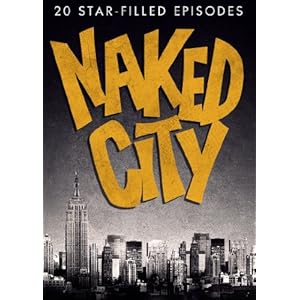
NAKED CITY: 20 STAR-FILLED EPISODES -- DVD Review by Porfle


Originally posted on 2/8/13


Like so many TV series of its time, the gritty cop drama "Naked City" (ABC-TV, 1958-63) now stands as a showcase not only for established stars working in television, but for the up-and-coming actors trying to break into movies (or at least bigger success on the small screen).  Spotting all these familiar faces is what makes Image Entertainment's 5-disc DVD set NAKED CITY: 20 STAR-FILLED EPISODES especially interesting to watch.

Sometimes upbeat, sometimes noirish and bleak, "Naked City" is a semi-documentary-style drama (filmed in black and white on real New York locations) that thoughtfully explores human foibles and social issues of the day between occasional bursts of violence such as a blazing shootout or tire-screeching car chase.  Not all of the stories are that interesting--in fact, they sometimes tend to drag or veer toward the maudlin--but at its best, the show can be scintillating and highly involving entertainment.

The first hour-long episode, "Sweet Prince of Delancy Street" (1961), features Robert Morse (HOW TO SUCCEED IN BUSINESS WITHOUT REALLY TRYING) in a manic performance as Richie, a schlub trying to keep his dad (James Dunn) from being arrested for vandalizing the factory he was just fired from and killing a security guard.  In addition to Jan "Madge the Manicurist" Miner and Arny Freeman of THE BRAIN THAT WOULDN'T DIE, a young Dustin Hoffman also appears in a smaller but ultimately pivotal role as Richie's friend Lester.

This episode (later ranked #93 on TV Guide’s list of "100 Greatest Episodes of All Time") introduces us to series regulars Paul Burke ("Twelve O'Clock High") as idealistic young police detective Adam Flint, Horace McMahon (ABBOTT AND COSTELLO GO TO MARS) as his world-weary boss Lt. Mike Parker, Harry Bellaver as his easygoing older partner Det. Frank Arcaro, and Nancy Malone as his faithful fiance' Libby Kingston.  The show's main emphasis, however, is usually on the guest characters and their problems, occasionally giving "Naked City" the feel of an anthology show. 

A brief glance at the episode titles such as "Robin Hood and Clarence Darrow, They Went Out With the Bow and Arrow" (with Eddie Albert) reveals how pretentious the series tends to be at times, as does a sample of the opening narration: "In the naked city, a man can search 10,000 side streets all 22,000 days of his life...and never come face-to-face with the stranger within himself." 

It's clearly intended as a showcase for writers and actors to allow free rein to their creativity and either shamelessly give in to excess or--in the case of old pros such as Albert, David Wayne ("The Multiplicity of Herbert Konish"), Claude Rains ("To Walk in Silence"), and Sylvia Sidney ("A Hole in the City")--do exceedingly impressive work.  

Some of the other future stars making early appearances include a wildly overacting William Shatner ("Portrait of a Painter"), Peter Fonda and Martin Sheen ("The Night the Saints Lost Their Halos"), Robert Duvall ("The One Marked Hot Gives Cold", "Hole in the City"), an emotional Dennis Hopper ("Shoes For Vinnie Winford"), Robert Redford ("Tombstone for a Derelict"), Jon Voight ("Alive and Still a Second Lieutenant"), "Jimmy" Caan and Bruce Dern ("Bullets Cost Too Much"), a willowy young Diane Ladd ("Line of Duty"), and Suzanne Pleshette ("The Pedigree Sheet").  Co-starring with Eddie Albert in "Robin Hood and Clarence Darrow, They Went Out With the Bow and Arrow" is a shockingly young-looking "Ronnie" (Christopher) Walken.

Already-familiar faces (at the time) from movies and television include Theodore Bikel, Barry Morse, Jo Van Fleet, Edward Andrews, Telly Savalas, Leslie Nielsen, Nehemiah Persoff, Paul Hartman, Jean Stapleton, Dick York, Johnny Seven, Betty Field, Peter Falk, Myron McCormick, Jack Klugman, Jan Sterling, Richard Conte, Nancy Marchand, Murray Hamilton, Roger C. Carmel, Jack Warden, and Carroll O'Connor.  Two 1958 episodes, "Lady Bug, Lady Bug" and "Line of Duty", take us back to the show's initial half-hour format with original stars John McIntyre and James Franciscus. 

Sharp-eyed viewers will spot the occasional lowly bit player who would later go on to bigger and better things, such as Richard Castellano (THE GODFATHER), Sorrell Booke ("The Dukes of Hazzard"), Joe Silver ("You Light Up My Life"), Sylvia Miles (MIDNIGHT COWBOY), and Doris Roberts ("Everybody Loves Raymond").

The 5-disc DVD set from Image Entertainment is in the original 1.33:1 aspect ratio with Dolby Digital mono sound.  No subtitles or extras. 

Spotting the then-and-future stars in an older show like this is kind of like birdwatching, only (to me) a lot more fun.  It helps if the show itself is worth watching, which the sometimes gritty, sometimes overly weepy "Naked City" manages to be more often than not.  And as a wallow in old-school classic TV, NAKED CITY: 20 STAR-FILLED EPISODES is pure, unadulterated nostalgia.


Share/Save/Bookmark

Wednesday, September 18, 2024

BEYOND THE WALL OF SLEEP -- Movie Review by Porfle


Originally posted on 12/16/11


I'm not sure how the average H.P. Lovecraft fan will react to it, so my impressions of BEYOND THE WALL OF SLEEP (2006) were based solely on the movie itself and not on how well or how badly screenwriter Barrett J. Leigh adapted it from Lovecraft's short story.  As such, I found it to be one of the creepiest and most over-the-top horror films I've seen in recent years.

The story takes place in one of those nightmarish insane asylums (circa 1911) in which the grievously abused and neglected patients serve as guinea pigs in the mad experiments of crazed doctors.  Young Dr. Eischel (Fountain Yount) is conducting his own really interesting experiment on a catatonic, cadaverous-looking woman named Ardelia--strapped to a chair, her skull has been sawed through for easy pop-top access to her brain, into which Dr. Eischel sticks electrodes that are hooked up to a device he uses to stimulate various nerve centers.  I was never really sure what his goal was (something about harnessing the enery of thought), but it didn't really matter because the whole thing was wonderfully weird and horrific. 

Meanwhile, Dr. Wardlow (Kurt Hargan), a profoundly cruel, power-mad alienist (okay, I had to look it up--"alienist: n. 'A physician who has been accepted by a court of law as an expert on the mental competence of principals or witnesses appearing before it'", according to www.answers.com) is presiding over the hearing of a wretched piece of human flotsam named Joe Slaader (William Sanderson, BLADE RUNNER, "Newhart"), who has been caught butchering a bunch of his fellow inbred hillbillies and running around in the woods with one of the severed heads.  Dr. Wardlow delights in pointing out Joe's myriad less-appealing qualities, including a large hump in his back that resembles a human face--the result of a fetal twin that didn't quite successfully make it through the gestation process. 

Wardlow, who can't wait to get this guy on an operating table for some good old surgical fun, applies leeches to Joe's body to "suck out the madness" and suggests cutting out the malformed twin, but Dr. Eischel contemptuously derides him as an idiot, initiating an intensely confrontational relationship between the two.  When Dr. Eischel later finds the chance to examine Joe on his own, he discovers that the fetal twin is alive and conscious--in fact, it is the dominant consciousness within the shared body, coming to the fore whenever Joe goes to sleep and telekinetically ripping people to bloody shreds (one of the few coherent things Joe ever says is the chant, "I kiss my loved ones...I go to sleep...I wake up with bad things").  Giddy with anticipation, Eischel vows to circumvent Dr. Wardlow's surgical plans and get Joe hooked up to his brain machine. 


And that's just for starters.  Believe me, this is one weird movie, and it gets weirder by the minute, eventually culminating in a grand, blood-drenched finale in which skulls are drilled, electrodes are implanted into living brains and the brains of several severed heads on spikes, and a terrifying Netherworld creature named Amducious claws its way into our dimension (via some not-so-great CGI). 

Along the way, some of the patients in the asylum find themselves hanging upside-down in their cells by some unseen force as all the flesh is ripped from their bones, and the lovely Ardelia, her body reanimated by Amducious' will, pries the head off of the recently-ousted asylum director who has discovered her in the basement, just as he is about to gleefully rape her.  One thing you have to say about this movie--it's pretty eventful.

It's also very deliberately stylish, and stylized--filmed in black-and-white, with color appearing only in the scenes in which Amducious' presence is felt, BEYOND THE WALL OF SLEEP is a dizzying collage of wild camerawork and sometimes rapid-fire editing, especially in the deeply unsettling dream sequences.  The most unique thing about it, though, which is also the thing that will turn off many viewers, is the highly stylized acting.  Everyone in the cast attacks their characters as though they were performing in a silent movie or perhaps the most melodramatic Grand Guignol theater presentation imaginable, manically emoting for the people in the back row, and this effect is even carried over into the stagelike makeup, costumes, and set design. 

It's purely intentional on the part of directors Barrett J. Leigh and Thom Maurer, and contributes to the heavy layer of black humor that permeates the entire movie, as well as its oppressive sense of unenlightened antiquity.  I'm sure a lot of people will simply regard this as horrible acting, which, in some cases, it may be.  But it worked for me. 

Will Lovecraft fans like this movie?  I have no idea, but judging from their reactions to most of the previous cinematic adaptations of the author's works, probably not.  On its own terms, however, I found it to be a wildly inventive, nightmarish, shocking, funny, and unabashedly bizarre experience that was enough fun for me to disregard its faults.  Plus, it's a visual feast for gorehounds, who will also be pleased to see Tom Savini in an all-too-brief role early on. 

BEYOND THE WALL OF SLEEP is a film that is definitely not for everyone, but if you get hooked into it just right, you may have almost as much fun as Ardelia does when Dr. Eischel sticks an electrode into the pleasure center of her brain and turns up the dial.


Share/Save/Bookmark

Saturday, August 17, 2024

Tuesday, June 4, 2024

NEVER OPEN THE DOOR -- Blu-ray Review by Porfle


Originally posted on 12/7/16


"Six people going crazy in a house" is how writer-director Vito Trabucco (SLICES, BLOODY BLOODY BIBLE CAMP) describes his horror film NEVER OPEN THE DOOR (2014), and that's a pretty apt summation of what you're in for when you watch it. 

What you're also in for, if you appreciate good old-fashioned black-and-white photography, is one of the best-looking monochrome films I've seen in recent years.  From the first noirish frame this looks like a throwback to the 60s, especially those creepy black-and-white chillers like Roger Corman's DEMENTIA 13 and William Castle's HOUSE ON HAUNTED HILL, or TV shows like "The Twilight Zone" and "The Outer Limits."

Trabucco cites the work of producer and co-writer Christopher Maltauro's grandfather John Brahm, who directed episodes of the aforementioned series as well as "Alfred Hitchcock Presents", as a major inspiration.  The film, in fact, is dedicated to him.


What this means is that NEVER OPEN THE DOOR is a visual treat, with cinematographer Joe Provenzano's finely-wrought imagery within the film's limited confines--it almost all takes place within a single two-storey vacation home in Big Bear--often no less than gorgeous.  The fact that Trabucco is a director of noteworthy talent only adds to the pleasure of watching the film unfold.

Working against it, unfortunately, is a script that encourages a great deal of improvisation from a cast not too adept at it.  (Trabucco himself admits to the overly lean nature of the script in his interview segment.)  The six main actors, playing old friends gathered together in the secluded house for a festive holiday weekend, give adequate individual performances (for the most part, anyway) but their ensemble acting is downright awful.

It all begins when their festive meal (replete with such bad dialogue that I suspected my leg was being pulled) is interrupted by a violent knock at the door.  Disregarding the film's title, Tess (Jessica Sonneborn, THE HOUSE ACROSS THE STREET) admits a wounded man who spews her with blood and then dies right there on the floor.


While she's taking a quick scrub upstairs, the rest of the group debate over what to do, with the added inconvenience that their cell phones not only don't work properly but are beginning to send them cryptic, inflammatory text messages (such as "Isaac is having an affair with your wife").

Things start to get ever weirder when Tess disappears and a series of animalistic growls begin to emanate from upstairs.  When yet another Tess shows up and claims to have just arrived, everyone's pretty convinced that there's definitely something odd going on.  In no time they're all going out of their minds, attacking one another, and generally behaving in a dangerously irrational manner as more unexplainable things continue to occur. 

With the increasingly frantic atmosphere amongst the main characters, we're in for more and more of that cringeworthy ensemble acting and bad improv, so much so that it eventually elicits its own sort of fascination.


Luckily, the violent and often shocking behavior these erstwhile friends and lovers display toward one another once the true madness starts to set in keeps us pretty much on edge the whole time, while Trabucco, with the help of some very creative editing and an enjoyably overheated musical score, manages to maintain a genuine sense of urgency until the fairly neat surprise at the end.   

Even with its flaws, or perhaps partly because of them, the story takes on a sort of oppressively nightmarish quality that eschews any kind of logic.  We get no explanation for what's going on, such as why Tess (the original version, that is) reappears as some kind of hideous monster lurking about in the darkness or a line of mysterious men in suits appear outside, watching the house. 

This is where the film differs from its inspirations, since shows like "The Twilight Zone" generally offered some kind of rationale for their irrational events. Here, we're plunged into a free-for-all of weirdness that's unfettered by any adherence to inner logic save that of the darkest nightmare.


The Blu-ray from Maltauro Entertainment in association with Baumant Entertainment is widescreen with subtitles in English.  In addition to a trailer and photo gallery,  there are interviews with Jessica Sonneborn (Tess), director Vito Trabucco, and producer Christopher Maltauro, and a tribute to special makeup artist Maggie Dillon, who passed away shortly after the film was completed.

With a brisk running time of barely over an hour, NEVER OPEN THE DOOR starts off running and sweeps us along with it from start to finish.  And while the acting and dialogue often veer perilously into trainwreck territory, the look of this low-budget indy horror flick is exquisite--a bonafide black-and-white joy to behold. 

in


Share/Save/Bookmark

Monday, May 20, 2024

FEED THE LIGHT -- Blu-ray Review by Porfle


Originally posted on 6/30/17


It's a real pleasure to see directors and cinematographers these days who not only work in black and white but seem to revel in the unique qualities and possibilities of the medium.

Swedish director Henrik Möller's nightmarishly dark FEED THE LIGHT, aka "Lokalvårdaren" (2015) has been described as "Lovecraftian", which it most definitely is, but visually it's also very "Lynchian" in its bleak and exquisitely evocative use of disturbingly surreal black and white imagery a la ERASERHEAD, with only a few splashes of color for emphasis. 

As Möller himself describes the plot, "In brief you can say that it's about a warehouse in the harbor where mysterious things happen to the cleaning personnel.  There is something wrong with the light."  (That's putting it mildly.)


To clarify that a bit, distraught mother Sara (Lina Sundén) has lost custody of her daughter Jenny to her abusive husband Jon (Patrik Karlson), and in order to try and steal her back, she seeks custodial employment in the same mysterious building where he works. 

Things seem "off" immediately.  The only managerial personnel consists of a stiff, cruel woman (Jenny Lampa) named Chefen but known in hushed tones as "The Boss."  The only other people roaming the dim, dreary hallways are a surly cleaning crew to which Sara is assigned, with the special instruction, "Always keep the silver dust swept up." 

It isn't long before Sara realizes that there's something strange and malevolent about the light inside the building--the silver dust, in fact, seems to fall from the light fixtures themselves.  Before the story's done, a bizarre source of light within the bowels of the lowest basement level will hold the horrible secret of the building's seemingly impenetrable mystery.


Until then, Sara engages in a furtive search for Jenny that keeps us in bewildered suspense from the very start, encountering both hostile coworkers and the increasingly intimidating Boss (who keeps in her office, seemingly as a pet, an unkempt naked man who seems to think he's a dog). 

Her only allies are an outwardly sympathetic crew foreman (Martin Jirhamn), who may or may not be on her side, and, surprisingly, her ex-husband Jon, whom she finds in decidedly decrepit condition after having spent some non-quality time in the lower level trying to get to the bottom of the mystery himself.

With their help and advice, and despite their warnings, Sara's quest to venture into the first basement (and eventually, of course, into the lowest, creepiest sub-basement) becomes a horrific journey into the paranormal in which nothing is as it seems.


Doors and entire hallways appear out of nowhere, while an unseen force seems to guide her along through the dark, mazelike corridors.  She encounters what appears to be Jenny, but is it?  Most disturbingly, there's a fleeting shadow creature reminiscent of those sleep-paralysis phantoms, only this one is more aggressively hostile.

It reminds me of the creature in the "Outer Limits" episode, "It Crawled Out of the Woodwork", of which I still have shuddery childhood memories.  Other chilling images bring to mind the scarier episodes of "The X-Files" (mainly the ones about the black oil).  

Moreover, the use of extremely limited resources in an imaginatively cinematic way reminds me of HARD REVENGE MILLY, a futuristic action-revenge thriller that also takes place mainly in one empty building and works wonders with very little.


Mainly, though, it's a unique film experience that will nourish the morbid-leaning genre fan's hunger for both the Lovecraftian and the Lynchian, whose subtle twists of reality suddenly give way to jarring images of horror.

The Blu-ray from Intervision is in 1080p full HD resolution with 2.0 audio (Swedish with English subtitles).  Extras include a making-of featurette, a director interview entitled "The Lovecraft Influence", and the film's trailer.

Brilliantly told, with excellent performances, the mood and atmosphere of FEED THE LIGHT surround the viewer like a dense fog, as we feel our way uncertainly toward an ending that is both disorienting and truly haunting.


Buy it at Severin Films


Share/Save/Bookmark