HK and Cult Film News's Fan Box

Saturday, May 10, 2025

PSYCHOMANIA -- DVD Review by Porfle

Originally posted on 10/7/2010
 

Here's an odd little artifact from the early 70s--a horror movie with no real horror or scares, a biker movie without a single "real" biker, and what appears to be an exploitation flick that's as tame as an extended episode of an old TV series.  In fact, director Don Sharp (CURSE OF THE FLY) helmed a few episodes of "The Avengers" and brings the same competent but rather dry style to PSYCHOMANIA, aka "The Death Wheelers" (1973), turning it into a pleasantly diverting yet ultimately bland experience. 

Still, this seems to be a fondly-remembered flick for a lot of people (including Fangoria editor Chris Alexander, who gushes about it during his five-minute introduction), especially those who look back on it through that nostalgic VHS-bargain-bin haze of their youth.  I can imagine enjoying it a lot more on a drive-in screen or some obscure late-night TV slot.  Seeing it now for the first time on DVD, it doesn't quite conjure up that magical feeling I still get from so many other guilty-pleasure films of that era.  Yet it's definitely an enjoyable little piece of goofball cinema. 

The main characters are a group of post-mod juvenile delinquent boys and girls who call themselves "The Living Dead" and ride around on wimpy bikes terrorizing the proper English citizenry.  Their leader, Tom (Nicky Henson, WITCHFINDER GENERAL), is a handsome sociopath whose mother (Beryl Reid, THE KILLING OF SISTER GEORGE) practices the occult arts.  From her, he learns that if one willingly commits suicide with the firm intention of returning from the dead, it will happen.  In one of the film's best scenes, Tom--buried by his friends in a sitting position on his beloved motorcycle--comes roaring up out of the grave in a shower of dirt.
 

After amazing the rest of the gang with his unexpected return, they can't wait to go out and start offing themselves in amusing ways.  These include some nice stunt scenes with them lunging off bridges and buildings, skydiving without parachutes, and (my favorite) crashing their motorcycles through the back end of a moving truck.  Now undead and unstoppable, the lethal pranksters go on a rampage which consists mainly of running motorists off the road and trashing a supermarket.  The latter scene features another cool stunt with bad girl Jane (Ann Michelle) gleefully running over a baby carriage and then crashing into a glass display case.

Tom, meanwhile, is having the time of his afterlife until he discovers that his girlfriend Abby (Mary Larkin), a nice girl at heart, isn't keen on dying.  This takes some of the fun out of spree-killing for poor Tom, who gives Abby an ultimatum--either die, or he will kill her.  Tough choice!  Disturbed by her son's evil ways, Mom takes steps to stop him with the help of her devoted servant, Shadwell, who is played by none other than top-billed George Sanders.  If Sanders looks a little bored in the role, which must've been a disheartening end to his distinguished film career, it's because he was soon to commit suicide with boredom being specified as one of the reasons in his farewell note.  However, his presence along with Reid's does help to class the movie up a little.


The actors portraying the "Living Dead" gang do an okay job, with Ann Michelle as Jane and Denis Gilmore (who reminds me a bit of Michael J. Pollard) as "Hatchet" making the biggest impression.  As a biker gang, though, these dweebs are a mixed-up bunch who kill for fun one minute and sit around singing folk songs and making floral wreaths the next.  Tom burial is accompanied by an ear-bending acoustic guitar ballad lip-synched by Miles Greenwood (as "Chopped Meat") while the corpse sits upright, mounted on his motorcycle, in the open grave.  In a film surprisingly devoid of the droll humor one might expect, this is definitely the most stupefyingly hilarious image.

The DVD from Severin Films is in 1.78:1 widescreen and Dolby Digital mono.  Taken from the best available print as the original negative is deemed lost, the image quality is good.  Extras include the lovingly-rendered 25-minute documentary "Return of the Living Dead", which features a charming Nicky Henson along with several other original castmembers.  "The Sound of Psychomania" offers composer John Cameron's recollections of creating the film's score.  In addition to Chris Alexander's introduction to the film and the original trailer, singer Harvey Andrews recalls recording the vocals to the awful folk song "Riding Free" which is heard during Tom's burial scene. 

With the emphasis on stunts and some really exciting car and bike chase sequences (but very little actual violence), PSYCHOMANIA's supernatural aspect is treated so lightly and matter-of-factly that it hardly registers.  Dying and coming back just seems to make these young smarties a little snarkier.  After an early scene in which Tom ventures into a mysterious locked room in search of some occult epiphany (his vision of a floating bullfrog shrouded in mist doesn't quite terrify), there's no attempt to scare viewers in any way until the slightly creepy ending.  What makes the film watchable is that it's lively, quirky, endearingly retro, and enjoyably dumb.



Share/Save/Bookmark

Friday, May 9, 2025

THE KILLING OF AMERICA -- Blu-ray Review by Porfle


 Originally posted on 11/7/2016


You start to notice a difference right away between this and the usual "Mondo Cane"-type shockumentary that you might be expecting when you first start watching it.  THE KILLING OF AMERICA (1981) isn't just about showing us violence in order to satisfy our more prurient interests, but to help us come to grips with it and, hopefully, begin to understand it.

Not that there's really anything to understand, because violence like this is mostly as far removed from reason and rationality as it can be.  The scariest thing about what we see, in fact, is the randomness, unpredictability, and total incomprehensibility of it all, particularly in the case of spree-killers, serial killers, and glazed-eyed zealots.

The documentary begins in the early 60s, when director Sheldon Renan and co-writer Leonard Schrader (whose brother Paul wrote TAXI DRIVER) believe that America's psyche was forever altered by the assassination of John F. Kennedy.  From that point and into the 80s, as Renan remarks in his commentary, "the weirdness of the killing, the numbers of people killed, and the craziness of the violence just continued to escalate."


Renan's film concentrates at length on the 60s with extensive footage, photographs, and testimony concerning the subsequent assassinations of Robert F. Kennedy and Martin Luther King, the latter sparking bloody race riots throughout the country.  The televised murder of Lee Harvey Oswald by Jack Ruby and the attempted killing of presidential candidate George Wallace (and later President Ronald Reagan) further illustrate how drastically an armed assassin can change the course of history.

As the decade dragged on, more and more of its (extreme) violence was being filmed or videotaped for posterity.  This allows us to witness much in the way of Viet Nam war protests and widespread campus unrest which led to the Kent State killings. 

After that, THE KILLING OF AMERICA begins to narrow its focus to such spree killers as Texas sniper Charles Whitman, the Manson family, the infamous "I Don't Like Mondays" girl who opened fire on school children walking past her house, and other, lesser-known psychos seeking infamy via mass murder. Some are seen enjoying the spotlight while in custody as does a smirking David "Son of Sam" Berkowitz, while others prefer to commit suicide or go out in a hail of cops' bullets. 


We witness the senseless shooting of a store clerk via security footage and endure a tense hostage situation in which a disgruntled man rages against injustice while clutching a shotgun that's taped to a loan officer's neck.  Graphic images of the infamous Jonestown massacre continue to shock, as does a montage depicting suicide's aftermath. 

Most disturbing, perhaps, is the section on serial killers such as Charles Kemper, John Wayne Gacy, Dean Corll, and Ted Bundy.  Actual scenes from Bundy's trial, during which he defended himself, show the deceptively normal-looking young man teetering on the brink of insanity, while Corll's then-teenaged accomplice tells the chilling story of luring several of his friends into Corll's evil clutches before he himself finally found himself an intended victim. 

Kemper, meanwhile, is interviewed up-close and personal in prison by Renan, and this imposing (6'8", 280 lbs.) killer's calm accounts of multiple murders, mutilations, and beheadings (including his mother) conjure mental images as disturbing as any picture.

All along the way, the squeamish will be kept squeaming by endlessly morbid stuff including a tour of the overcrowded Los Angeles city morgue during which a number of autopsies are being performed.  Again, this isn't "Faces of Death"-style exploitation for its own sake, but be warned that no punches are pulled. This is grimly matter-of-fact material and it's intended to make a visceral impact.


Narrator Chuck Riley lends the same solemn vocal authority here that he did in the haunting 1979 documentary "Whodunit? The Greatest Unsolved Mysteries" which you might've caught on HBO back in the 80s.  Mark Lindsay of Paul Revere and the Raiders co-wrote the score. 

The Blu-ray from Severin Films is widescreen (new 2k scan from original negative) with English and Japanese 2.0 audio English subtitles.  In addition to the exhaustive director's commentary and the film's trailer, extras include featurettes "The Madness is Real: Interview with Director Sheldon Renan", "Cutting the Killing: Interview with Editor Lee Percy", and "Interview with Mondo Movie Historian Nick Pinkerton."

There's some editorializing, of course, but for the most part we're left to form our own conclusions from what we're shown. After a few New York showings in 1982, THE KILLING OF AMERICA disappeared from American screens (while being a big hit in such places as Japan and Australia) until now.  Needless to say, it's just as relevant as ever.


Share/Save/Bookmark

Thursday, May 8, 2025

INVASION OF THE BLOOD FARMERS -- Blu-ray Review by Porfle


 Originally posted on 2/21/19


Bad movie fans love to wander through that magical, dreamlike territory created when a low-budget, made-on-a-shoestring horror movie transcends its badness to become an almost blissfully immersive experience in "so bad it's good"-ness.

One movie that easily transports willing viewers to that wacky wonderland of the twisted mind is INVASION OF THE BLOOD FARMERS (Severin Films, 1972).  This makeshift affair was filmed on three weekends with actors paid mostly with six packs of beer (the highest-paid thespian in the cast received a whopping $25) on rural locations in upstate New York.

Director and co-writer (with Ed Kelleher) Ed Adlum, who also produced and co-wrote SHRIEK OF THE MUTILATED, planned for this to be an alien invasion movie, but economy forced him to make it about druids who are kidnapping people and draining them of their blood in an isolated farmhouse, hoping to find the right blood type that will reanimate their sleeping Queen Onhorrid and please the underworld gods that they worship.


It's an uneasy juxtaposition of MOTEL HELL (these druid-drones are some real backwood hick-types), complete with a torture barn where screaming victims are chained up and horrifically power-drained of their blood with what appears to be a cow-milking machine, and some diabolical Gothic-tinged scenes with an effeminate cult leader, Creton (Paul Craig Jennings), and his capo who both appear to have studied at the Bunny Breckinridge School of Acting.

Meanwhile, blissfully square med student Don Tucker (Bruce Detrick) is engaged to waiflike Jenny (Tanna Hunter) while assisting her scientist father Dr. Anderson (Norman Kelley) in studying a sample of druid-victim blood that is constantly increasing in volume.

Little do they realize that Dr. Anderson's friend and consultant on the case is Creton's right-hand man, who conspires to sabotage his research and kidnap Jenny as a potential blood donor for the druids' slumbering queen.


Add to that a gang of comical ne'er-do-wells down at the local bar, including a drunken police deputy who refers to the bar as a "police annex", and we have a cast of characters whose Ed Wood-level acting and dialogue are a constant delight, especially during the more dramatic scenes which just can't help but turn out delightfully funny.

Writer-director Adlum himself confirms that there was no intentional humor in the film (save for one reference to Bloody Marys) and that things just sort of turned out that way while they were earnestly trying to get the film done with the rushed schedule and meager resources available.  As it is, the film's technical qualities vary wildly with different people behind the camera and some occasionally rough editing, among other things.

Yet it all comes together to create a strangely satisfying and pleasingly odd horror film experience that reminded me somewhat of EQUINOX (without the SPFX) by way of TEXAS CHAIN SAW MASSACRE and garnished with the sort of florid Goth touches found in old horror comics.  All of which is juxtaposed with that hokey Hicksville ambience that seems rife for an invasion by evil blood farming druids.


The Blu-ray from Severin Films features a very nice-looking print taken from the original negative.  English subtitles are available.  The bonus menu includes a commentary track with Ed Adlum and actress Ortrum Tippel, moderated by Kier-La Janisse (author of "House of Psychotic Women"). There's also a very interesting and engaging interview with Adlum, an interview with actor Jack Neubeck (who played druid-drone Egon), an interview with cinematographer Frederick Elmes, and the film's trailer.

INVASION OF THE BLOOD FARMERS is one of those delightful bad-movie romps that just can't help being consistently entertaining in one way or another. The big finale, shot mostly in one take, is just too oddly off-kilter for words.  And even the happy ending left me agog.  It's the sort of blandly bizarre narrative one might dream after being hit over the head with a blunt instrument. 


Buy it from Severin Films

Release date: 2/26/19

Special Features:
Audio Commentary with Director Ed Adlum and Actress Ortrum Tippel, Moderated by Kier-La Janisse, Author of House of Psychotic Women
Nothing You’d Show Your Mom: Eddie Adlum’s Journey through Exploitation, Coin-Op & Rock n’ Roll
Harvesting the Dead: Interview with Actor Jack Neubeck
Painful Memories: An Interview with Cinematographer Frederick Elmes
Trailer


Share/Save/Bookmark

Wednesday, May 7, 2025

COMBAT SHOCK, aka "American Nightmares" -- Blu-ray Review by Porfle


 Originally posted on 7/21/2018


Sometimes you discover a film by an indie first-timer that's so earnestly conceived and fiercely original that it transcends its rock-bottom budget to become something fascinating. The PTSD nightmare COMBAT SHOCK, aka "American Nightmares" (Severin Films, 1984), is one of those movies, capable of keeping us transfixed whether we like it or not.

Not that this story of a Viet Nam vet named Frankie (Rick Giovinazzo), still haunted by the jungles of Southeast Asia while trying to fit back into the urban jungle of New York, isn't derivative, because even the writer director Buddy Giovinazzo (Rick's brother) admits he was heavily influenced by both "Taxi Driver" and "Eraserhead."

The "Taxi Driver" influence is most pronounced in the depiction of the city's most rancid, sordid underside, a hideous ruin filled with drooling junkies, cruel pushers and loan sharks, violent pimps, and other lowlifes.


This is the world through which Frankie trudges in his neverending search for a job or some other means of paying off his crushing debts to keep from being evicted or having his legs broken, or both.
His home life is no better, with a claustrophobic's nightmare of a filthy apartment that should be in the dictionary under "squalor."  His wife Cathy (Veronica Stork) nags incessantly, but I don't blame her because her life is a living hell as well.

This is especially true since she's stuck taking care of their mutant year-old baby, an Agent Orange casualty that looks like an infant Cropsy from "The Burning" only worse and is constantly screeching in an otherworldly voice.  (The puppetry used to create this eye-curdling monstrosity is a marvel.)  Taken as a whole, Frankie's home life makes "Eraserhead" look like a musical comedy.

Frankie's also haunted by war flashbacks involving some horrific massacre of villagers which he was powerless to stop, as well as being hunted until captured and then subjected to agonizing prolonged torture.


In his state of mind, the past and present keep overlapping until he sometimes doesn't know where he is, or when. Coupled with his incredible bad luck, this takes a toll on his sanity that eventually has him acting in dangerously irrational ways.

The film is impressively directed for someone who was pretty much a neophyte, always capably transcending its extremely meager budget and often showing flashes of brilliance.  Yet the overwhelming squalor is unrelenting, almost soul-crushing, not just for Frankie but also the desperate junkies and other hard luck cases we see begging for dope, begging for food or a second chance to repay a debt, or dying like starving rats on the street.

Buddy G. pulls no punches here, and the film is graphically gory and violent as well as brimming with disturbing images (people eating from garbage cans, little girls being sold as prostitutes, staggering inhumanity and despair, and, always, that utterly repellant baby).  As he states himself, he made the film with no regard for its commercial appeal, instead simply following his artistic instincts wherever they might lead.


They lead, finally, to a shocking (an understatement, to be sure) conclusion in which Frankie's burgeoning psychosis inevitably reaches full fruition. The last segment of the film enters a realm of dementia that's rendered in such twisted visual terms that it might have you questioning the sanity of the filmmakers themselves.

Filmed in dribs and drabs over a long period of time with uncertain finances and mostly amateur talent, COMBAT SHOCK is almost better than it has a right to be.  The cast is mostly unpolished but intense and filled with conviction.

The chintzy sets and sometimes unconvincing exteriors (Staten Island fills in for Viet Nam) create a world of their own which is augmented by several great authentic locations.  Rick Giovinazzo contributes a terrific original musical score.


The 2-disc Blu-ray edition from Severin Films contains this score on a CD as well as the uncensored, fully remastered director's cut on another disc which is also brimming with special features (listed below) including an engaging commentary from the Giovinazzo brothers and special makeup FX artist Ed Varuolo.

The version I reviewed is a special limited edition of 2000 that's autographed by Buddy Giovinazzo and comes with a fully illustrated book containing the daily shooting diary, shooting script with notations, and publicity materials, plus a piece of film from the movie itself.  

I once thought "Taxi Driver" was a downer, but compared to COMBAT SHOCK it's a Miyazaki film.  It's as though some celebrated auteur suddenly went insane and made a movie using whatever cash he had in his pockets at the time, and watching it is an experience which is both stunningly nightmarish and utterly freaky-deaky.


Buy It From Severin Films
 

Special Features:
American Nightmares Director’s Cut (new 4k scan from 35mm Inter-negative with 2k inserts from the Director’s personal 16mm answer print. Mono audio remaster from original mag tracks. New color correction supervised by Director Buddy Giovinazzo)
Audio Commentary with Writer/Producer/Director Buddy Giovinazzo, Actor/Composer Rick Giovinazzo and Special Makeup Effects Artist Ed Varuolo
The Brothers G: Interview with Buddy & Rick Giovinazzo
Nightmare Effects: Interview with Special Makeup Effects Artist Ed Varuolo
Combat Shots: Interview with Director of Photography Stella Varveris
Playing Paco: Interview with Actor Mitch Maglio
Mike the Junkie Memories: Interview with Actor Michael Tierno
American Deep Red: Interview with Artist/Critic Stephen Bissette
Shock Xpression: Interview with International Film Journalist Alan Jones
Outtakes and Tests
Post Traumatic: An American Nightmare Featurette
Hellscapes: Locations Then and Now
Buddy Giovinazzo and Jörg Buttgereit at 2009 Berlin Film Festival
Combat Shock Trailer
16mm Short Films:
Mr. Robbie: Maniac II Promo (New 2k scan from Answer Print)
Audio Commentary with Director Buddy Giovinazzo and Composer Rick Giovinazzo
Outtakes
Jonathan of the Night Promo (New 2k Scan from Workprint)
The Lobotomy (16mm Version)
A Christmas Album
Leave This World (Music Video) [New 2k scan from Workprint)
8mm Short Films:
The Lobotomy (8mm Version)
More Than a Mouthful
Paranoiac
Maniac Drummer
The Combat Shock Limited Edition Blu-ray Package also includes:
FIRST EVER CD Soundtrack of the film
American Nightmares Scrapbook:  96-page booklet with Director’s Diary, Shooting Script, Rare Photos, Storyboards, & More
Individual Actual Frames of the Director’s Workprint
Limited Edition Numbered Slipcover Autographed by Director Buddy Giovinazzo


Share/Save/Bookmark

Tuesday, May 6, 2025

DOLEMITE -- Blu-ray/DVD Review by Porfle


Originally posted on 4/26/16


If the 70s were heroin, DOLEMITE (1975) would be an O.D.  This is one of the quintessential Blaxploitation flicks of the decade, and it revels in the era's day-glo tackiness with an avalanche of pure kitsch.

Rudy Ray Moore takes his popular comedy act to the screen with the character of super bad-ass pimp Dolemite, serving a bum rap in prison but released in order to redeem himself by bringing the real criminals terrorizing his neighborhood to justice.

This includes current pimp lord Willie Green (D'Urville Martin, ROSEMARY'S BABY, GUESS WHO'S COMING TO DINNER, SHEBA BABY, BLACK CAESAR), who framed Dolemite and took over his nightclub, The Total Experience.  When Dolemite and Willie go at it head to head, the whole hood erupts in intermittent bursts of shooting, pummeling, extreme profanity ("You rat-soup-eatin' mutha****er!"), and really unconvincing martial arts choreography.


The film is chockful of gloriously bad acting, with the occasional good performance (Hy Pyke, who played "Taffey Lewis" in 1982's BLADE RUNNER is a crooked mayor) standing out like a sore thumb.  Moore and his co-star Lady Reed as madam Queen Bee are unpolished to say the least, but thoroughly earnest and into their roles. 

Along with the standard black crime boss come the requisite bad honkeys, who are, unsurprisingly, crooked cops representing The Man.  They're led by another capable actor, John Kerry (no, not THAT John Kerry), as the vile Detective Mitchell.  Scripter Jerry Jones is good black cop Blakely, while Vainus Rackstraw steals his scenes as a drug-addled informant known as "The Hamburger Pimp."

The script veers easily from drama to comedy and back.  After we hear the tragic story of how Dolemite's nephew was gunned down in the street and the whole neighborhood's going to hell, Dolemite's "ladies" bring him his colorful pimp clothes at the prison gate and he changes into them while the guards and inmates look on with mouths agape.


Minutes later he cheerfully ventilates some bad guys who were tailing his car with a machine gun, making the last one dance ("Girls, this muthaf***er's got rhythm, hasn't he!") before blowing him away.

Of course, Moore gets to perform some of his rhyming comedy routines during the film, as when he reopens his nightclub with a big event that quickly degenerates into all-out war with Dolemite and his kung-fu ho's (they've been studying martial arts while he was away) taking on Willie Green's pistol-packing thugs.

The film is loaded with vulgar sexuality and plenty of violence, although we're spared the sight of what appears to be Dolemite plunging his hand into someone's chest by a crude edit.  Production values are conspicuously low.  First-time director D'Urville Martin reportedly didn't take the project very seriously and it shows.  The overall look of the film is delightfully garish, with Moore himself credited as set designer.


The Blu-ray/DVD set from Vinegar Syndrome offers the feature film, which is restored from a newly-discovered 35mm negative, in both 1.85:1 matted widescreen and unmatted full screen (called the "Boom Mike" version for obvious reasons). An informative commentary by Rudy Ray Moore biographer Mark Jason Murray also includes comments from Moore and actor-writer Jerry Jones. 

Extras also include the making-of doc "I, Dolemite", raw footage from an interview with Lady Reed, a "Locations: Then & Now" featurette, and trailers for this and the sequel, "The Human Tornado." The DVD's cover artwork is reversible.

Back before home video and cable made such things commonplace even for kids, an "R" rating before a movie made us feel like we were really going to see something.  In achingly, blazingly 70s style, the unabashedly irreverent DOLEMITE delivers on that promise.


Share/Save/Bookmark

Monday, May 5, 2025

BLACKENSTEIN -- Blu-ray Review by Porfle


 Originally posted on 5/12/2017


Back in the early 70s, it was sort of a "thing" to take popular movie titles and add the word "black" to create new concepts in Blaxploitation.  This led to such films as BLACK GODFATHER, BLACK CAESAR, BLACULA, and, last but certainly not least, the unforgettably named BLACKENSTEIN (1973).

(Fortunately, this trend faded out before anyone came up with BLACK JAWS or BLACK ENCOUNTERS OF THE THIRD KIND.)

Despite the rather obvious joke reference of the title, however, BLACKENSTEIN isn't true "Blaxploitation" at all, since it lacks any of the usual dubious elements of that genre (pimps, hookers, drug dealers, guns, gratuitous racial references, etc.).


That we visit a blues club frequented mainly by black patrons in one scene is purely incidental.  In fact, the race of any character in the film could, as far as the story goes, be totally interchangeable.

Even the sadistic white male nurse who verbally abuses helpless Viet Nam vet Eddie, a black man, during his stay in a veterans' hospital, refrains from adding any racial epithets to his spittle-spewing tirade. (Prolific actor John Dennis gives what is probably the film's best performance here.)

The story is actually rather old-fashioned "Monster Kid" stuff about a brilliant scientist, Dr. Stein, who offers to help reconstruct Eddie after a landmine has blown off all four limbs.


Complicating things is the fact that Dr. Stein's creepy assistant Malcomb has fallen in love with Eddie's bride-to-be, the beautiful Dr. Winifred Walker, who's helping Dr. Stein with the procedure.  After she rejects his advances, Malcomb maliciously alters Eddie's DNA injections so that he will gradually evolve into a bestial, Frankenstein's Monster-like killing machine and go on a bloody rampage. 

An ornate Old Hollywood mansion provides ideal exteriors, as well as some of the dark, shadowy interiors, for Dr. Stein's modern Gothic abode (which, though sunbaked by day, seems forever plagued by lightning storms and fog at night).  Sparser sets make up the rest of the interior locations such as bedrooms for Dr. Stein's various experimental patients including Andrea King (THE BEAST WITH FIVE FINGERS). 

The doctor's laboratory itself consists of a large, shadow-strewn room adorned with as much realistic-looking medical and electrical gadgetry as the filmmakers could muster, including, interestingly enough, some of Kenneth Strickfaden's original FRANKENSTEIN equipment.
  

Production elements such as direction, editing, and camerawork are decidedly unpolished, yet hardly unwatchable.  In fact, the film has its own earnest and oddly compelling quality which I found rather endearing. 

One thing BLACKENSTEIN does have going for it is a fairly tight pace, with director William A. Levey (SKATETOWN U.S.A., THE HAPPY HOOKER GOES TO WASHINGTON, WAM BAM THANK YOU SPACEMAN) moving us right along from one important plot point to the next with little or no padding and sometimes not much of a transition, either. 

Library music is wielded like a blunt instrument in piecing together the film's extensive score--often it's so wonderfully overwrought that it makes even Albert Glasser seem sedate by comparison.  Adding to the mood are some evocative blues songs by Cardella DeMilo, who appears in the nightclub scene.


What really makes this a fun monster movie is, of course, its monster.  Despite looking decidedly on the low-rent side, Joe DeSue's shuffling "Blackenstein" monster is an amusing, fun creation (even with his turtleneck shirt, square afro, and "Dad" boots) who manages to create a good amount of bloody havoc wherever he goes. 

A visit to that abusive male nurse is the first item on his rampage list, which he follows up on successive nights by slaughtering some nightclub patrons and then making quick work of several other hapless individuals who cross his path, complete with crude but colorful gore effects. 

The ending, involving a pack of vicious police dogs who seem not to have been fed recently, is particularly splattery.


In addition to the graphic violence, there's also a bit of nudity here and there, notably when Blackenstein pays a nocturnal visit to the home of famed stripper and mob moll Liz Renay, who resembles a young Dolly Parton and appears briefly in a see-through nightie.   

John Hart, probably best known for playing TV's "The Lone Ranger" for a season back in the early 50s, is a bland and rather philanthropic Dr. Stein, a stark contrast to the mad doctor of so many other Frankenstein spinoffs. 

Ivory Stone is a winsome Dr. Winifred Walker, while stoic Joe DeSue does an adequate job as Eddie before and after his fateful transition.  As Dr. Stein's assistant Malcomb, Roosevelt Jackson creeps us out by always sneaking furtive glances at Winifred even as she ministers to her bedridden fiancé between operations.   

The Severin Films Blu-ray offers both the Theatrical Version and a new Video Release Version with about eleven minutes of extra footage.  These bonus scenes haven't been restored since the original elements no longer exist, which makes it easier to tell when we're seeing the added material.


Interestingly, the new and extended segments contain some relatively impressive camera moves and allow smoother transitions from one scene to the next.  Even the performances seem somewhat better with the fleshing out of the characters and dialogue.

The Blu-ray is in 1080p full HD resolution with English 2.0 sound.  Subtitles are available for the Theatrical Version.  Bonus features focus mainly on the fascinating life and mysterious execution-style murder of the film's writer-producer Frank R. Saletri.  His sister June Kirk is interviewed in the touching featurette "Monster Kid", while producers/directors/actors Ken Osborne and Robert Dix weigh in with their remembrances.  There's also an interview with monster makeup creator Bill Munns, an archive news broadcast about Saletri's unsolved murder, and a trailer.

The thing that struck me most about BLACKENSTEIN is that it isn't nearly as irredeemably awful as I'd always been led to believe.  That is, while the "so bad it's good" fun-factor still goes straight to eleven, there's also a kind of sincerity that's disarming. Even at its most lurid, exploitative, and inept, in its heart it just wants to be an old-fashioned monster movie.


Buy it from Severin Films


Share/Save/Bookmark

Sunday, May 4, 2025

JACK THE RIPPER (1959) -- Blu-ray Review by Porfle


Originally posted on 4/25/22


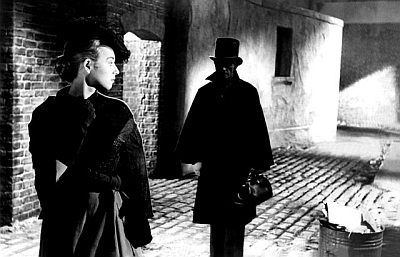
I saw JACK THE RIPPER (Severin Films, 1959) on TV as a kid in the 60s, and the thing I remember most is the horrific elevator scene at the end.  Sure enough, that memorable moment is right here in my long-overdue rewatch, and, although the rest of the film is in glorious black and white, that final ghastly image is in living, bloody color.

At least, it is in the US version. Severin's Blu-ray release has both this and the original British version, the rights of which were purchased for release in the States by famed film entrepreneur Joseph E. Levine (HERCULES) and jazzed-up (literally) with a new musical score, a teasing voiceover intro by Paul Frees inviting us to solve the mystery of Jack the Ripper ourselves while watching the film, and other small touches here and there including that color shot.

The film's original elements are gone, so Severin has assembled the best looking prints of both versions with the elements available.  The British director's cut, which is in 1.33:1, is near-pristine and quite lovely, while the US print (1.66:1) is considerably more worn.


This, however, is a plus for me, as my frequent readers will know.  I love a print that looks like it has been around the block a few times--it's a nostalgia thing, and a big reason why I love PLANET TERROR so much.

The story itself is a taut, wonderfully compelling fictional account by screenwriter Jimmy Sangster (CURSE OF FRANKENSTEIN, HORROR OF DRACULA) of the famous tale about mysterious serial killer Jack the Ripper's six notorious and very brutal slayings of prostitutes in London's Whitechapel district in 1888, a case that was never solved.

Here, London police inspector O'Neill (Eddie Byrne) and his American friend, Detective Sam Lowry (Lee Patterson) stay one step behind the killer's trail of ravaged bodies found in back alleys, their deaths apparently the work of a surgeon or other person with knowledge of anatomy and surgical tools.


Seeking advice from medical experts leads them to a hospital where we meet some of our main suspects--chief surgeon Sir David Rogers (Ewen Solon), aging and possibly over-the-hill Dr. Tranter (John Le Mesurier), surgical assistant Dr. Urquhart (Garard Green), and facially-disfigured hunchback (and thus chief suspect in the film's publicity) Louis Benz (Endre Muller), who tends to the surgical instruments during operations.

The atmosphere in the district is heated and volatile, with mobs of angry and often drunk men ready to form at a moment's notice to hunt down anyone even slightly suspected of being the ripper, resulting in a few tense sequences.

This mood is exacerbated by the sometimes claustrophobic nature of the film's stagebound sets (at Shepperton Studios), which are otherwise ideal for establishing the 19th-century setting filled with grimy cobblestone streets and dark, foggy alleyways where dastardly deeds are performed in the shadows.


In contrast to these are the bright music hall scenes that are alive with period frivolity including a raucous can-can dance sequence and a clash between some posh visitors on the prowl for a good time and a naive young dancing girl who didn't realize this was part of her job description. When she gets wise to her companion's intentions, she flees into the night and right into the clutches of the mysterious stalker.

Production, direction, and photography are all credited to Robert S. Baker and Monty Berman, who stage each scene in a just-right way that, unless I'm mistaken, was an inspiration for some of the visuals of the later version, FROM HELL.

The black and white cinematography is exquisite, and the music in both versions very good. I enjoy the brash Jimmy McHugh and Pete Rugolo score (I had the 45 rpm single of the main theme at the time) while some might prefer the more stately original by Stanley Black.

The cast is top-notch, delivering Sangster's snappy dialogue with aplomb.  The romantic angle between Detective Lowry and Dr. Tranter's beautiful, plucky ward Anne (winsomely portrayed by Betty McDowall), who works at the hospital, is well-handled.


The main draw, of course, is the sick thrill of Jack the Ripper's horrific murders (some shockingly staged for 1959) and the increasing urgency for our detective heroes to put a stop to them.  In the exciting finale, the killer finally tracks down the woman he's been searching for (each murder begins with him asking, in creepy, sotto voice, "Mary Clark? Are you Mary Clark?") and then menacing Anne herself as Lowry races to her rescue.

The Blu-ray from Severin Films is in 2.0 English mono sound and 1080p full HD resolution.  The British version has English subtitles while the US version does not.

Besides the two versions of the film, extras include the US trailer, photo and poster gallery, alternate "continental" takes which contain nudity, an essential interview about the film with author Denis Meikle ("Jack the Ripper: The Murders and the Movies"), and a history of the case entitled "The Real Jack the Ripper." Last but not least is a commentary track with Robert S. Baker, Jimmy Sangster, and assistant director Peter Manley, moderated by film historian Marcus Hearn.

JACK THE RIPPER is moody, atmospheric black and white 50s-style horror entertainment at its best, sharply-rendered in all aspects and a real treat for genre fans.  And there's a reason that elevator scene stayed in my memory for over half a century--it really tops off the movie in shocking style.


Buy it from Severin Films

Special Features:
British Version
US Version
Audio Commentary With Co-Director/Co-Producer/Co-Cinematographer Robert S. Baker, Screenwriter Jimmy Sangster, Assistant Director Peter Manley, Moderated By British Horror Historian Marcus Hearn
Alternate Continental Takes
Interview With Denis Meikle, Author of “Jack The Ripper: The Murders And The Movies”
The Real Jack the Ripper Featurette
Theatrical Trailer
Poster & Still Gallery


Share/Save/Bookmark

Saturday, May 3, 2025

BAHIA BLANCA -- Blu-ray Review by Porfle


Originally posted on 6/26/20


After seeing prolific writer-director Jess Franco at his most outrageous, most violent, most sexually explicit, and most, well...baffling...it's nice sometimes to see him as a restrained, thoughtful, contemplative filmmaker switching into low gear to fashion something as quietly effective as BAHIA BLANCA (Severin Films, 1984).

Franco has chosen a scenic oceanfront village as his location, and revels in capturing its pictorial beauty in shot after dazzling shot. Against a backdrop of glittering ocean waves and blazing cloud-strewn sunsets, everything and everyone in the story takes on added importance and effect.

As for the story, it's surely some of Franco's best writing, filled with memorable dialogue, interesting characters, and a low-key plot that takes its time to unfold but keeps drawing us along toward its heartrending conclusion.


Antonio Mayans is Inspector Carlos Fernández, the local lawman who must delve into the mysterious murder of one Pocho Martin after he is found with a bullet to the head. 

The investigation leads to an island tavern run by beautiful Alida (Eva León), who sells both alcohol and love to the passing sailors, and cares for her mute, simple-minded sister Maria (Franco mainstay Lina Romay) while also carrying a torch for Carlos.

This complicates her relationship with the local underworld boss Raul Sebastian (Tony Skios), a cool, cruel type with a jealous streak that tolerates no other man in Alida's life.


More drama comes in the form of Raul's amorous son Andy (José Llamas), engaged to a sweet village girl but not above forcing himself on Maria despite Alida's threats of deadly force. Franco himself appears as a supposed mystic who warns those involved for whom he foretells grave peril.

Franco the filmmaker is more interested this time in telling an involving story than shocking or titillating us, keeping the sex scenes reined in (despite numerous and very pleasant topless shots of Eva León and Lina Romay) and never going for any kind of cheap shocks.

While it takes a bit of time to draw us in, the story eventually takes root in the viewer's imagination (this one, anyway) like an unusually well-written pulp novel featuring impetuous characters bound for tragedy in an exotic location.


The Blu-ray from Severin Films is scanned in 4K from the original negative for the first time ever. Spanish mono with English subtitles. Extras consist of "In the Land of Franco, Part 4" (Stephen Thrower & Antonio Mayans tour multiple Franco locations in Spain) and "Bay of Jess" (interview with Stephen Thrower, author of "Murderous Passions" and "Flowers of Perversion").

I'm not sure how many films like BAHIA BLANCA Franco made or how characteristic it is of his work--having seen only fifteen or twenty of his films, I'm still a relative novice--but this is doubtless a prime example of the genuine filmmaking talent which was his to command when he chose to do so. It's by no means an epic, but it really burrows in and stays with you.


Limited Edition Blu-ray--MID YEAR EXCLUSIVE (Limited to 1500 copies)

Please Note: Bahia Blanca is a MID YEAR EXCLUSIVE, meaning this will be sold ONLY during the 4-day Mid Year Sale and will not be available ever again (much like Severin's Combat Shock release). ALL OF THESE RELEASES ARE REGION FREE.


Share/Save/Bookmark

Friday, May 2, 2025

THE HOT NIGHTS OF LINDA -- Blu-ray/ DVD review by porfle


 Originally posted on 10/12/2013


The third film (the first two being THE SINISTER EYES OF DR. ORLOFF and PAULA-PAULA) in my admittedly limited experience with the late cinematic superstar Jess Franco, THE HOT NIGHTS OF LINDA (1975), aka "Les nuits brûlantes de Linda" and "But Who Raped Linda?", leaves me still trying to catch that vibe which seems to attract so many Franco-philes to the prolific director's highly eclectic assortment of films like moths to a flame.   

Still, this strange, slapdash, often tawdry exercise in exploitation is brimming with enough perverse sex,  violence, and off-kilter oddness to hold our attention even through a few seemingly interminable stretches.  It begins with a Frenchwoman named Marie-France Bertrand (the voluptuous Alice Arno) being hired by Greek millionaire Mr. Steiner (Paul Muller) to live in his beachfront villa and care for his invalid daughter Linda (Catherine Lafferière) and psychologically disturbed niece Olivia (Franco mainstay Lina Romay). 

Unfortunately,  the feeble-minded Linda will respond only to Steiner's mute manservant Abdul (Pierre Taylou),  a kindly soul who dotes on Linda while drooling over Olivia from afar.  This is exacerbated by the fact that the oversexed Olivia, although still a virgin, sheds her clothes and starts furiously masturbating at the drop of a hat.  Marie-France herself eventually gets sucked into Olivia's gravitational pull until she begins to realize how flakey she really is. 

The film's title is a misnomer since the only "hot night" Linda has is the one in which Olivia sneaks into her bedroom and rapes her.  This sexually voracious nutcase also ravishes an incredulous Abdul in return for him sneaking into Mr. Steiner's room and retrieving the key to a bedroom he keeps sealed.  Here,  years ago, the adolescent Linda witnessed her uncle murder the man who was having an affair with his wife Lorna, who later committed suicide.

This rambling,  almost  stream-of-consciousness story is, like so many of its kind,  the framework on which to hang a succession of perverse sexual situations that build to a violent climax.  Much of the running time consists of Franco languidly caressing Lina Romay's nude body with his camera, whether she's rolling around in bed pleasuring herself or forcing herself sexually on some unsuspecting victim.  Other nudity includes a sunbathing Linda and some glimpses of Marie-France's ample form, in addition to a sequence in which Mr. Steiner chains a naked Abdul to a wall and canes him severely as punishment for "touching" Olivia. 


There's more to this story, however.  The first 2,500 copies of Severin Films' Blu-ray/ DVD combo set also include a third disc containing what they call the "rare alternate banana version" of THE HOT NIGHTS OF LINDA.  This is the hardcore French cut, with much more nudity and graphic sex which Franco lensed himself since he knew that such scenes would be added anyway.  Some scenes are merely reshot with the actresses exchanging the same dialogue in the nude rather than clothed, while Romay's masturbation sessions, as well as her lesbian encounters with Alice Arno and Catherine Lafferière, are much more up close and personal. 

The term "banana version" is derived from the scene in which Olivia rapes the helpless Linda--here, she uses the fruit in question as an impromptu phallic substitute, drawing a stream of vaginal blood (which doesn't score too high on my eroto-meter).  Elsewhere, her heated coupling with Abdul now includes some dreadfully unappealing fellatio that's shot in such extreme closeup that the camera often meanders around in a mish-mash of blurred flesh. 

Missing from the "banana version" is an entire comedy-relief subplot about a rotund police inspector (Angelo Bassi) and a female tabloid photographer who are staking out Mr. Steiner's residence.  (This was added to the softcore version to fill in the gaps from all the deleted X-rated material.)  An entire murder scene is gone as well, making the ending somewhat less violent. 

While the softcore print, from a 35mm source, is fairly good with occasional flaws (some of them a bit jarring), the "banana version" seems to have been dubbed from a finely-aged videotape copy complete with choppy editing,  bad sound, and awful picture quality.  Still,  it is in the original French with English subtitles, whereas the edited version is badly dubbed in English--lips sometimes move without accompanying dialogue, and the mute Abdul's grunting noises are similar to those of the closet monster in THE BRAIN THAT WOULDN'T DIE. 

Severin Films' Blu-ray/DVD combo set is in 2.35:1 widescreen with English mono sound (French on the subtitled limited-edition disc).  Franco fans will enjoy the two bonus interviews, one with the director alone and another with both him and his beloved muse Lina.  David Gregory (director of "Ban the Sadist Videos!") offers a short segment with genre author Stephen Thrower discussing the film.   In another brief clip,  we see Franco receiving the Fantastic Fest Lifetime Achievement Award with Lina by his side.   Some outtakes--mostly of Olivia and Abdul's sex scene,  plus Alice Arno rolling around naked in bed--and a trailer round out the extras.

Jess Franco's most impressive quality, to me, is how prolific he was--a compulsive, seat-of-his-pants filmmaker who didn't lavish a lot of time and care on his films, giving them a hit-or-miss quality which makes them, at the very least, interesting to watch.  THE HOT NIGHTS OF LINDA is that, but not much more.   Unless,  of course,  you're tuned into that special Franco vibe that has so far managed to elude me.


Share/Save/Bookmark

Thursday, May 1, 2025

TWO FEMALE SPIES WITH FLOWERED PANTIES -- Blu-ray Review by Porfle


 Originally posted on 9/2/2017


I continue to find the cinematic output of prolific Spanish filmmaker Jess Franco to be a mild diversion at best, as in VAMPYROS LESBOS and SHE KILLED IN ECSTASY.  (Or at worst, as in PAULA-PAULA.)

But whatever it is about Franco's work that has attracted so many avid followers over the years, they're likely to find it in his 1980 softcore-sex-and-spy potboiler TWO FEMALE SPIES WITH FLOWERED PANTIES, aka "Ópalo de fuego".

As usual, Franco shoots with a half-artistic, half-artless style that's slapdash one moment and somewhat striking the next--owing some of the latter, it seems, to good fortune.  The shaky zooms and pans characteristic of his work go hand-in-hand with some shots that have sort of a rough-hewn arthouse look.


Franco's lifelong love Lina Romay (THE HOT NIGHTS OF LINDA) stars as Cecile, an exotic dancer whose year-long prison sentence for "indecency" will be erased if she agrees to go to the Canary Islands and spy on some suspected sex-slavers for the French secret service. 

Cecile agrees and, along with her beautiful but airheaded dancing partner Brigitte, is soon occupying a posh hotel suite next to the mansion of main suspects Mr. and Mrs. Forbes.

They also end up dancing (if you can call it that) in the Forbes' swank nightclub where Cecile's contact, Milton, also works.  Milton's one of those "is he or isn't he?" characters who's gay one minute and straight the next, and some comedy is derived from Brigitte becoming infatuated with and practically raping him.


Franco, in fact, seems to enjoy juxtaposing such lighthearted scenes with those of rape (the Forbeses breaking in a new captive meant to be sold as sex slave to some perverted millionaire) and sadism (a captured Cecile being sexually tortured by evil Forbes henchwomen who enjoy inflicting pain).

While there's certainly nothing here on the level of one of the "Ilsa" flicks, some scenes are quite startling in their strong content compared to the almost innocuous spy antics of the rest of the film.

For the most part, however, TWO FEMALE SPIES WITH FLOWERED PANTIES is pretty unremarkable as either comedy or suspense thriller.  While passable entertainment for the patient viewer, many scenes tend to drag, even those meant to be erotic (as when Mr. and Mrs. Forbes hash out their weird marital sex problems).


The film's main appeal, as it were, is a likable performance by the voluptuous Romay, portraying a character whose lack of spy smarts is made up for by tons of spunk and a kind of fearless innocence. 

Some political intrigue and a couple of shocking murders (with more of that jarring torture which seems almost out of place) build to a fairly lively action climax involving members of a hippie/biker commune who have taken a liking to Cecile and decided to come to her rescue.

The 2-disc set from Severin Films (with reversible box cover) contains the movie proper on Blu-ray disc, in both English and French with English subtitles.  In addition to a trailer and some silent outtakes, the bonus menu contains interviews with Franco and film composer Daniel White, along with an informative and insightful look at the film by Stephen Thrower.

Disc two (DVD) is the alternate cut of the film entitled "Ópalo de fuego" which differs considerably, containing much that is missing from the longer cut while also lacking many of its key scenes, especially those of a sexual nature.  The reason for this odd alternate cut is a mystery even to Franco expert Thrower, making it an interesting novelty.

Generally speaking, this tepid spy adventure barely gets by on Lina Romay's charm and a wealth of nudity and twisted eroticism.  But as a Jess Franco film, TWO FEMALE SPIES WITH FLOWERED PANTIES will no doubt be of great interest to those who find the study of both him and the evolution of his filmography to be an object of endless fascination.

Buy it at Severin Films


Share/Save/Bookmark