HK and Cult Film News's Fan Box

Thursday, March 7, 2024

DANIKA -- Movie Review by Porfle


(This review originally appeared online in 2006 at Bumscorner.com. Contains spoilers.)


DANIKA (2006) is one of those wickedly suspenseful "Twilight Zone"-type psychological thrillers that you know is going to have a twist ending, so all you can do is hope that you're not going to be disappointed with it. In this case, the ending doesn't make you do a mental doubletake like THE SIXTH SENSE or FIGHT CLUB, but it does tie up all the loose ends in a satisfying way and make you feel as though it was worth sitting through all the build-up.

Marisa Tomei gives a very effective performance as Danika Merrick, a devoted mother of three who is happily married to Randy (Craig Bierko, THE LONG KISS GOODNIGHT), but whose constant fear that the evils of the world are closing in on her and her family is causing her to have vivid paranoid delusions that are gradually destroying her life. This isn't helped by the fact that every time she looks at a TV, she sees news bulletins about school buses exploding or children being abducted.

To make matters worse, a little girl she encounters on the sidewalk one day with a man she assumes is the father turns up in a news report about the discovery of a missing child's body, and Danika's guilt over not being able to help her results in her being haunted by frightening visions of the dead girl.


On the home front, Danika fears she's losing control of her own children as well. Her daughter Lauren (Nicki Prian) shocks her one evening by asking her what the "C" word (rhymes with Allen Funt) means, claiming she read it in a book assigned by her English teacher, Mrs. Zachary--and then shocks her again by saying, "I wish she would die a horrible death."

Danika storms off to the school for a parent-teacher meeting and faints dead away when Mrs. Zachary turns out to be the owner of a head Danika saw in one of her grotesque delusions (which is one of the really good "gotcha" scares of the movie). Later, the teacher assures her she wouldn't dream of assigning such a book to her students. Moments later, Danika imagines seeing the same teacher's violent death after a sheet of plate glass falls on her from above and slices her throat.

Meanwhile, her oldest son Kurt (Kyle Gallner) is spending more and more time "studying in his room" with Myra (Danay Garcia), a really (really) hot Spanish exchange student, whom Danika later catches giving Kurt a biology lesson that isn't in the textbook and throws her out. Myra shows up again later on in her skimpies, lying beside Danika in bed and shooting up heroin before flinging off her bra and heading off to Kurt's room to "study" some more. So, while Danika's delusions grow increasingly disturbing to her, they are often quite entertaining for us in various ways.


Needless to say, Danika feels compelled to seek psychiatric help. But Evelyn (Regina Hall) strikes her as too young and inexperienced to relate to her problems, and the sessions eventually end up serving little purpose besides giving Danika a chance to describe to us some of the stuff that's going on in her head. In one of these episodes, Danika goes into a store to buy a videogame for her youngest son and then, after viewing another horrifying news bulletin on a bank of display TVs, she turns around and suddenly finds herself seemingly the only person left in the world.

This is especially reminiscent of "The Twilight Zone", or the 1962 low-budget classic CARNIVAL OF SOULS, another film about a woman who is steadily losing her grip on reality and descending into a nightmare world. But although Evelyn may be ineffectual as a psychiatrist, she will return in a very unexpected way.

During all this I found myself wondering if Danika was simply losing her marbles, or if there was going to be some supernatural explanation--either of which would have been fine with me if handled properly. What I definitely didn't want (and was afraid I was going to get) was to find out that the whole thing was a plot to drive her crazy, concocted by her husband and his mistress in order to get rid of her (especially when we discover that Danika's husband once had an affair with their children's nanny).

Movies with this storyline usually end up going too far, with the plot to drive the husband/wife insane having to be unbelievably and often impossibly complex to explain all the various things that are made to happen in order to drive him/her nuts. (HOUSE ON HAUNTED HILL comes to mind, although I forgive that movie its logical lapses because it's just so much fun.) Plus, that sort of plot twist is just way too predictable these days because we've seen it so many times before.

Thankfully, DANIKA doesn't go that route. She's definitely either going insane or suffering from something malevolently supernatural. I'll let you find out which, and hopefully you'll enjoy getting there as much as I did. By the end, when everything started falling into place, it was like the feeling you get when you fit the last piece into a jigsaw puzzle and finally get to see the whole picture, and it seems as though doing so was time well-spent. Unfortunately for Danika, though, it isn't a very happy picture.


Share/Save/Bookmark

Wednesday, March 6, 2024

THE AMICUS COLLECTION -- Four Blu-ray Reviews by Porfle


(Originally posted on 10/25/22)


"THE AMICUS COLLECTION" is a Blu-ray box set from Severin Films which contains the following titles: And Now the Screaming Starts/Asylum/The Beast Must Die!/The Vault of Amicus.  Here are our collected reviews of each separate title.


ASYLUM (1973)


I missed out on most of the cool-looking Amicus productions covered in "Famous Monsters of Filmland" magazine when I was a kid. Except TALES FROM THE CRYPT, which I did get to see at the drive-in when it came out and was duly impressed and entertained. 

Which is exactly my reaction to finally getting to see another quintessential Amicus anthology feature, ASYLUM (Severin Films, 1973), surely just as aptly representative of the small but hard-working studio that seemed to rival Hammer in its own modest way, but with a personality all its own, back in the 60s and 70s.

With super-efficient producing partners Max Rosenberg and Milt Subotsky handling the business end of things while hiring the best artistic and technical people for the actual filmmaking duties, ASYLUM ranks as one of their finer efforts thanks to a tight script by Robert Bloch ("Psycho") and what amounts to a pretty impressive all-star cast.


Robert Powell, best known by me from such films as TOMMY, THE SURVIVOR, and the TV mini-series "Jesus of Nazareth" (in the title role, no less), is Dr. Martin, a psychiatrist applying for a position in an asylum for the criminally insane. (I especially enjoyed the robust rendition of Mussorgsky's "A Night On Bald Mountain" that accompanied his country drive to the secluded location.)

The institute's eccentric boss, Dr. Rutherford (Patrick Magee, A CLOCKWORK ORANGE), informs him that his predecessor, Dr. Starr, recently went violently mad himself and is now a patient with an entirely different personality.  Rutherford tells Martin that he has the job if he can interview the patients and ascertain which of them is actually Dr. Starr.

Thus hangs the anthology aspect of the film as Martin visits each patient in turn and listens to their stories, which we see in flashback.  They amount to a potent mix of spine-chilling horror tales, each boasting a kind of slow, deliberate storytelling that I find quite satisfying as well as an atmospheric British ambience with that pleasing 70s vibe. 


Things start out with a bang when patient Bonnie (Barbara Parkins, VALLEY OF THE DOLLS) tells the story of "Frozen Fear", the most lurid and visceral tale in the collection.  In it, she and her lover Walter (Richard Todd, THE LONGEST DAY) plan to do away with his wife Ruth (Sylvia Syms) via dismemberment. 

Ruth, however, has been dabbling in voodoo and, even in death, turns out to be more than just the sum of her...parts.  It's the liveliest and most grotesque entry, and my favorite. (The film's spoileriffic trailer dwells particularly upon this segment.)

The next story, "The Weird Tailor", has the debt-ridden title character (Barry Morse of "The Fugitive" and "Space: 1999") accepting a lucrative commission for a very strange suit of clothes by a mysterious stranger (played by the great Peter Cushing).  The purpose of the odd suit of clothes turns out to be quite a shock for the old man, and for us when the supernatural tale reaches its violent end.


"Lucy Comes To Stay" offers a two-fer of great leading ladies with Charlotte Rampling (THE NIGHT PORTER, "The Avengers") and Britt Eklund (THE MAN WITH THE GOLDEN GUN) in a story of overbearing husband George (James Villiers, REPULSION) plotting against his mentally-unstable wife while her friend Lucy stops at nothing, including murder, to protect her.  It's the most low-key entry with a predictable twist, yet I found it involving enough, especially with such an appealing cast.

The fourth tale, "Mannikins of Horror", takes place right there in the asylum with Herbert Lom as patient Dr. Byron, a man whose hobby is fashioning doll likenesses of his friends and colleagues.  He claims that he can project his soul into his own miniature self, animate it, and use it as a weapon of vengeance against his most hated enemy, who happens to be one of the asylum's inhabitants. Which, in a delightfully staged sequence, is exactly what he does.

The individual flashback tales are involving to various degrees, while the framing story inside that big, Gothic asylum ultimately delivers the goods for a twisty, satisfying finish. 

Direction by Roy Ward Baker (A NIGHT TO REMEMBER, FIVE MILLION YEARS TO EARTH, AND NOW THE SCREAMING STARTS) is solid and thoroughly professional as are all other aspects of the production, and, while not really gory, it's still strong stuff for its time.

The Blu-ray from Severin contains their usual lavish bonus menu beginning with "Two's A Company", a 70s-produced BBC report on the making of the film which, in addition to cast and crew interviews, features fascinating thoughts on filmmaking from Amicus co-producer Milt Subotsky himself.  Recent interviews of David J. Schow (regarding his friend Robert Bloch) and Fiona Subotsky (about her husband Milt) yield much information and insight. 

The featurette "Inside the Fear Factory" offers directors Roy Ward Baker and Freddie Francis and producer Max J. Rosenberg talking about Amicus. There's also an informative commentary track with Baker and camera operator Neil Binney, reversible cover art, and two trailers.
 
ASYLUM is solidly made, nicely atmospheric, and just plain fun genre filmmaking that this horror fan considers time very well spent.  


AND NOW THE SCREAMING STARTS (1973)


The title of the original novel by David Case was "Fengriffen", with Roger Marshall's screenplay similarly dubbed "The Bride of Fengriffen."  To the actors' dismay and my delight, the title of this 1973 Amicus production ultimately became AND NOW THE SCREAMING STARTS (Severin Films). 

I find this not only more interesting-sounding but quite apt, as leading lady Stephanie Beacham (DRACULA A.D. 1972, "The Colbys") and various of her co-stars emit piercing, full-bodied screams every five minutes or so in reaction to some unbearable horror visited upon them by the script.

It all starts when 18th-century British nobleman Charles Fengriffen (genre stalwart Ian Ogilvy) brings his new bride Catherine (Beacham) home to the rustic but extravagantly elegant family estate in the country.  (Perennial film location Oakley Court provides the lavish exteriors, with equally elaborate interiors constructed and shot at Shepperton Studios.)


What Catherine doesn't realize--and which both Charles and everyone else take pains to hide from her--is that due to the heinous crimes of Charles' grandfather Henry against his woodsman Silas (Geoffrey Whitehead), there's a terrible curse on the house of Fengriffen that's to be visited upon the first virginal bride to reside there.  (For which she, to her grave misfortune, qualifies.)

This offers director Roy Ward Baker a chance to punctuate the formal, richly Gothic atmosphere with shocking flashes of lurid imagery as the horrified Catherine is subjected to ghostly visions such as a bloody hand plunging through Henry's portrait and glimpses of the disembodied but ambulatory hand making its way around inside the house while a spectral Silas appears intermittently at the window with gory holes for eyes. 

We're led to wonder if such visions are real or merely figments of her heated imagination--that is, until various household staff and others connected with the Fengriffens begin to die off in violent ways.  Catherine herself needs no more convincing after a spectral presence seems to force itself upon her sexually on her very wedding night, setting into motion what will become the eventual ghastly fruition of the curse.


Baker's surehanded directorial experience on such classics as A NIGHT TO REMEMBER, ASYLUM, and FIVE MILLION YEARS TO EARTH comes into play as he moves the camera fluidly within the spacious indoor sets.  Lighting, costumes, and other production details also contribute to give this film a look beyond its relatively modest budget.

This look is similar to that of the earlier Gothic-tinged Hammer films, and indeed seems to be trying to fill the gap left by Hammer's move at the time toward a more modern image.  Yet it somehow retains what I think of as the distinctive, perhaps indefinable visual ambience of an Amicus production.

Even with its R-rating, gore is kept to a minimum although that severed hand stays quite busy and Silas' bloody axe gets its chance to swing as well.  A couple of implied rape scenes (one featuring second-billed Herbert Lom in a revelatory flashback as the evil Henry Fengriffen) and some brief nudity add to the adult content.

The closing minutes also contain a scene in which a grave is desecrated in such a violent way that it comes off as shockingly morbid, and almost makes everything that came before seem sedate in comparison.  The final twist is no less effective for its predictability--the fact that what we expected all along finally comes to pass is, in fact, somewhat satisfying.


Performances are fine, with the always-reliable Ogilvy and the wonderfully expressive Beacham aided by supporting castmembers such as Patrick Magee (A CLOCKWORK ORANGE, ASYLUM) as a family doctor all too familiar with the curse, and the aforementioned Lom in his brief but effective flashback scenes. 

Distinguished genre legend Peter Cushing doesn't make his appearance until around the halfway mark or later, but he makes the most of his role as a psychiatrist who tries to make scientific sense of what's happening to Catherine and those around her.  Even in those moments when the film's stately pace begins to lag, he and the other leads are always interesting to watch.

The Blu-ray from Severin Films offers a lovely remastered print with only the occasional rough patch.  The bonus menu is nicely stocked as usual, with a lengthy, clip-filled featurette about Oakley Court hosted by horror authors Allan Bryce and David Flint, an audio interview with Peter Cushing (with accompanying photo montage), a review of the film by horror author Denis Meikle, plus a trailer and radio spot.  Two seperate commentary tracks are available, one with Roy Ward Baker and Stephanie Beacham, the other with Ian Ogilvie, and both are marvelous fun to listen to.

AND NOW THE SCREAMING STARTS is one of those simmering Gothic tales that might've been a bit slow for me in my younger days, but now it's just the thing for me to settle into and enjoy like a good book. Only turn the pages in this book and you never know when a bloody hand or an eyeless woodsman with an axe are going to jump out at you.   


THE BEAST MUST DIE! (1974)


One of the most hard-and-fast rules of cinema is that any movie is worth watching if it has a "Werewolf Break." 

Okay, I made that up, but I do find it to be true in the case of the 1974 Amicus werewolf thriller THE BEAST MUST DIE! (Severin Films), which not only does have a "Werewolf Break" but happens to be the only film I can think of to boast such a distinction.

It opens with a lively title sequence featuring eccentric millionaire Tom Newcliffe (American actor Calvin Lockhart, COTTON COMES TO HARLEM, UPTOWN SATURDAY NIGHT) being hunted by his own ex-military security staff in order to test their capabilities. This is in preparation for an antipated guest--namely, a werewolf. 


Newcliffe, in fact, has invited a varied array of men and women to his secluded estate for the weekend, believing one of them to be a werewolf and looking forward to the opportunity of hunting it down to satisfy his sadistic lusts for sport and blood, as he does every other kind of wild beast he comes in contact with.

Thus, we already get a strong THE MOST DANGEROUS GAME vibe, especially when Newcliffe makes it clear that none of the guests--that is, werewolf suspects--is free to leave the grounds until one of them has been exposed and terminated. 

There's also sort of a low-rent Agatha Christie flavor a la "And Then There Were None" and "Ten Little Indians", including even the traditional gathering of the suspects and surprise reveal at the end. (The script is actually adapted from a short story by James Blish, author of the very first Star Trek novel "Spock Must Die!")


What makes this variation on the old saw so much fun--besides, of course, the werewolf angle, which will have the attention of old-school monster fans from frame one--is the pure, undiluted 70s-era cheesiness of the whole thing. 

While capable enough, the direction by Paul Annett, as well as cinematography,  editing, and some rather broad acting, give the film the look and feel of a quickie TV-movie of the era. 

The original score by Douglas Gamley is perfectly fine and even somewhat reminiscent of Bernard Herrmann until he tries for a 70s funk-rock effect, which recalls the old thwacka-wacka 70s porn-movie backing tracks.

This, however, by no means hampers one's enjoyment of the film.  Rather, it increases it for viewers with a taste for fine cheese who revel in seeing such a cast, including Peter Cushing, Anton Diffring, Michael Gambon, and Charles Gray, taking part in such goings on. 


Calvin Lockhart himself overacts his role with such magnificent abandon that I kept wishing he could skip the werewolf and go up against Rod Steiger in a ham-actor cage match. 

With three successive nights of full moons, THE BEAST MUST DIE! gives us plenty of furious action (although the murky day-for-night photography sometimes makes it hard to see just what's going on) as well as lots of ensemble drama pitting the hot-blooded hunter against his own reluctant guests as he tries to trick each into revealing his or her hidden lycanthropy.  This includes even his wife, Caroline (Marlene Clark, who also tends to emote rather robustly).

When we see the werewolf itself, it's rather disappointingly played by an actual canine rather than a person in werewolf makeup (which I, being a lifelong fan of such films as THE WOLF MAN and CURSE OF THE WEREWOLF, would much prefer). 

I got used to this, however, and was primed when the film finally paused for its delightfully hokey "Werewolf Break", a gimmick harkening back to the days of William Castle in which we're given thirty seconds to weigh the clues and decide the true identity of the werewolf.  (I was wrong, and you probably will be, too.)


The Blu-ray from Severin Films looks good despite occasional imperfections in the source material.  Personally, I prefer my vintage monster flicks with a hint of the old grindhouse look since that's the way they used to look running through a theater projector for the thousandth time back in the good old days.  So to my eyes, the film looks just fine.

Special features include an audio essay by horror historian Troy Howarth, an informative commentary track with director Paul Arnett, the featurette "Directing the Beast" with Arnett again, and the theatrical trailer.  These extras, like the film itself, are exclusive only to the Severin 4-volume set "The Amicus Collection", which also includes "Asylum", "And Now the Screaming Starts", and "The Vault of Amicus."  Both English and Spanish soundtracks are available, with English subtitles.

There are those, of course, who will find this  practically unwatchable if they require their horror films to be more costly, refined, and sophisticated.  That's fine for them, but I'm one of many who can watch a movie like THE BEAST MUST DIE! and relish it every bit as much as those other ones--and, occasionally, even more. 


THE VAULT OF AMICUS (2017)


So you like Amicus Pictures, and you also like trailer compilations, eh?  Well then, Severin Films has just the thing for you--namely, their new Blu-ray collection entitled THE VAULT OF AMICUS (B&W/color, 63 min.), which gathers 30 or so Amicus trailers from 1960-81 together into one nice, watchable batch and also adds a commentary track and a couple of lengthy interviews with the company's founders, Max Rosenberg and Milton Subotsky, for good measure.

It's exclusive to Severin's new 4-volume boxed set, THE AMICUS COLLECTION, which also contains Amicus classics ASYLUM, AND NOW THE SCREAMING STARTS, and THE BEAST MUST DIE!  The trailers for these show up later, of course, but the disc begins with Rosenberg and Subotsky's pioneer foray into film, a pre-Beatles teen music show called "Ring-a-Ding Rhythm" which is delightfully out of touch with where pop music was headed at the time.


What follows is an account of how the producing partners followed trends, tried new things, learned their craft through trial and error, and ended up putting out a widely-varied body of work which happened to concentrate mainly upon horror and science-fiction, the two most lucrative genres for the independent filmmakers. 

Some of the more familiar titles in the latter category are "Dr. Terror's House of Horrors", "Dr. Who and the Daleks", "The Skull", "Daleks Invasion Earth: 2150 A.D.", Robert Bloch's "The Psychopath", "The Terrornauts", "They Came From Beyond Space", "The Mind of Dr. Soames", "Torture Garden", and one of their least successful efforts, "The Deadly Bees." 

A departure for them was the spy thriller "Danger Route" with Richard Johnson.  Forays into more high-brow and/or experimental territory would come with such films as "The Birthday Party" with a young Robert Shaw (who would later play Quint in "Jaws"), "What Became of Jack and Jill" (a psychological thriller), and "Thank You All Very Much" with Sandy Dennis.


But it's the good stuff (as far as I'm concerned, anyway) that Rosenberg and Subotsky kept coming back to.  As the commentary points out, experience taught them what worked and what didn't, so they just kept doing what worked as well as they could.

This resulted in a string of classics and near-classics that gave Hammer Studios a run for their money in the 60s and 70s, with such titles as "The House That Dripped Blood", "Scream and Scream Again", "I, Monster" (Christopher Lee doing Jekyll and Hyde), "Asylum", "And Now the Screaming Starts", "The Beast Must Die!", "From Beyond the Grave", "Madhouse", and that beloved duo of EC Comics adaptations, "Tales From the Crypt" and "The Vault of Horror."

Later, Amicus would venture into Edgar Rice Burroughs fantasy-adventure romps with "The Land That Time Forgot", "At the Earth's Core", and "The People That Time Forgot."  Rosenberg and Subotsky's partnership would conclude with "The Uncanny" and "The Monster Club."


This is the stuff I read about in "Famous Monsters" magazine as a kid and was occasionally lucky enough to see on the big screen. I particularly recall seeing "Dr. Who and the Daleks" as the second half of a double bill with "Night of the Living Dead."  The colorful and relatively cheerful "Daleks" came as quite a relief for a kid who just endured Romero's grueling nightmare of terror for the first time.
 
The trailers, as usual for a collection such as this, are a mixed bag with some more interesting than others, but all in all it's a splendidly entertaining set.  Casting was an Amicus strong point, so many of them are jam-packed with familiar faces such as Peter Cushing, Christopher Lee, Vincent Price, Jack Palance, Burgess Meredith, Patrick Magee, Caroline Munro, Ingrid Pitt, Diana Dors, Harry Andrews, Carol Lynley, Robert Vaughn, Nigel Davenport, Patrick Wymark, Doug McClure, Robert Powell, Terence Stamp, and many others.

The commentary track by horror authors Kim Newman and David Flint is knowledgeable and fun, with nary a dead spot.  The bonus menu consists of very lengthy, in-depth interviews and remembrances by Rosenberg and Subotsky themselves (with accompanying pictures) which should prove absolutely invaluable to any interested parties. 


The trailers themselves have that wonderful grindhouse look that fills me with nostalgia--most of them look like they've been around the block a few times. (Look for the really cool Easter Egg for some fun TV spots.)

THE VAULT OF AMICUS, like any good trailer compilation, is a treasure trove of juicy clips from lots of great movies, in this case the best of a legendary production duo whose solid genre output kept us horror and sci-fi fans going back in the days before such things became mainstream and plentiful.  It's the kind of nostalgia that you just want to settle into and wallow around in for awhile.


Order THE AMICUS COLLECTION (Blu-ray 4-volume box set) from Severin Films

Asylum and And Now The Screaming Starts can be ordered separately.


Share/Save/Bookmark

Tuesday, March 5, 2024

SPARTACUS: THE COMPLETE SERIES -- Blu-ray Review by Porfle


  Originally posted on 9/14/2014


"This show is what you get when you cross a riveting, exquisitely-produced story with a meat grinder." That's how I described the first season DVD set ("Blood and Sand") of the shockingly graphic, richly dramatic, and blazingly entertaining Starz series "Spartacus", with subsequent sets ("Gods of the Arena", "Vengeance", and "War of the Damned") matching if not surpassing it with each hypnotically watchable episode.


If you're new to the series, or have missed parts of it along the way, fear not. Anchor Bay and Starz have collected the entire sweeping saga in the 13-disc box set SPARTACUS: THE COMPLETE SERIES (available in either DVD or Blu-ray+Digital HD with Ultraviolet™) containing all 39 episodes and original bonus features plus an extra all-new bonus disc. And if you're like me, this just might become your brand new stranded-on-a-desert-island pick of the week, month--maybe even year.


Those with even a passing knowledge of the historical account and/or the Stanley Kubrick film will be familiar with the story of Spartacus, a free man cast into slavery by the Romans circa 73 B.C. and forced to fight in the gladiatorial arena until at last he led a slave revolt whose growing legions, for a short while anyway, threatened to conquer Rome itself.


While hailed by the arena's bloodthirsty spectators as its greatest and most heroic gladiator of all, Spartacus' growing horror at the mistreatment and oppression of his fellow slaves, coupled with an overwhelming lust to avenge his beloved wife's death at Roman hands, finally drives him and his followers into all-out war at the mind-boggling climax of "Blood and Sand."

But first we get to see our hero's constant struggle to survive one harrowing fight for life after another against a never-ending procession of the deadliest foes ever to wield swords and shields. And the clashes continue even in the gladiators' off-time as well, as Spartacus must coexist not only with brave allies like Varro (Jai Courtney) and harsh but noble trainer Doctore (Peter Mensah, 300), but with such bitter rivals as super-warrior Crixus (Manu Bennett)--whose aid he'll desperately court when the time comes to revolt--and various others who wish his downfall either through fair competition or more devious means.

When it comes to deviousness, however, none can match that of the spoiled, entitled Roman elite who enjoy lives of leisure and idle intrigue while using their slaves as either beasts of burden or objects of sexual and sadistic gratification. Of these, most entertaining are John Hannah (THE MUMMY) as gladiator master Batiatus and his scheming wife Lucretia, played to perfection by "Xena: Warrior Princess" herself, Lucy Lawless.


Joining them in the delightfully dark and sinister goings-on of the Roman upper class is Viva Bianca (SCORNED) as vain, condescending Ilithyia, wife of super soldier Gaius Claudius Glaber (Craig Parker), who will one day be charged with defeating Spartacus in battle. Ilithyia proves a vile young seductress who feigns friendship while forever plotting against Lucretia and Batiatus to improve her social status.

At times, the lengths to which these characters will go (perhaps "stoop" would be a better word) to outwit each other are dazzlingly perverse, as are many of their diversions. "Spartacus" is rife with more steamy softcore sex than a whole month's worth of "Cinemax After Dark", and whether you fancy the male or female form in all its unfettered glory, you're sure to get more than an eyeful with each episode. Careful, though--several of these sexual couplings have not-so-happy endings.

What impresses most about this series, however, are the battle scenes--perhaps the goriest and most graphically violent ever filmed, and without a doubt some of the most exciting. No horror film ever boasted this level of carnage--heads roll, limbs are severed, blood fills the air--all done with a combination of practical and computer effects that match the semi-unreal green-screen ambience of the series as a whole (which I find appealing in its own way).


Both arena and battlefield fights are a blend of styles from such films as 300, THE MATRIX, and the "Lord of the Rings" trilogy, using lots of bullet-time shots and super-slo-mo tableaux that resemble splash pages from exquisitely-drawn comic books. All of which is of feature-film quality and keeps us entertained on a purely visceral level while also moving the plot relentlessly forward.

With star Andy Whitfield sidelined by illness (which, to every fan's great sorrow, the likable and talented actor would not survive), the producers chose the prequel path as a follow-up to season one. "Gods of the Arena" concentrates on the gladiator business with John Hannah and Lucy Lawless coming to the fore to enact some of their characters' most outlandish dealings in both the gladiatorial and social arenas.

Again, arena action dominates all else as we get to see not only the origin of Crixus, but the introduction of a new gladiator hero known as Gannicus (Dustin Clare), a devil-may-care fighter with the insouciant air of a rock star. At first superficial, Gannicus will eventually reveal a depth that makes him and his story both fascinating and moving. Getting to know Crixus better also enriches his backstory, enhancing his later relationships with Spartacus and others. The "Star Wars" saga's own "Jango Fett", Temuera Morrison, appears as Batiatus' head gladiator-trainer.


In elevating his status in Roman society, John Hannah's Batiatus proves so cunning, willful, and prone to sudden bursts of extreme violence that his plotlines often have the feel of a Mario Puzo underworld thriller from an earlier time. Lucy Lawless' Lucretia, of course, is involved in equally calculating pursuits of her own. Both will be taken aback when Batiatus' domineering father returns from exile to take over the family gladiator business from his errant son. As in season one, the storylines all come together to end in jarring fashion that will leave viewers breathless.

The third series, "Vengeance" (officially referred to as "season two", with "Gods of the Arena" being considered a separate miniseries), introduces Liam McIntyre in place of the late Andy Whitfield as Spartacus. The change is jarring at first, to be sure, but give him time--eventually McIntyre will make the role his own. We finally get to rejoin the slave revolt already in progress, with Spartacus' army increasing in number with each Roman household they lay waste to and each group of slaves that they liberate.

Cynthia Addai-Robinson replaces Lesley-Ann Brandt as Naevia, former "body slave" to Lucretia who is now the love of Crixus' life. In time, Naevia will become a fierce warrior herself and fight alongside Crixus and the others as Addai-Robinson, like McIntyre, grows into the character.


Ilithyia returns in a surprising new storyline, as does her husband Gaius Claudius Glaber, who leads the Roman forces against Spartacus and finds the slave army and its leader--who is fast becoming a living legend to both slave and Roman alike--more formidable than he dared imagine.

It all leads up to the final season, "War of the Damned", in which the series reaches a level of visual spectacle and dramatic intensity that serves as a fitting climax to the saga. Battlefield action rivals that of RETURN OF THE KING, with each blood-drenched clash topping the last in a fury of blunt and bladed weapons thudding and slicing their way through oceans of writhing combatants.

The title character now fully belongs to Liam McIntyre, who plays the role with a conviction and depth much improved over the previous season. Manu Bennett's Crixus and Dustin Clare's Gannicus are also far more rounded characters who add to the series' dramatic tension as well as continuing to provide some of its most thrilling battle action.


One ambitious plotline involves the conquering of an entire city as a home for Spartacus' forces, which will prove as hard to hold as it is to manage when a brash young Gaius Julius Caesar (Todd Lasance, who recalls Brad Pitt in TROY) infiltrates their ranks and leads a devastating attack from within.

But Spartacus has an even greater new foe, perhaps his most fearsome of all, in the brilliant military leader Crassus (an outstanding Simon Merrells, THE WOLFMAN), a vastly wealthy man who, after being implored by a beleaguered Roman senate, purchases an army of 10,000 men with his own money and leads them into battle against the rebels.

While ruthless and unyielding, Crassus proves a more interesting antagonist than the usual "boo-hiss" villain in that he respects Spartacus as both man and warrior, and displays emotional depth in his dealings with an ambitious but incompetent son, Tiberius (Christian Antidormi), and a beautiful slave woman, Kore (Jenna Lind), whom he loves over his own wife.


The usual liberal doses of softcore porn are depicted with the same matter-of-fact frankness as the battle scenes. The latter are, as always, rendered with the utmost imagination and visual creativity. Often an impeccably choreographed moment is staged and frozen in time as to resemble a Barry Smith painting or Jim Steranko gatefold brought to life.

As usual, there's more blood and gore here than in just about any horror film you can imagine. Nothing is held back in the depiction of extreme, graphic violence that shows in hyper-realistic detail just what carnage would reign during one of these vicious hand-to-hand battles with thousands of men and women ferociously flailing and hacking away at each other in close quarters.

With the slave revolt an ever-growing threat to Rome's way of life, Spartacus and Crassus continue to match strategy and armed might in a battle of wits that has heartrending repercussions for both sides. In this, the final season, beloved characters fall and the unthinkable happens time and again.


Because the characters are, by this time, so familiar and well-drawn, the dramatic passages carry an impact just as riveting if not more so than the action scenes, especially since history already tells us that this story, at least in some key aspects, won't have a happy ending. But as far as that goes, the writers still have a number of ways to keep things from being too downbeat and predictable as we near the inevitable conclusion.

The Blu-ray and DVD box sets from Anchor Bay/Starz are in 1.78:1 widescreen with English Dolby Digital 5.1 and Spanish mono sound. Subtitles are in English and Spanish. Runtime is 2173 minutes for Blu-ray and 2136 minutes for DVD. (A complete list of bonus features follows this review.)

All in all, SPARTACUS: THE COMPLETE SERIES is one of the most solidly and consistently compelling series I've ever seen. With endlessly impressive battle scenes filled to the brim with action and excitement, and dramatic storylines that are shocking, suspenseful, and scintillating, it belongs on any hardy cinephile's bucket list of must-see entertainment.

Buy it at Amazon.com:

Blu-ray
Limited Edition Blu-ray
DVD


1st season ("Blood and Sand") bonus features:
DVD and Blu-ray™ bonus features:

Featurettes:
•Gladiator Camp
•History Rewritten
•Make-up Effects
•The Hole

And more!
•Audio Commentaries
•Episodes with Enhanced Digital Effects
•Behind-The-Scenes Footage
•Bloopers
•Trailers

 
Exclusive Blu-ray™ bonus feature:


•Four "Directors’ Cut Extended Episodes" personally selected by Executive Producer Rob Tapert


Prequel season ("Gods of the Arena") bonus features:

Blu-ray and DVD bonus features include:

•Starz Studios: Gods of the Arena
•Weapons Of Mass Disruption
•Battle Royale: Anatomy Of A Scene
•On Set With Lucy Lawless
•10 Easy Steps To Dismemberment
•Post Production: The Final Execution
•Enter The Arena: Production Design
•Dressed To Kill
•Convention Panel
•Arena Bloopers

Exclusive Blu-ray bonus features include:


•3D "Ring Of Fire" Battle Sequence
•Extended Episodes
•Audio Commentaries On All Episodes (including: Writer/Creator/Executive Producer Steven S. DeKnight, Executive Producer Rob Tapert and actors John Hannah, Lucy Lawless, Dustin Clare, Jaime Murray, Peter Mensah – and more

2nd season ("Vengeance") bonus features:

•Starz Studios: Spartacus: Vengeance
•The Making of Spartacus: Vengeance
•Behind the Camera: Directing the Rebellion
•On Set with Liam McIntyre
•The Legend of Spartacus
•Famous Last Words
•Bloopers


•BLU-RAY EXCLUSIVE – 9 Extended Episodes and Audio Commentaries!

3rd season ("War of the Damned") bonus features:

•SPARTACUS: The Legend Retold
•The Price Of Being A Gladiator
•A Bloody Farewell
•The Spoils Of War Revealed: Visual Effects
•Adorning The Damned
•The Mind Behind SPARTACUS

 
•BLU-RAY™ EXCLUSIVES – Extended Episodes and Audio Commentaries!


New Bonus-Disc Features:


•SPARTACUS Fan Favorites With Liam McIntyre
•Scoring A Hit: Composer Joseph LoDuca
•An Eye Full: Roger Murray
•SPARTACUS: Paul Grinder
•The Last Word: John Hannah


Share/Save/Bookmark

Monday, March 4, 2024

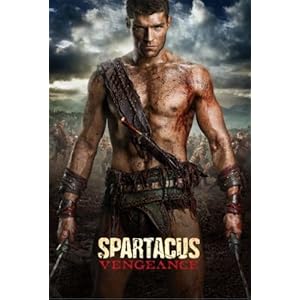
SPARTACUS: VENGEANCE--THE COMPLETE SECOND SEASON -- DVD Review by Porfle


Originally posted on 8/25/12


When we last saw him at the end of season one, Spartacus had just ignited a bloody slave revolt against the house of Batiatus, supplier of gladiators to the arenas in Rome.  Now, with Anchor Bay's 3-disc DVD set SPARTACUS: VENGEANCE--THE COMPLETE SECOND SEASON, we join the slave rebellion already in progress as Spartacus struggles to unite his disparate followers in a common purpose over the span of ten incredibly action-packed episodes. 

The biggest change since SPARTACUS: BLOOD AND SAND--THE COMPLETE FIRST SEASON, of course, is the absence of the late, lamented Andy Whitfield in the title role.  Newcomer Liam McIntyre takes some getting used to but eventually suffices as a replacement, even though watching him in the role is a little like watching George Lazenby in ON HER MAJESTY'S SECRET SERVICE and wishing it were Sean Connery instead.  Also taking some getting used to is Cynthia Addai-Robinson as Naevia, awkwardly replacing Lesley-Ann Brandt as the love of Crixus' life. 

Manu Bennett as arena champion Crixus and Peter Mensah as former gladiator trainer Oenomaus resume their roles with all the usual soulful intensity.  There's an exciting subplot involving Crixus' attempt to free Naevia from the mines to which she's been banished, and a series of flashbacks shows us a young Oenomaus being discovered and groomed as a gladiator by the elder Batiatus, after which we see him in his current fugitive state, fighting incognito in the horrific arena known as "the pit." 

Craig Parker returns as Spartacus' arch-enemy Glaber, now a Praetor sent by Rome to quell the rebellion.  His expectant wife Ilithyia, once again played to perfection by Viva Bianca, is in her usual fine form as the ultimate scheming status-seeker who will do anything to advance herself.  Reluctantly taking up residence in the abandoned house of Batiatus, they're shocked to find his wife Lucretia (the always awesome Lucy Lawless), thought dead after the slave revolt, still alive and haunting the place like a ghost. 

Now seemingly out of her mind, Lucretia becomes Ilythyia's closest friend and conspirator even as her eyes flicker with their own ominous secret intent.  The two actresses play their roles like virtuosos, reveling in a heady concoction of sexually decadent melodrama and two-faced political intrigue.  These are soap opera machinations on a gut-wrenching level, often with a visceral intensity that makes "The Sopranos" look relatively tame.

Things get really interesting when Ilithyia plans to dump hubby Glaber for the up-and-coming Praetor Varinius (Brett Tucker), forcing Glaber to take drastic action.  His reaction to Ilithyia's later kidnapping by Spartacus' forces is to take beautiful young Seppia (Hanna Mangan Lawrence) into his bed after murdering her brother, with whom she had incestuous relations.  And lurking in the background all the while is the traitorous Ashur (Nick Tarabay), now more monstrous than ever as he schemes to take revenge against his former gladiator brothers and acquire both Batiatus' house and his wife Lucretia as rewards for service to Glaber.

Meanwhile, Spartacus and his followers continue to cut a swath of violence across the countryside in a series of battles which, more than anything, give the show its distinctive look and appeal.  Filmed in highly impressionistic, almost fetishitic style, these incredibly entertaining action scenes are often slowed almost to a halt in order to highlight certain violent tableaux as though they were ornately-rendered comic book panels drawn by the likes of Jim Steranko or Barry Smith.

Blood is the main motif here, and it would be an understatement to say that there's buckets of it.  Even optical-wipe transitions between scenes are often composed of splashes of blood.  Gorehounds will be in seventh heaven as the screen is filled with more blood 'n' guts than most horror movies, including one sword slash by Spartacus that ends an altercation with a rowdy German ex-slave in jaw-droppingly decisive fashion, and another incident in which Naevia proves that it is indeed difficult to remove a man's head with a single sword thrust.  Crucifixions, eviscerations, and other atrocities abound, many committed by the Roman upper class for their own amusement or as an example to others.  

Of these ten episodes, two stand out as especially thrilling.  The first is episode five, "Libertus", in which captives Crixus and Oenomaus are to be executed in the arena while Spartacus sets a plan into motion not only to rescue them but also to bring calamity on a scale that will shock both the Romans in attendance and the viewers watching it all on TV.  When a group led by Spartacus' current love interest, the warrior woman Mira (Katrina Law), sets fire to the bowels of the arena, it starts a chain reaction of destruction that gives the show's SPFX team a real workout.  "Libertus" also heralds the return of Dustin Clare as Gannicus, the most memorable character from the prequel mini-series SPARTACUS: GODS OF THE ARENA.

The other episode is, naturally, the season finale, "The Wrath of the Gods", which features not only the epic confrontation between the forces of Spartacus and Glaber but also the startling resolution to the whole Ilithyia-Lucretia business that's had us guessing throughout the previous episodes.  Other subplots are resolved in highly dramatic fashion as well, as the season is drawn to a satisfying close.

The 3-disc DVD from Anchor Bay is in 1.78:1 widescreen with Dolby 5.1 English sound and Spanish mono.  Subtitles are in English and Spanish.  Extras include seven behind-the-scenes featurettes, a blooper reel, a teaser for season three's SPARTACUS: WAR OF THE DAMNED, and a DVD-ROM extra, chapter one of "Spartacus: Swords and Ashes."  The Blu-Ray also has nine extended episodes plus audio commentaries.

With its fierce, furious battles between gladiators, soldiers, and slaves, SPARTACUS: VENGEANCE--THE COMPLETE SECOND SEASON is intoxicatingly action-packed--that's a given.  But it also overflows with giddily decadent drama that had me rooting for one human monster over another and celebrating the utter deviousness of whoever manages to outwit their equally monstrous opponent.  Some developments--such as Ilithyia's surprisingly pointed handling of a romantic rival--go beyond shocking into being downright flabbergasting.  This is just the kind of thing I want from a show like this and it really delivers.


Share/Save/Bookmark

Sunday, March 3, 2024

SPARTACUS: BLOOD AND SAND--THE COMPLETE FIRST SEASON -- DVD Review by Porfle


Originally posted on 9/14/10


The Starz original series "Spartacus: Blood and Sand" is a heady mix of extremely violent action, gore, nudity and softcore sex, riveting drama, and even romance.  There's something for everybody here, but especially for people who love movies like 300 and GLADIATOR.  SPARTACUS: BLOOD AND SAND--THE COMPLETE FIRST SEASON (2010) contains thirteen powerful episodes on four discs, and, if you're like me, you'll devour the whole heady concoction as fast as you can.

It's 73 B.C., and Rome has just asked the men of Thrace for help in their war against the Greeks.  Of course, Thracian warrior Spartacus (a perfectly-cast Andy Whitfield) and his men get screwed over by the snide young Roman commander Claudius Glaber (Craig Parker), who decides to pursue glory elsewhere while Thracian villages are pillaged.  After a bloody confrontation with the Romans, the surviving Thracians find themselves sentenced to fight and die in the arena for the entertainment of jaded Roman citizens.  But Spartacus manages to defeat all six of his burly, sword-slinging executioners and becomes a hero.

Batiatus (John Hannah, THE MUMMY) and his wife, Lucretia (Lucy Lawless, "Xena: Warrior Princess"), who are in the business of training gladiators for sport, see their new prize Spartacus as a means of gaining political power and social advancement.  But as devious and underhanded as they are, there are always others, such as Glaber's venomous wife Ilithyia (Viva Bianca) and Batiatus' backstabbing competitor Solonius (Craig Walsh Wrightson), whose own unscrupulous schemes threaten to destroy them.  Meanwhile, Spartacus endures grueling gladiator training under the whip of the invincible Doctore (Peter Mensah, 300) while reigning arena champion Crixus (Manu Bennett) becomes his bitter enemy.


I've barely scratched the surface of all the various subplots and machinations that crackle throughout this show's first season.  Spartacus' one goal is to make himself so valuable to Batiatus as a gladiator that he may someday win freedom for his beloved wife Sura (BITCH SLAP's Erin Cummings), who was sold into slavery by Glaber.  Batiatus and Lucretia are so supremely vain, selfish, and cruel that their unending villainy becomes fascinating, especially with Hannah and Lawless playing the roles with such reptilian relish.  In his own way, Batiatus is as ruthless as Don Corleone or Tony Montana during his "come-up", and his story sometimes has a GODFATHER B.C. feel to it.  Viva Bianca's spoiled, condescending Ilithyia is equally vile. 

The plight of their hapless slaves is the heart of the story--even our hero's bitter rival Crixus, who might have been depicted as a standard bad guy, gains our sympathy with his desperate love for Lucretia's servant girl Naevia (Lesley-Ann Brandt), which is complicated by the fact that Lucretia has chosen him as her virile sexual slave.  Spartacus' friend Varro (Jai Courtney) fights in the arena to repay his debts so that he can rejoin his wife and son, but fate conspires to keep them apart.  Spartacus himself will endure a series of tragic betrayals which will reveal to him the true monstrous nature of his Roman captors and eventually force him to contemplate a dangerous and deadly slave revolt.

While the slaves eke out their meager existence, the Romans wallow in decadence and perversion.  There's enough nudity (much of it full-frontal) and simulated sex in these episodes to equal a month's worth of Skinemax.  Some couples go at it in artistically-lensed romantic fashion, as in the case of Spartacus and Sura or Crixus and Naevia, while the Romans crudely indulge every aspect of their carnal lust with unwilling slaves.  Naturally, the occasional full-blown orgy pops up now and then.  There are some great-looking women in this cast--"Xena" fans will particularly enjoy the frequent views of naked Lucy Lawless.  For those who fancy the male physique, there's tons of bulging beefcake on display wherever you look.


With its sumptuous cinematography and imaginative direction, the show is like a graphic novel come to life.  (I was often reminded of Barry Smith's classic "Conan" comics from the 70s.)  Frequent use of green screen also lends a storybook quality.  Much of the battle action is visually stylized and accentuated by sudden moments of extreme slow-motion that look like extravagantly-rendered comic panels.  As for the violence itself, it is extremely graphic as heads, limbs, and entrails go flying and the frame is often awash in great crimson splashes of blood.  The staging of the numerous fights is outstanding, the action gritty, hard-hitting, and realistic. 

Even out of the arena, the shocking violence continues with a combination crucifixion-castration and an unexpected murder scene in which one woman impulsively bashes another woman's head to an unrecognizable pulp against a stone floor.  The season comes to a blood-drenched climax in a deadly frenzy of killing that is titled, fittingly enough, "Kill Them All."

The four-disc DVD set from Anchor Bay is 1.78:1 widescreen with Dolby Digital 5.1 sound and English and Spanish subtitles.  Several episodes feature cast and crew commentary tracks.  There are nine behind-the-scenes featurettes exploring various aspects of the production.  The discs are encased in lavishly-illustrated book form, the only drawback being that it's a bit difficult sliding them in and out of their page slots without getting fingerprints on them. 

Often the curse of watching a single season of a great television serial is that you're left hanging at the end.  With SPARTACUS: BLOOD AND SAND--THE COMPLETE FIRST SEASON, we may not get the full story of how he eventually leads a massive slave rebellion against the Romans and the tragic fate that awaits him at the end of his quest, but what we do get ends, satisfyingly enough, with a big, bloody bang.  This show is what you get when you cross a riveting, exquisitely-produced story with a meat grinder.


Share/Save/Bookmark

Saturday, March 2, 2024

SPARTACUS: GODS OF THE ARENA -- DVD Review by Porfle


Originally posted on 8/26/11


With the bloody slave revolt and slaughter of their Roman masters which ended SPARTACUS: BLOOD AND SAND with such a resounding bang, it was hard to imagine that a prequel about earlier events not even involving the title hero would amount to much.  SPARTACUS: GODS OF THE ARENA (2011), however, proves a worthy follow-up that almost matches its predecessor.

Not only do we already know that Batiatus (John Hannah), who runs a gladiator-training school (or "ludus"), and his equally scheming and ambitious wife Lucretia (Lucy Lawless), are dead, but we're shown how it happened in a brief recap of the earlier season finale.  Next thing we know, it's years earlier, and Batiatus has just begun his quest to become top dog in his chosen field amidst a host of more powerful and influential men (including Jeffrey Thomas as his own domineering father, Titus, who will make a highly unwelcome return from exile to take over).

Hannah and Lawless delight in playing this scheming couple united in their lust for power and social status, and we find ourselves rooting for them since they're often the lesser of many evils.  These include Tullius (Stephen Lovatt) and his young toady Vettius (a wonderfully supercilious Gareth Williams), vile competitors who pull the city's strings and run their business like an ancient version of the Mafia.  In fact, much of the brutal retribution, terror tactics, and ruthless strategies that result from Batiatus' rivalry with them are reminiscent of THE GODFATHER and GOODFELLAS, and often result in the unexpected and violent deaths of major characters.


As in "Upstairs, Downstairs", the activities of the privileged class are contrasted with the trials of their indentured inferiors--in this case, the gladiators and other household slaves.  Chief among these is Gannicus (Dustin Clare), greatest of all gladiators despite his cavalier attitude.  Much of the series involves a tug-o-war over him by Batiatus and Tullius, each of whom want him as their prized gladiator in the grand new arena that's under construction.  A somewhat superficial character at first, Gannicus soon reveals a depth that makes his story the most compelling one of all and leads to the season's emotional climax.

Back from last season is Peter Mensah as Oenomaus, not yet the ludus' Doctore (head trainer) as the position is filled by an almost unrecognizable Temuera "Jango Fett" Morrison.  His beautiful wife Melitta (Marisa Ramirez) is Lucretia's personal slave and struggles against a doomed mutual attraction to Gannicus.  Barca (Antonio Te Maioha) returns along with the cowardly Ashur (Nick Tarabay), who demonstrates why he was so reviled in the previous series.  Of particular interest is the origin of Crixus (Manu Bennett), who will one day be champion but is now seen as a lowly recruit fighting to stay alive and gain stature in the eyes of his peers.

With all of this going on, there's never a dull moment in SPARTACUS: GODS OF THE ARENA.  Batiatus and Lucretia's devious machinations are an endless source of amusement, with Lucretia's recently-widowed friend Gaia (Jaime Murray) aiding their cause in hopes of landing a man with a fat purse while renewing lustful intentions toward Lucretia herself.  This leads to some of the show's many softcore sex scenes, which erupt with such eye-popping regularity that it's like a month's worth of "Cinemax After Dark" crammed into each episode. 

While the gladiators enjoy their post-arena "rewards", jaded, repellent Romans indulge in perverse sexual scenarios with hapless slaves.  Lucy Lawless fans are apt to freak out during Lucretia's frenzied lesbian couplings with Gaia, with an enthusiastic Batiata squeezing in for the occasional threesome.


Aside from the carnal aspects of the series, however, the main attraction is what goes on in the arena.  Amidst frenzied crowd reactions (people either cheer like they're at a rock concert, flash their boobs at the gladiators, fight amongst themselves, get splattered with blood, or screw), each bone-crushing battle between these bloodthirsty behemoths is a heady concoction of wildly stylized visuals, eye-pleasing SPFX, and imaginative staging.  Slow-motion is used very well to accentuate and prolong particular moments that would normally pass too quickly to be fully savored. 

A street brawl between one of Vettius' men and a blindfolded Gannicus (the result of a poorly-worded challenge taken literally) is an early highlight.  The older, smaller fight venue provides a more intimate setting for most of the clashes seen here, with spectators being liberally doused with errant gore or even finding themselves minus a few fingers.  The inaugural games of the massive new arena end the final episode with a spectacular free-for-all pitting all of Batiatus' men against those of his two-faced friend Solonius (Craig Walsh Wrightson) in a battle royale. 

Here, as in every other episode, the gore factor is sky-high--H.G. Lewis himself never imagined the graphic carnage on display thanks to skillful use of both practical effects and CGI.  The screen is splattered with geysers of blood, severed limbs, and jaw-dropping (in one case, literally) acts of bodily harm.  Gorehounds will be in hemoglobin heaven. 

The look of the show is a non-stop wallow in lush visuals with so much detail that I often had to rewind to catch dialogue I'd missed while taking it all in.  Speaking of dialogue, these characters are such serious potty mouths--every other sentence contains the word "cock" and/or crude references to various bodily functions--that listening to them talk is consistently amusing.  In one scene, a drunken Gannicus favors us with the song "My Cock Rages On", while elsewhere the prospect of having sex with him prompts Gaia to remark, "One moistens at the very thought."  All our other favorite four-letter words are generously and creatively featured as well.

The 2-disc, six-episode set from Anchor Bay and Starz is in 1.78:1 anamorphic widescreen with Dolby 5.1 sound and subtitles in English and Spanish.  Extras consist of ten featurettes focusing on behind-the-scenes, weapons, costumes, SPFX, post-production, production design, and other aspects of the show.  Also included is a ComicCon panel session, "On Set With Lucy Lawless", and bloopers.

A must for anyone who enjoyed the earlier saga, SPARTACUS: GODS OF THE ARENA is like crack for fans of sex, violence, and gore done with impeccable production values and no-holds-barred storytelling.  Now if only Andy Whitfield can return from his unfortunate illness so we can resume the story of Spartacus himself. 


Share/Save/Bookmark

Friday, March 1, 2024

CAMELOT: THE COMPLETE FIRST SEASON -- DVD Review by Porfle

Originally posted on 8/27/11


One of these days I'm going to sit down and read the original legend of King Arthur just so I'll be able to sort out all the differing cinematic versions of the tale.  It certainly inspires filmmakers to come up with their own interpretations, as we've seen in everything from John Boorman's stunning EXCALIBUR (still my favorite King Arthur movie) to the recent TV series "Merlin."  I guess the good thing about this is that instead of getting the same old rehash every time, with all the elements dutifully falling into place as expected, we're treated to some surprising retellings each with its own unique spin.  "Camelot", a Starz original series, is one of the latest and most interesting of these.

During the ten-episode saga of the DVD set CAMELOT: THE COMPLETE FIRST SEASON (2011) we see an origin story stripped of much of the usual pomp and wizardry, grounded in the grimy, oppressive atmopshere of a Dark Ages-era England struggling to climb out of destitution and disarray.  The murder of King Uther Pendragon prompts the wizard Merlin (Joseph Fiennes, SHAKESPEARE IN LOVE) to reveal the existence of Uther's bastard son, Arthur, who has been raised by foster parents since being taken from his mother Queen Igraine (Claire Forlani) at birth.  Now barely out of his teens, Arthur (Jamie Campbell Bower of the "Twilight" and "Harry Potter" films) is suddenly informed that his destiny is to rule England as heir to the Pendragon throne, with Merlin as his manipulative mentor.

Complicating things is Arthur's half-sister Morgan Pendragon, who believes herself the rightful heir to the crown and will stop at nothing to get it.  With her piercing eyes and haughty, intimidating presence, CASINO ROYALE's Eva Green steals the show as Morgan and is without a doubt its most watchable asset.  She plays the role with such intensity and obvious relish that we almost sympathize with the evil Morgan as she plots against Arthur within the walls of Pendragon castle and conspires to turn his subjects against him.


No gleaming fortress of silver and gold, the Camelot in which Arthur and his men take up residence is a crumbling, overgrown ruin overlooking the sea.  Everything we take for granted in an Arthurian film is developed from the ground up here, including Arthur himself.  As played by Bower, he initially has more in common with Jeff Spicoli than a royal personage and comes off as the sort of arrogant horndog that you might have hated in high school.  It's a long, tough character arc for this callow Arthur before he begins to gain our respect (roughly around the last couple of episodes), especially when he can't keep his hands, among other things, off the bride-to-be of his most gallant warrior, Leontes (Philip Winchester).  The lady in question, of course, is Guinevere (Tamsin Egerton), burdened by guilt after a wedding-day roll on the beach with Arthur.

Playing the role of Merlin even more offbeat than EXCALIBUR's Nicole Williamson, a bald and beardless Joseph Fiennes surprises by being smaller-than-life and eschewing sorcery.  The dark arts, we find, are both addictive and hazardous to one's health, forcing Merlin to rely on his wits more than we're used to.  Fiennes' interpretation of the character takes some getting used to but he began to grow on me after a few episodes.  His counterpart in sorcery, the scheming Morgan, uses her powers with much less restraint and, while suffering the consequences, manages to create a good deal of havoc in Camelot. 

"Camelot" is in no hurry to plunk all the pieces of the story as we know it into place or to reveal them in ways we expect.  Rather than portraying a legend, it depicts gritty, realistic events that will become legend in the retelling.  This is particularly true when we see how the tales of the sword in the stone and the lady of the lake are handled, with Merlin often twisting the facts and making up future history as he goes along. 

With verdant Irish locations, plus great sets and production design, the series looks fantastic.  It does, however, resemble the sort of semi-juvenile television fare seen so often in recent years, yet with occasional attempts at a more adult sensibility that are often jarring.  While most of the episodes would be suitable viewing for kids, there are several softcore sex scenes which seem out of place, especially when, during their romantic beach rendezvous, Arthur drops his pants and starts humping Guinevere like a dog.  And while I must admit finding it quite nice to finally get a look at Eva Green's outstanding assets, it really isn't necessary for "Camelot" to try and come off as adult-oriented entertainment along the lines of the recent "Spartacus" series and indeed sacrifices some of its sense of wonder because of this.


A definite plus is the lack of moronic comedy relief or bad-CGI monsters, with the supernatural elements kept to a more believable minimum and no hinky-looking dragons popping up to pad out the scripts.  Dialogue is modern-sounding but rarely overly so.  The stories are a bit episodic but the overall story arc is enough to bind them together. 

Supporting characters are finely cast, with Sinéad Cusack a standout as Morgan's devious cohort, Sybil, an evil nun riding the aspiring Queen's coattails to the throne, and Claire Forlani as Arthur's true mother, Igraine.  Forlani has a field day in the episode in which Morgan takes on Igraine's physical appearance to cause unrest in Camelot.  Guest stars include Sean Pertwee as Arthur's foster father Ector and James Purefoy as one of Morgan's early allies against Arthur.

While there isn't an abundance of action, "Camelot" does have a number of exciting sword battles that are well-executed.  The season finale, "Reckoning", features a vastly outnumbered Arthur and his men desperately fighting off Morgan's soldiers even as, back in Camelot, she is on the verge of ascending the throne.  Major characters die, and there are enticing hints of what's to come including a foreshadowing of the imminent appearance of Lancelot (who, as we already know, will give Arthur a taste of his own medicine in the heartbreak department). 

There are few nagging cliffhangers as such (I hate season cliffhangers), but one of the most intriguing events in the Arthurian saga is wonderfully and surprisingly depicted in the last scene, setting us up for season two with keen anticipation.  We're also left with the initial core of Arthur's brave knights along with the first wedge of the fabled round table.

The three-disc set from Anchor Bay and Starz is in 1.78:1 anamorphic widescreen with Dolby 5.1 sound and subtitles in English and Spanish.  Extras consist of eight featurettes including behind-the-scenes, character profiles, scene breakdowns, and bloopers. 

As an addition to the host of King Arthur movies and TV series, CAMELOT: THE COMPLETE FIRST SEASON holds its own while not quite slashing its way to the front of the pack.  Fans of the legend will definitely want to give it a look.


Share/Save/Bookmark