HK and Cult Film News's Fan Box

Showing posts with label Animation. Show all posts

Monday, September 28, 2026

RWBY: VOLUME 5 -- Blu-ray Review by Porfle


 Originally posted on 5/28/18


When I was a kid, it was Santa Claus and the county fair that gave me some of my best annual thrills.  Now, it's the disc release of each season of Rooster Teeth/Cinedigm's mind-candy American anime series, "RWBY", the continuing adventures of those four multi-hued heroines Ruby Rose (red), Weiss Schnee (white), Blake Belladonna (black), and Ruby's sister Yang Xiao Long (yellow)--the latest of which being the 2-disc Blu-ray, RWBY: VOLUME 5. 

Here's the backstory: after a catastrophic war that almost destroyed everything, the world of Remnant has been divided into four kingdoms dedicated to maintaining peaceful relations.  Also drawing them together is a common enemy, the Grimms, a never-ending army of terrifying supernatural beasts that constantly attack both urban centers and outlying villages, drawn by negative emotions such as fear, panic, and hatred. 

The main line of defense consists of hunters and huntresses, those born with various super-powers who train from a young age at special academies until ready to take on the Grimms.  This is where we first met Team RWBY shortly before their academy was attacked and virtually destroyed by a combination of Grimms and a group of terrorists known as White Fang, made up of human-animal hybrids called Faunus under the command of a secret cabal of sinister villains.


As season five commences, the mixed group of RWBY and JNPR (Juniper) team members have completed their arduous journey to the neighboring land of Mistral and its Haven Academy, in a quest to gather more huntsmen and huntresses for the battles to come.  But all is not well--the academy has been infiltrated by evil forces of both White Fang and the dreaded sorceress, Salem, and most of its best warriors murdered.

Meanwhile, Ruby's sister Yang is not only dealing with her new robot arm but must confront her own mother, Raven, now a renegade criminal with very dark dealings involving Salem and her minions.  These include vengeful Cinder and some of the worst members of White Fang, who are now targeting Blake and her family because of their efforts to establish peaceful relations between the Faunus and the human race.

It may sound complicated, but darn if all this drama and intrigue isn't just as riveting as the many intense battle sequences that occur during these fifteen serial-like chapters.  The characters are all fascinating and beautifully conceived, with scintillating dialogue that's either richly dramatic or breezily funny. 


This time there is, in fact, much more personal and political intrigue, now that more of a foundation for such plot complications has been gradually established over the previous seasons and our increased familiarity with the characters makes deeper explorations of them possible.  Both good and bad guys this time around are three-dimensional and increasingly interesting to observe. 

As always, the looks of the series is absolutely gorgeous--even moreso, now that the technology used in creating the digitally simulated "cel animation" look of the show has gotten better and better over time.  Never has "RWBY" looked this gorgeous, richly colorful, and stunningly designed.  The result is often breathtaking, and always a treat for the eyes.

As for the battles themselves, they're choreographed and executed for maximum drama and excitement, with new species of Grimm as well as new human and Faunus opponents.  In an early episode, Weiss takes on a swarm of Grimm resembling giant hornets who attack the transport she's using to get to Mistral.  In the thrilling finale, all the forces of good and evil clash in a prolonged battle that spans several chapters and had me on the edge of my seat the whole time.


The 2-disc Blu-ray set from Rooster Teeth/Cinedigm contains the 15-chapter saga on one disc and special features on the other.  These include exciting character studies (deleted scenes), a "Five Years of RWBY" series recap, a collection of featurettes ("CRWBY") detailing various elements of the show's creation, and a manga booklet. Total story running time: 244 minutes.  Widescreen with English Dolby 5.1.  English captions are available.

As always, RWBY: VOLUME 5 kept me thoroughly, deliriously entertained and left me wanting more.  So while my younger friends are awaiting Santa's return, I'll be looking forward to my next annual wallow in the incredible adventures of my current favorite cartoon heroes. 

Release date: June 5, 2018


Share/Save/Bookmark

Sunday, September 27, 2026

RWBY: VOLUME 4 -- Blu-ray/DVD Review by Porfle


Originally posted on 6/5/17


If you're a RWBY fan, then you're already stoked for the next installment in the series as presented in this Blu-ray/DVD combo from Rooster Teeth and Cinedigm.  If not, then RWBY: VOLUME 4 (2017) should be a good introduction to those four color-coordinated heroines Ruby Rose (red), Weiss Schnee (white), Blake Belladonna (black), and Ruby's sister Yang Xiao Long (yellow).

Long story short: after a catastrophic war that almost destroyed everything, the world of Remnant has been divided into four kingdoms dedicated to maintaining peaceful relations.  Also drawing them together is a common enemy, the Grimms, a never-ending army of terrifying supernatural beasts that constantly attack both urban centers and outlying villages, drawn by negative emotions such as fear, panic, and hatred. 

The main line of defense consists of hunters and huntresses, those born with various super-powers who train from a young age at special academies until ready to take on the Grimms.  This is where we first met Team RWBY shortly before their academy was attacked and virtually destroyed by a combination of Grimms and a group of terrorists known as White Fang, made up of human-animal hybrids called Faunus under the command of a secret cabal of sinister villains.


Volume 4 opens after the previous season's terrific climactic battle has left all four kingdoms in chaos and the RWBY team scattered.  Weiss has returned to her palatial home where her stepfather runs the family "Dust" business in decidedly shady fashion and all is definitely not well.  Blake has also returned to her parents estate on the Faunus continent accompanied by Sun, a boisterous young fellow with an eye for her.  Ruby's sister Yang is still recovering from the loss of both her right arm in the battle and her self-confidence and resolve, which the girls' father is doing his best to restore. 

The main thrust of the season's story, however, is the cross-country trek of Ruby and her friends Jaune, Ren, and Nora (formerly of team JNPR until the tragic death of the valiant huntress Pyrrha) to reach the kingdom of Mistral.  It's one of those grand, heroic journeys filled with much self-discovery and character revelations, not to mention intense life-or-death battles with some of the largest, fiercest, and most horrific Grimms that we've seen thus far. 

The route takes them through the vast wilderness between populated areas and also through various secluded villages, some of which need their help vanquishing particularly hostile Grimms, and others which have already been utterly destroyed by either Grimms or marauding bandits.  One smoking ruin prompts Ren to recall his history as a boy whose parents were killed before his eyes by a bloodthirsty beast, and how he assumed responsibility for another lost soul, the destitute orphan Nora.


While Yang struggles to regain her confidence and learn how to use her new robotic arm, Blake and Sun's ocean cruise to the Faunus continent is both incredibly scenic--the show is pictorially intoxicating as usual--but highlighted by a spectacular battle with a flying sea dragon.  Once they've reached their destination, the drama continues with Blake's parents clashing with the socially-awkward Sun as well as two highly-suspicious emissaries from the White Fang group.

As usual, we're left with a cliffhanger ending to keep us on edge until the next season begins, with Ruby's team reaching Mistral but discovering that much is not as they expected.  Meanwhile, the main villains of the saga, led by mysterious white goddess Salem and her evil underlings (including last season's traitorous huntress Cinder) keep a low profile and bide their time for a later, more catastrophic strike, with only the near-invincible madman Tyrian directly engaging our heroes in fierce battle during their journey.

Through it all, RWBY VOL. 4 carries on this sharply-written series' tradition of scintillating dialogue and character interactions that make the less action-packed segments just as riveting as the frentic battles--which, as usual, are both lightning-paced and imaginatively staged, striking just the right balance between humor (especially with the girlishly excitable Nora) and dead seriousness, as when a key member of Ruby's group is critically injured.


Visually, the series is a feast of colorful CGI settings and pleasingly executed motion-capture figures that move well and are exquisitely designed. While I still prefer cel animation in my cartoons, I gladly make an exception when a three-dimensional CGI simulation of old-school anime such as this is rendered to such lavish and eye-pleasing effect. Voice performances and music are outstanding as well.

The "It's Also a Gun" Special Edition Blu-Ray/DVD Combo Pack contains both a Blu-ray disc and a DVD, along with a collectible Crescent Rose lenticular card featuring Ruby's distinctive scythe-shaped weapon ("It's also a gun").  Also available in Blu-ray/DVD and DVD editions.  Total story running time: 190 minutes.  Widescreen with English Dolby 5.1.  English captions are available.

Bonus featurettes include: "World of Remnant: Kingdoms", "World of Remnant: The Great War", "World of Remnant: Schnee Dust Company", "World of Remnant: Faunus", "World of Remnant: Between Kingdoms", "Behind the Scenes: A Grimm Introduction", and "Behind the Scenes: RWBY 4 Production Diary", plus audio commentaries. 

With RWBY: VOL. 4, this series remains one of my favorite and most eagerly-anticipated of any genre adventures being created today.  While not quite as action-intensive as the previous season, this one more than compensates with a richness of story and character that lends even greater impact to the slam-bang battle sequences.


Buy it from Rooster Teeth

Read our original coverage

Street date: June 6, 2017

http://www.cinedigm.com/                                      
http://www.facebook.com/cinedigm
http://www.twitter.com/cinedigm                             
http://www.youtube.com/cinedigm


Share/Save/Bookmark

Saturday, September 26, 2026

RWBY: BEACON, VOLUMES 1-3 (STEELBOOK) -- Blu-ray Review by Porfle


 Originally posted on 10/2/16


The creative team at Rooster Teeth and Cinedigm (the creators of RED VS. BLUE) have really outdone themselves with the stunningly beautiful and exciting American anime epic RWBY: BEACON, VOLUMES 1-3, the first major story arc in the ongoing series.  In fact, watching it may have gotten me so spoiled that from now on, few other examples of this k‌ind of animated adventure will live up to its level of wonderfulness. 

If that sounds like an exaggeration, it's because I tend to do that when I'm having a fantastic time.  I reviewed the third volume of this saga on its own earlier this year (which you can read HERE), and even without the first two as backstory it wasn't long before I was caught up in the sweeping tale of a futuristic world called "Remnant" (whose now-peaceful countries are the remains of a cataclysmic world war) in which super-powered teens train at academies to become huntsmen and huntresses who protect the world from evil.

This evil consists mainly of roving packs of huge, vicious animal-monsters known as Grimms.  However, human and semi-human villains plot against the forces of good as well, some of them even posing as students and infiltrating Beacon academy where our favorite superheroes-in-training strive to take their places as guardians of the world.


The main team of wannabe huntresses is known as RWBY (pronounced "ruby") whose color-coded members consist of the childlike, excitable Ruby Rose (red), ice-queen heiress Weiss Schnee (white), mysterious, moody Blake Belladonna (black), and Ruby's outgoing older sister Yang Xiao Long (yellow). Like everyone else at Beacon, each has her own individual super-power and preferred weaponry.  

At first they seem to be the usual girly-girls we find in such series as "K-On"--they're funny and sometimes a little ditzy in addition to being great athletes and warriors, and not above the occasional bout of slapstick comedy--but as the events of the story progress they and their classmates reveal many levels to their characters as the various interpersonal conflicts become progressively deep and emotionally resonant, and often carry over onto the field of battle. 

The sharply-written script is filled with snappy, natural-sounding dialogue that avoids being dumb or stilted. What's more, the large cast is loaded with appealing characters (the voice acting is superb), each of whom is fascinating in his or her own way.


Since this is a story about teens discovering themselves and each other, even the "cooler" and more seemingly invincible students get to reveal their sensitive, vulnerable sides as well as a few insecurities that are helped along by the understanding and empathy of their peers. 

Naturally, all of this teamwork, friendship, and acceptance contributes to a general feelgood ambience that's just pure fun.  There's even an impromptu group dance during the charming ballroom dance sequence that rivals the one in DEAD KIDS for pure uninhibited joy.

In sharp contrast, it's the somber, fiercely dramatic and often action-packed scenes where RWBY really goes into overdrive.  Consistently dazzling displays of imaginative fight choreography, brilliant direction, an excellent musical score, and eye-pleasing design shatter monotony and keep each new battle as fresh, thrilling, and unpredictable as the last.  The gorgeous candy-coated visuals have the look of vibrant cel art that's been brought to life with finely-rendered computer animation and motion-capture. 


Battle sequences come at the viewer at a breakneck pace that's edited rapid-fire but still easy to follow.  The battle between the young heroes and two terrible Grimms--a giant vulture and a monster scorpion--within the ruins of an ancient temple during a training mission is one of the most breathtaking and spectacular displays of animation of ANY kind that I've ever seen. 

Yang's deflating remark at the end ("Well...that was a thing") is just the sort of dead-on attitude of serious fun that permeates this entire collection.   One incredible action sequence follows another, including a furious competition between the different training academies which then becomes a spectacular and sustained battle royale when the villains, led by ultra-bad-girl Cinder and juvenile-delinquent-deluxe Torchwick, launch their final attack on Beacon. 

For me, a giddy feeling of "this is gonna be good!" preceeds each fight, which never disappoints. It's the kind of all-out wonderful genre goodness that makes me glad I became a nerd in the first place.  If I were still a smoker I'd have had to light up when it was over.


As I said in my review of volume three: "I don't often see a story escalate from colorful action-filled fun to catastrophic disaster epic the way RWBY: VOLUME 3 effortlessly does...this is great anime entertainment that left me wanting more."

The 3-disc Blu-ray set from Rooster Teeth and Cinedigm is packaged in a cool limited-edition steelbook case with plastic slipcover.  Total feature running time is 7 hours and 19 minutes.  There are no subtitles for disc one, but discs two and three contain English subtitles for the deaf and hard of hearing. Each disc is generously endowed with commentary tracks, informative behind-the-scenes featurettes, character profiles and other backstory info, trailers, and other goodies.

While some hardcore anime fans tend to be more blase' about it (according to various forum posts), this is some of the best anime I've ever seen.  Heck, it's one of the best things of ANY kind I've ever seen.  Watching it gives me the same feeling of exploring something new and amazing that I had the first time I ever saw AKIRA.  And while that may only be my immediate excitement over it talking, it sorta tells you just how exciting it is.  RWBY: BEACON, VOLUMES 1-3 is spectacular in a way that no other medium could express, and watching it is pure, exhilarating entertainment.


Share/Save/Bookmark

Tuesday, September 22, 2026

TEKKEN: BLOOD VENGEANCE -- DVD Review by Porfle


Originally posted on 11/9/11


Sometimes a movie makes me really glad that CGI was invented, and TEKKEN: BLOOD VENGEANCE (2011) is one of those movies.  This photo-realistic digital action epic is the kind of sweet eye candy that makes my eyeballs feel good.

Xiaoyu and Alisa are two high school girls who both have a crush on introspective loner Shin, who's brawny and handsome but troubled, maybe even suicidal.  What the girls don't know is that Shin is the sole survivor of a genetic experiment and his rapidly mutating body is sought by two arch rivals, Mishima Zaibatsu and the sinister G Corporation.  What Shin doesn't know is that Xiaoyu is an unwilling agent of G Corporation and Alisa is a humanoid robot from Mishima Zaibatsu, and they're both under orders to locate him.

Behind all of this, as Tekken fans will have already guessed, is the blood-feuding Mishima clan.  Jin, the youngest, is the head of Mishima Zaibatsu while his father and mortal enemy Kazuya runs G Corporation.  Kazuya, with the help of evil warrior babe Anna Williams, hopes that isolating Shin's "Devil Gene" will help him control his own super powers, but Jin and his beautiful assistant Nina Williams (Anna's sister) are determined to thwart him by getting to Shin first.  Pulling everyone's strings in the background is mean old family patriarch Heihachi Mishima, whose intentions are even more insidious.


The film's opening, which resembles something out of AKIRA, thrusts us right into the action with a motorcycle vs. big rig collision on the freeway which leads to fierce hand-to-hand combat between the Williams sisters.  Here, we get an indication of how good the motion-capture animation is going to be in this movie, with the impossibly-stacked ladies literally looking like living dolls. 

It only gets better when Xiaoyu and Alisa meet on their high school campus and begin their friendly rivalry over Shin.  Sumptuously rendered backgrounds bursting with vivid color and detail are realistic yet fanciful at the same time, providing the backdrop for some gorgeous character design.  Faces and body language are highly expressive and nuanced, with little of the "uncanny valley" effect seen in other virtual characters. 

The direction, editing, and virtual camerawork are outstanding as well, as the filmmakers are able to meticulously construct fight scenes in a way that live action can rarely achieve.  The first really awesome example of this occurs when Alisa's programming forces her into battle against Xiaoyu in a thrilling and visually dazzling sequence.  A mix of lightning-fast moves and slow-mo are easy to follow even as the action rushes by almost in a blur.


The film climaxes with a half-hour series of bouts between the Mishimas as they assume their true beastly appearance and wreak all kinds of destruction, laying waste to the countryside.  Director Yoichi Mori keeps the action and suspense of this all-out war building until the blazing finish, with an appropriately grandiose musical score to propel things along. 

But just as important are the quieter scenes between Xiaoyu and Alisa, with Dai Sato's screenplay allowing them lots of charming interplay to offset the bad-girl posturing of the Williams sisters and the seething fury of the Mishimas.  Pink-haired robot Alisa is particularly endearing with her childlike innocence and wide-eyed fascination with human behavior, making it even more startling when her programming forces her into attack mode complete with chainsaw arms and rocket-powered wings.  Feisty and funny schoolgirl Xiaoyu is also a very likable and lifelike CGI creation. 

The DVD from Bandai Entertainment is in 16x9 widescreen with Japanese and English 5.1 soundtracks and English subtitles.  Extras consist of a movie trailer and a movie/videogame hybrid trailer.

Even if the story and characters weren't so compelling and the action so intense, TEKKEN: BLOOD VENGEANCE would be worth watching simply to bask in the strikingly good visuals.  You don't have to be a fan of "Tekken" or videogames in general to be entertained by this awesome example of superior digital animation.


Share/Save/Bookmark

Monday, August 31, 2026

All The Giant Behemoth Scenes From "THE GIANT BEHEMOTH" (1959) (video)


THE GIANT BEHEMOTH is a radioactive monster from the depths of the sea.

The film was known in England as BEHEMOTH, THE SEA MONSTER.

The director, Eugène Lourié, also directed THE BEAST FROM 20,000 FATHOMS as well as GORGO and THE COLOSSUS OF NEW YORK.

The stop-motion animation was done in Los Angeles by SPFX pioneer Willis O'Brien of KING KONG fame.

These effects were then integrated into footage filmed in Great Britain.
O'Brien made the most of a relatively low budget.

Audiences noticed the film's similiarities to BEAST FROM 20,000 FATHOMS.

Distributors insisted on such a dinosaur-like creature instead of the script's original radioactive blob.

British film censors originally gave the film an "X" certificate.
This was changed to an "A" after two minutes were removed.


I neither own nor claim any rights to this material.  Just having some fun with it. Thanks for watching!


Share/Save/Bookmark

Saturday, June 20, 2026

Does Kiko Cry "Mommy!" At The End Of SON OF KONG? (1933) (video)


"Son Of Kong" is a delightful, fairytale-tinged follow-up to "King Kong."

(You can read our review of it HERE.)

Kong's son "Kiko" is a likable character played for laughs and sympathy...
...with decidedly human-like qualities.

Kiko's life is threatened when the island begins to sink...
...and his foot gets caught in a crevice.

Does the poor little soul actually call for his Mommy?

What do you think?


I neither own nor claim any rights to this material.  Just having some fun with it.  Thanks for watching!


Share/Save/Bookmark

Friday, June 19, 2026

LOONEY TUNES SUPER STARS: TWEETY & SYLVESTER -- DVD Review by Porfle


Originally posted on 1/19/2011
 

When the Warner Brothers animation department was at its peak in the 40s and 50s, they consistently churned out some of the best and funniest cartoons ever made.  One of their most memorable comedy teams was the cute little bird Tweety and the always-hungry cat Sylvester, whose catchphrases ("I taught I taw a putty tat!" and "Sufferin' succotash!") are part of cartoon history.  With Warner Home Entertainment's LOONEY TUNES SUPER STARS: TWEETY & SYLVESTER, fifteen of their classic shorts have been collected on DVD--some uproariously funny, others not quite hitting the bullseye.

The team, who had already appeared individually in several Warner Brothers shorts, scored an Academy Award for Best Short Subject (Cartoons) with their first pairing, 1947's "Tweetie Pie" (sic).  This initial outing, in which homeless Tweety is taken in by a household whose cat sees the tiny bird as a mouth-watering meal, seems to be an answer to MGM's Tom and Jerry.  The cat who would later be known as "Sylvester" is referred to here as "Thomas" just like the MGM character, and is similarly harangued by a generic housewife seen only from the waist down. 

With Tweety's cage suspended from the ceiling, he sits in his swing warbling a strange little tune ("I love little putty, his throat is so warm...And if I don't hurt him, he'll do me no harm").  Meanwhile, Sylvester devises a series of ingenious methods of attaining his prey, giving the writers a chance to come up with some pretty funny material while establishing the basic formula for the series.  Sylvester causes more and more chaos and destruction with each attempt, either by his own ineptitude or the playful deviousness of the little bird.
 

Next comes "Bad Ol' Putty Tat" (1949), the classic situation in which a cartoon cat lays siege to a bird perched high up in a birdhouse, and "All Abir-r-r-d!" (1950), with similar antics taking place in the baggage compartment of a passenger train.   These initial offerings are mid-level Warner Brothers stuff, well-drawn and animated but not all that outstanding. 

With "Canary Row" (1950), the characters have come into their own and the gags are snappy and clever.  "Friz" Freleng's direction also gets progressively sharper and more inventive.  As always, musical maestro Carl Stallings' score plays a major part in making the action a lot funnier as Sylvester tries to sneak into a hotel to get Tweetie.  Thanks to voiceover legend Mel Blanc, we hear the cat speak for the first time as he impersonates a bellboy: "Your bagth...madame?"

Blanc's speeded-up voice is charmingly funny as Tweety sings his theme song over the titles:

"I'm a sweet little bird in a gilded cage
Tweety's my name but I don't know my age
I don't have to worry and that is that
I'm safe in here from that old putty tat
."

Tweety's kindly old protector, Granny (first voiced by Bea Benederet, later by June Foray), makes her first appearance as well, thus rounding out the cast and giving the series a more distinctive character.  Thankfully for us cat lovers, it's not as painful seeing Granny whack Sylvester with her umbrella as some faceless harridan beating him with a broom.


1951's "Putty Tat Trouble" opens with Tweety shoveling snow out of his nest ("This is what I get for dweaming of a white Chwistmas!") and catching the attention of two housecats, Sylvester and a roughhousing rival, who go at it tooth and nail over the tiny bird.  This is the first real laugh riot of the collection and had me guffawing out loud several times.  (Look for the cardboard box with the words "Friz--America's Favorite Gelatin Dessert", a self-reference by director "Friz" Freleng.) 

The all-out hilarity continues in "Room and Bird" (1951), with both Granny and Sylvester's owner sneaking their pets into a "No Pets Allowed" hotel where they're joined in mischief by a belligerent bulldog, causing the house detective a huge headache.   "Tweety's S.O.S." (1951), in which Sylvester spots Tweety through the porthole of his cabin on board a docked ship, gives the cat another rare early line of dialogue: "Hell-o, breakfast!"  Later, when Granny catches him and he puts on an innocent act, Tweety exclaims "Ooh, what a hypocwite!"

"Tweet Tweet Tweety" (1951) takes place in a national forest with Sylvester trying to cut down the tree in which Tweety's nest is perched.  We hear his catchphrase "Sufferin' succotash!" for the first time here as he grows increasingly more talkative.  "Gift Wrapped" (1952) is an amusing Christmas-themed story.

In "Ain't She Tweet" (1952), a pet store delivers Tweety to Granny, who also keeps a hundred or so vicious bulldogs fenced in her yard.  The sight of Sylvester repeatedly falling into this roiling mass of teeth and claws in his attempts to get into the house are somewhat nightmarish. 

"Snow Business" (1953) is the first time we see "Tweety & Sylvester" billed together as a team.  They start out as friends this time, until they get snowed in up in Granny's mountain cabin with nothing to eat but bird seed.  While a starving Sylvester tries to trick Tweety into a boiling stew pot, he must also avoid a hungry mouse who's after him.  For some reason, the cat never thinks of eating the mouse.

"Satan's Waitin'" (1954) suffers from an unwieldy premise--Sylvester gets killed while chasing Tweety, goes to Hell, then finds that his punishment will be delayed while his other eight lives are snuffed out one by one.  An unfunny bulldog-Satan eggs them on in a series of tepid gags, each climaxing with another death.  Geez, getting hit with a broom is bad enough--I don't really want to see Sylvester being cast into a fiery lake of devilish bulldogs for all eternity.

1961's "The Last Hungry Cat" shows the more modern influence of later WB cartoons with angular backgrounds rendered in an appealingly creative way.  High concept strikes again in this spoof of "The Alfred Hitchcock Show" in which Sylvester thinks he has "murdered" Tweety and is sought by the police.  The guilt-ridden cat suffers a torturous, sleepless night, constantly needled by the Hitchcock-like narrator, until he discovers Tweety is still alive and reverts back to form.  While this short is nice to look at, it just isn't funny.
 

The trend of over-thinking these stories continues with "Birds Anonymous" (1957).  Sylvester is initiated into an "AA"-type group for bird-crazed cats, who are presented as helpless addicts.  ("I was a three-bird-a-day cat," one of them testifies.) 

Increasingly preoccupied with being clever, the writers of these later cartoons sometimes forget to pack in the funny, fast-paced gags that made this series so popular in the first place.  Here, Sylvester endures yet another mental ordeal, with a grotesque bloodshot-eyes closeup that's almost a duplicate of the one from "The Last Hungry Cat."  Why the heck has Sylvester suddenly turned into Ray Milland?

The final short in the collection, "Tweety and the Beanstalk" (1957), is a fun take-off on the old fairytale (June Foray can be heard as the unseen woman who throws Jack's magic beans out the window).  The idea of Sylvester running around the giant's castle trying to nab a Tweety who's the same size as him, while eluding a monstrous bulldog, sounds tiresome at first but actually manages to generate some old-style sight gags with an outrageous ending.

The DVD is in standard format (no choice of matted widescreen this time) with Dolby Digital English and Spanish mono sound, and subtitles in English and French.  The titles on this disc have appeared previously in other Warner Brothers DVD collections.

While uneven in quality, the fifteen shorts in LOONEY TUNES SUPER STARS: TWEETY & SYLVESTER are examples of some of the finest theatrical cartoons ever produced by one of the top animation studios of its time, in an era when such fare was designed to be enjoyed and appreciated by audiences of all ages. 


Share/Save/Bookmark

Thursday, June 18, 2026

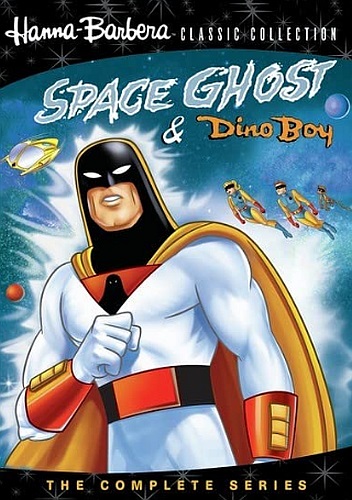
SPACE GHOST (1966-1968) -- DVD Review by Porfle


Originally posted on 1/30/22
 
 
Currently watching: the complete DVD collection of one of my favorite Saturday morning cartoons as a kid, SPACE GHOST (1966-1968). 
 
(Full DVD title: "Space Ghost & Dino Boy: The Complete Series" from the Hanna-Barbera Classic Collection. 20 episodes on 3 discs, 42 7-minute Space Ghost segments in all. Bonus feature is a movie-length documentary, "Simplicity: The Life and Art of Alex Toth.")
 
I love Cartoon Network's later comedy reworking of the character in his own talk show called "Space Ghost Coast To Coast", but that takes nothing away from my feeling for the original action-adventure space opera designed by comics legend Alex Toth. 


It was only Hanna-Barbera's second adventure cartoon after "Jonny Quest", and their first superhero series. "Laugh-In" star Gary Owen did the voice for Space Ghost, and his teen sidekicks Jan and Jace were voiced by Ginny Tyler and Tim Matheson. 
 
Other voice talent includes Ted Cassidy as Metallus, Vic Perrin as Creature King, Alan Reed as Glasstor, Keye Luke as Brak, Paul Frees as Brago, and Don Messick as Blip, Space Ghost's cute monkey companion who often gets him and the kids out of trouble.
 
Alex Toth's character designs and layouts are eye-pleasing, and the show was done while Hanna-Barbera were still doing quality animated shows. The music is great, too. 


The secondary "Dino Boy" segments don't do anything for me--I don't even remember bothering to watch them when originally aired. 
 
Super villains Zorak, Moltar, and Brak would later become regulars on the talk show, along with occasional appearances by Metallus, Tansit, Lokar, and Black Widow. It's fun seeing them play it straight as they do here in their introductory appearances.
 
Space Ghost, whose subterranean laboratory can be found on the Ghost Planet, is sort of an interplanetary policeman whose main powers are supplied by his power bands, which are worn on his wrists, and his inviso-belt. 


Jan and Jace alert him of suspicious activity while on patrol in their scout ship and often get captured by the bad guys so that Space Ghost must fly to their rescue in his spaceship, the Phantom Cruiser. 
 
The stories are flashy and colorful, with lots of explosions, and are kept very simple and formulaic so that they can be easily followed by younger viewers.
 
As far as light entertainment with a strong sense of nostalgia goes, I just love this kind of stuff.


Share/Save/Bookmark

Wednesday, June 17, 2026

REDLINE -- DVD Review by Porfle


Originally posted on 12/27/11


Sizzling with supercharged action, the simple plot of director Takeshi Koike's sci-fi anime REDLINE (2009) serves as a backdrop for some of the most mindblowing, audacious cartoon animation to ever blaze its way across the screen. 

The pre-titles sequence features a qualifying "Yellowline" race in the desert that already makes the podrace from THE PHANTOM MENACE look like a frog-jumping competition.  We meet J.P., who resembles a brawny Ricky Nelson with a skyscraper pompadour and, thanks to his crooked partner Frisbee, has a reputation for fixing races.  Sure enough, Frisbee's in deep with the mob on this one and sabotages J.P.'s car near the finish line, landing him in the hospital.

When some of the qualifiers for the Redline drop out, J.P.'s back in the game along with his heartthrob Sonoshee, a lovely lass with more interest in machines than men.  But the location for the race turns out to be Roboworld, a militaristic society whose leaders are so opposed to the competition taking place on their world (and possibly having some of their military secrets broadcast galaxy-wide) that they declare all-out war against the racers.  In order to win this one, J.P. will have to battle it out against ruthless drivers (including Sonoshee), the entire military force of Roboworld, and perhaps even his own sidekick Frisbee.


Fans of non-CGI animation should have a ball reveling in this 100% hand-drawn visual feast, whose creators invested seven years and 100,000 drawings in its making.  Each frame of this dazzling tribute to old-school cartoon wizardry is as insanely detailed as panels from the more extravagant underground comix of the 60s and 70s, and unlike digital cartoons you can see the artists' and animators' hands in every painstaking detail. 

The dynamic, hard-edged drawing style, a eye-pleasing mix of both the futuristic and retro, yields a wealth of beautifully-rendered character designs and backgrounds that are then brought to vivid life.  Surreal touches, such as J.P.'s gravity-defying hairdo and an endless parade of grotesque aliens, rub shoulders with the hard-edged yet wildly-imaginative hardware of cars, spaceships, and other machinery. 

The over-the-top character design (by co-writer Katsuhito Ishii, who also worked on the anime sequence from KILL BILL, VOL. 1 and helped create REDLINE's outstanding soundtrack) goes well with the film's larger-than-life cast of oddballs.  These include J.P.'s multi-armed canine mechanic Pops, the towering cyborg Machine Head, and the various other racers whose bizarre appearance and unique personalities keep things interesting.  Even the crowd scenes are filled with a vast array of colorful "extras."


While the plot busies itself with various concerns such as J.P.'s wooing of the reluctant Sonoshee and Frisbee's conflict of loyalties between him and the mob, REDLINE roars to life during its many spectacular action sequences.  The imposing Colonel Votron and his Roboworld army launch a full-scale attack on the racers that begins when they leave the mothership and attempt to land their shuttle vehicles on the planet.  The race itself is a non-stop series of thrilling setpieces which lead to the activation of the Roboworld president's ace in the hole, an out-of-control behemoth known as "Funky Boy" who proceeds to destroy everything in sight.  

The DVD from Anchor Bay's "Manga" label is in 1.78:1 anamorphic widescreen with Dolby 5.1 and 2.0 soundtracks in both Japanese and English, with English subtitles.  Extras consist of a 24-minute making-of featurette and the film's trailer. 

Thrilling, funny, and endlessly watchable, REDLINE is chock-full of some of the most visually-stunning racing action and futuristic warfare ever created for an animated film.  Best of all, it's a return to the glory days of hand-drawn animation which, in the words of its creators, offers something new by doing things the old way again. 


Share/Save/Bookmark

Sunday, June 14, 2026

TOM AND JERRY: THE GENE DEITCH COLLECTION -- DVD Review by Porfle


Originally posted on 5/31/15


I originally watched these cartoons during my college days, many years ago, on a tiny portable TV.  Thus, I never realized that they're actually fairly nice-looking, colorful cartoons with some lovely backgrounds.  My only reaction at that time to the Gene Deitch "Tom & Jerry"s was abject horror at how awful they seemed compared to the earlier Hanna-Barbera ones, which were actually known to win Oscars from time to time.

The only way any of the thirteen cartoons in Warner Home Entertainment's TOM AND JERRY: THE GENE DEITCH COLLECTION would get an Oscar would be if producer William L. Snyder taunted members of the Academy enough to have one thrown at him.  With Hanna-Barbera's departure from MGM, the studio turned to Snyder and Chicago-born animator-director Gene Deitch (a former Terrytoons producer and father of famed underground comix artist Kim Deitch) to keep the cat-and-mouse game afoot.

From Snyder’s Prague-based animation studio, Rembrandt Films, they churned out 13 new shorts from 1960-62 (after viewing some of the celebrated originals for the first time and disliking them) and created a run of "Tom & Jerry"s which stand as some of the oddest, least accessible, and, some might say, most bizarre mainstream cartoons ever made. 


Even as the age of the theatrical cartoon began to wane, moviegoers young and old must've scratched their heads as these wacky artifacts unspooled before them on the big screen. (A later Deitch creation, the Nudnik, would be even harder to relate to, although, to his credit, one of Deitch's unrelated shorts during this period won an Academy Award.)

A follower of the UPA style of animation, Deitch was unused to MGM's old-school, freewheeling slapstick hijinks and outlandish gags.  His attempts to recreate the works of animators such as William Hanna, Joseph Barbera, and the brilliant Tex Avery while adapting their brand of outrageous comedy to his post-modern sense of humor resulted in a series of hybrid efforts which, while hardly as entertaining as their forebears, are nevertheless curiously compelling.

Many of the odd, poorly-rendered gags make little or no sense--after being buried alive in "Switchin' Kitten", Tom's tail slithers up out of the ground and then his head appears on the end of it like a flower, looking just as perplexed as we are. The eye-pleasing artwork is at odds with the jerky movements and editing, while the sound effects often consist of reverb-heavy electronic noises that seem to have been recorded in a restroom. 


Rather than simply come up with the usual domestic antics for the duo, Deitch started putting them into all kinds of outlandish settings and situations (something Looney Tunes vet Chuck Jones would continue to do when he took over the reins from Deitch later on).  Haunted castles, ancient Greek cities, the jungle, outer space, and even a ship under the command of Captain Ahab ("Dicky Moe") are some of the backdrops for these stories.

Some of them consist of Tom simply doing what's expected of him--protecting the homefront from vermin.  Meanwhile Jerry, who is basically a home invader out to steal food (and, let's face it, spread disease), gleefully causes the hapless feline to get beaten and tortured for his efforts.   Honestly, it's as though we're expected to despise cats with a passion in order to find these cartoons funny.

Deitch lays the anti-cat sadism on thick as the writers try to top themselves coming up with ways for poor Tom to suffer (some of his punishments here are positively medieval) while Jerry, of course--insufferable little bastard that he is--dances around gloating and basking in his own horrid "cuteness."  The cat-hate is taken to especially uncomfortable extremes whenever Tom's new owner, a surly fat guy who constantly abuses him, takes him aside for a severe beating as Jerry looks on with a smirk and gorges himself on ill-gotten food.


Fortunately, some of the later entries in the series manage to tone down the Tom-related violence a tad as the stories become a bit cleverer and even the already-passable artwork seems to improve.  "Landing Stripling" and "Calypso Cat" come closest to the classic MGM cartoon style (while still displaying the usual Deitch touches) with an old-school look and gags that are actually funny. 

In "Landing Stripling", this is helped by making Tom the clear-cut bad guy from the start so that he deserves what he gets for once (although it's clear we're being manipulated to feel that way).  The duck character here is a throwback to Yakky Doodle from the classic era although not as cute.  "Calypso Cat" finds Tom once again trying to woo a beautiful girl cat, this time aboard a luxury cruise ship, while Jerry mischievously cramps his style--leading to some genuinely funny gags.

Deitch also harkens back to earlier cartoons with the music-based "Carmen Get It!" and the fourth-wall-breaking "The Tom & Jerry Cartoon Kit", although such attempts tend to emphasize the relative awkwardness of the newer ones.  "Dicky Mo", the western "Tall in the Trap", and "Sorry Safari" suffer from Deitch's grotesque depiction of human characters, whom Hanna-Barbera generally avoided save for the occasional pair of legs.  Another above-average entry is "Buddies...Thicker Than Water", whose tale of penthouse-dwelling Jerry taking in a homeless, freezing Tom actually generates some charm.


The DVD from Warner Bros. Home Entertainment is in standard format with Dolby mono sound in English and Spanish.  The 13 cartoons are newly remastered and look very nice.  Subtitles are in English, Spanish, and French.  Extras consist of a Gene Deitch interview, "Tom and Jerry…and Gene: The Rembrandt Years", and a series retrospective entitled "Much Ado About Tom and Jerry" which spans the decades from their debut cartoon all the way to their most recent TV incarnations.

Although as a cat-lover I eventually came to find even the earlier, classic MGM "Tom and Jerry" cartoons somewhat hard to endure (feeling sorry for Tom and seething with hatred for Jerry the whole time), I still watch them from time to time simply to enjoy the sheer genius behind their creation.  As for the 13 shorts in TOM AND JERRY: THE GENE DEITCH COLLECTION, the reason I watch them is the same reason I watch Ed Wood movies or gaze at kitsch art--because some things are so interestingly bad that they instill in the viewer a curious blend of revulsion, disbelief, and perverse pleasure.


Featured Shorts:
•Switchin’ Kitten
•Down and Outing
•It’s Greek to Me-ow!
•High Steaks
•Mouse Into Space
•Landing Stripling
•Calypso Cat
•Dicky Moe
•The Tom & Jerry Cartoon Kit
•Tall in the Trap
•Sorry Safari
•Buddies Thicker Than Water
•Carmen Get It!


Buy it at the WB Shop

Street date: June 2, 2015


Share/Save/Bookmark

Friday, May 8, 2026

THEATER OF MR. & MRS. KABAL -- DVD Review by Porfle


Originally posted on 4/29/17


Walerian Borowczyk was a Polish avant-garde artist who chose film as one medium through which to express his wildly imaginative musings.  In 1967, he tackled the art of animation with the feature-length cartoon THEATER OF MR. & MRS. KABAL, aka "Théâtre de Monsieur & Madame Kabal" (Olive Films).

Or perhaps "tackled" isn't the correct term as much as "drugged, wrestled into submission, and dressed up funny."

With what appears to be a mix of cel art, cutouts, and other elements (at times it looks as though Borowczyk is drawing directly onto white paper in increments), he tells the story of a day in the lives of Mr. and Mrs. Kabal--he a short, mousey husband and she a tall, grotesque wife who appears to be a soulless mechanical monster of some kind.


The first scene catches her in the midst of assembling herself out of spare parts and choosing a head (after many tries, she picks the most alarming-looking one) before going along her un-merry way into what passes for a narrative, which actually isn't one at all.

Mr. Kabal, meanwhile, whiles away his spare time gazing around at the barren scenery through his telescoping binoculars until he catches brief glimpses of live-action women lounging in bikinis who are then menaced by an old man with a beard. These clips are the only color in this stark pen-and-ink world save for a few splashes here and there, including the ever-present butterflies flying endlessly about.

One sequence features the couple lying on the ground (he reading a newspaper, she lying face down) while the butterflies flit by for several minutes.  Some flutter, some flap, and others sound like trash can lids rolling by.


Borowczyk has a field day with the sound design throughout the film, as Mrs. Kabal foreshadows "Star Wars" robot C3PO with her staccato speech consisting of a barrage of electronic beeping noises. 

Borowczyk himself appears early on and urges her to simply act naturally (relatively speaking) so that we can observe the Kabals going through a typical day.  She beeps furiously in response (her dialogue is subtitled in three languages) before conjuring a weight out of thin air to drop on Borowczyk's head. 

The early scenes are the best, because they're slower paced and we can better assimilate what's going on, as nonsensical as it is, such as Mrs. Kabal shedding her outer metal husk in order to bath in the ocean, or Mr. Kabal attending a cinema show entitled "The Depths of the Human Body" which features live-action closeups of pulsating organs and a quivering esophagus.


In another scene, a giant crosscut saw separates Mrs. Kabal's head from her reclining body, which then expands to such great size that Mr. Kabal immediately scampers inside to explore the depths of its Escher-like interior.

As the film progresses, so does the pace, until we're assailed by a dizzying procession of utterly bizarre and senseless images that grow more relentlessly incomprehensible by the minute.  Finally the story is nothing more than pure stream-of-consciousness incongruity, and the effort to take it all in becomes rather taxing. 

For this reason it may be advisable to watch THEATER OF MR. & MRS. KABAL in several short bursts rather than trying to handle it all in one mind-numbing sitting.  The more adventurous cineastes among us may consider the latter something of a challenge, while others will be both unable and unwilling to endure more than a few minutes of it.


One thing's for sure--I would be very surprised if Terry Gilliam, who supplied the celebrated animations for "Monty Python" throughout his tenure with the group, weren't at some time influenced by Borowczyk's work, just as the Polish artist's later live-action film GOTO, ISLE OF LOVE seems to foreshadow the early stylings of David Lynch.   

The story of the Kabals is similar to GOTO in its arbitrary and thoroughly unapologetic strangeness for its own sake (or, rather, for art's sake).  But unlike that film with its more coherent plot and less rampant surrealism, the almost hallucinatory THEATER OF MR. & MRS. KABAL remains in the uppermost stratosphere of strangeness from beginning to end, like the long, fervid dream of a rarebit fiend, and dares us to still be there when it's finally done.

Tech Specs
Regional Code: region 1
Languages: French
Subtitles: English (optional)
Video: 1.33:1 aspect ratio; b&w + color
Runtime: 78 minutes
Bonus features: none


Share/Save/Bookmark

Saturday, April 25, 2026

Porfle's Trivia Quiz #14: "KING KONG" (1933) (video)


KING KONG (1933) is arguably the greatest giant monster movie of all time.

Question #1: What does Ann Darrow (Fay Wray) call the ship's monkey?

A. Ziggy
B. Iggy
C. Wiggy
D. Biggy
E. Izzy

Question #2: What does Carl Denham (Robert Armstrong) say is "scarce" on the island?

A. Booze
B. Dames
C. Jazz
D. Blondes
E. Crooners

Question #3: What does Kong do with the first woman he grabs in New York?

A. Eats her
B. Steps on her
C. Puts her down
D. Drops her
E. Carries her away

Question #4: What does Carl Denham (Robert Armstrong) say "killed the Beast"?

A. Desire
B. Bullets
C. Beauty
D. Heartbreak
E. Greed


I neither own nor claim any rights to this material.  Just having some fun with it. Thanks for watching!


Share/Save/Bookmark

Wednesday, February 11, 2026

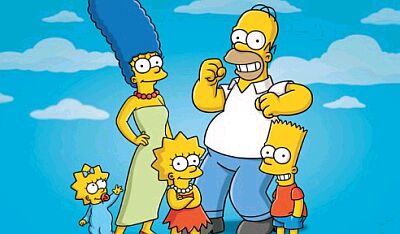
THE SIMPSONS: THE FOURTEENTH SEASON -- DVD Review by Porfle


Originally posted on 12/23/11


Whenever I hear that heavenly chorus singing the title as the camera's eye descends upon the town of Springfield--followed by one of the greatest TV sitcom themes of all time (thanks to Danny Elfman)--I know I'm in for a half-hour of almost supernaturally blissful cartoon comedy.  With 20-Century Fox's 4-disc DVD set THE SIMPSONS: THE FOURTEENTH SEASON, I get to experience this heady sensation 22 times! 

That may sound a little over-the-top, but aye carumba!, I love this show.  Breezy, colorful, and as addictive as only the most delectable mind candy can be, the irreverent and sharply satirical (yet often heartfelt) adventures of Homer and Marge Simpson and their kids Bart, Lisa, and Maggie easily earn a spot in the top ten greatest situation comedy series of all time.  Maybe even the top five.  Top three?  Arguably.

Some fans insist that the long-running show has long been running on fumes, but by season fourteen it was still going strong, netting an impressive array of guest stars, winning Emmys, and serving up some of its most memorable episodes with all the familiar panache.  As usual, each one reels us in with some intriguing situation which seems to be the main plotline until it unexpectedly veers into something entirely different.


A family jigsaw-puzzle obsession leads to Homer and Marge's sudden breakup; a disastrous trip to the Springfield Botanical Gardens morphs into a heartwarming love story between baby Maggie and eternal loser Moe the bartender ("Moe Baby Blues").  When movie star Ranier Wolfcastle holds an estate sale to pay off his debts, this gag-filled opening gives no indication of the trauma that will ensue when Marge is mugged on the way home and becomes a trembling agoraphobe hiding out in the family basement ("The Strong Arms of the Ma").

The season comes charging out of the gate with an outstanding Halloween episode, "Treehouse of Horror XIII", featuring three scarifying stories: "Send in the Clones", in which Homer acquires a magic hammock that generates even dumber duplicates of himself; "The Fright to Creep and Scare Harms", which tells what happens when the Old West's baddest outlaws rise from the grave to menace Springfield just after Lisa has succeeded in wiping out all handguns; and "The Island of Dr. Hibbert", a twist on the old H.G. Wells tale which has the Simpsons and other characters being transformed into manimals. 

This is followed by one of the series' most celebrated episodes, "How I Spent My Strummer Vacation."  After an inebriated Homer is caught dissing his family life on the reality show "Taxicab Conversations", Marge and the kids decide he needs a break and ship him off to a Rock 'n' Roll Fantasy Camp presided over by none other than guest voice talent Mick Jagger, Keith Richards, Elvis Costello, Tom Petty, Lenny Kravitz, and Brian Setzer.

"Barting Over" marks the milestone 300th episode (or does it?) with Bart suing to become an emancipated minor and becoming pals with skateboard ace Tony Hawk after moving into his own loft apartment. In "Pray Anything", Homer's ongoing turbulent relationship with God is further explored when he's awarded ownership of the church in an accident suit and turns it into party central. 

"Three Gays of the Condo" finds him exploring the world of homosexuality, not to mention his first guy-guy kiss, when yet another tiff with Marge results in him rooming with two gays including guest voice Scott Thompson ("The Kids in the Hall").  Marge's unconscious resentment of Homer surfaces with a string of attempts on his life in "Brake My Wife, Please", featuring the voices of Steve Buscemi, Jackson Brown, and Jane Kaczmarek. 


Other episodes in this collection include "Bart vs. Lisa vs. the Third Grade", "Large Marge" (a hospital mix-up results in Marge being given huge fake boobs), "Helter Shelter", "The Great Louse Detective", "Special Edna" (regular Marcia Wallace voices Bart's lovelorn teacher Miss Krabappel), "The Dad Who Knew Too Little", "I'm Spelling As Fast As I Can", "A Star is Born Again" (widower Ned Flanders has an affair with Marisa Tomei's sexy movie star character Sara Sloane), "Mr. Spritz Goes to Washington" (Krusty the Clown runs for Congress), "C.E. D'oh", "'Scuse Me While I Miss the Sky", "Dude, Where's My Ranch?", "Old Yeller-Belly", and "The Bart of War."

Some of the guest voices not already mentioned: Kelsey Grammer (returning as Bart's eternal nemesis Sideshow Bob), Tony Bennett, Jan Hooks, Adam West and Burt Ward, Baha Men, Larry Holmes, David "Squiggy" Lander, Little Richard, Elliot Gould, Pamela Reed, Ken Burns, Lisa Leslie, blink-182, George Plimpton, Jim Brooks, Helen Fielding, Joe Mantegna (as mobster Fat Tony), "Monty Python" star Eric Idle, "Weird Al" Yankovic, David Byrne, Andy Serkis, Jonathan Taylor Thomas, and Stacy Keach.

In addition to some beautifully designed menus featuring the entire cast being hosted for "dinner" by ravenous aliens Kang and Kodos, the set is overflowing with a wealth of fun special features.  These include an introduction by creator Matt Groening (bo-ring!), audio commentaries on all episodes, deleted scenes, lots of featurettes, sketch galleries, and several Easter eggs that can be accessed by pressing the "up" button on individual episode menus.  The packaging itself is an eye-pleasing double-sided pictorial foldout containing a sizable information booklet.  The only snag is having to fish the discs out of those snug built-in pockets.

Watching THE SIMPSONS: THE FOURTEENTH SEASON is similar to taking a trip through a theme park brimming with childlike delights, like Six Flags or Knott's Berry Farm (but not Dollywood, because Ned Flanders wouldn't approve) without the inconvenience of finding a parking space or having to walk.  If you're a Simpsons fan, the rewatchability factor is pretty much endless. 


Share/Save/Bookmark

Tuesday, December 16, 2025

YOGI BEAR'S ALL-STAR COMEDY CHRISTMAS CAPER -- DVD Review by Porfle


Originally posted on 12/21/10


In the 60s, Joseph Hanna and William Barbera pioneered the use of limited animation for television, knocking off a string of successful cartoon shows such as "Huckleberry Hound", "Quick-Draw McGraw", and "The Flintstones."  While simpler and cheaper than fully-animated theatrical cartoons, the initial Hanna-Barbera TV output was still far superior to the increasingly-inept Saturday morning drivel that would follow, and hold up today as good-looking, well-written shows which, like their big-screen counterparts, are entertaining for both children and adults.

Such is the case with one of their most popular characters, Yogi Bear, who lives in Jellystone National Park with his pal Boo-Boo and drives Mr. Forest Ranger crazy by constantly stealing picnic baskets from unwary campers.  With the DVD release of YOGI BEAR'S ALL-STAR COMEDY CHRISTMAS CAPER, we get to see examples of Yogi both in his glorious 60s heyday and in a lackluster 80s adventure that pales in comparison.

(Little kids, of course, will probably enjoy each of them equally, so feel free to pop in this DVD and let the tykes go nuts.  With that out of the way, let's look at the two stories on this disc from the nostalgic old geezer perspective.)


First up is the titular tale, "Yogi Bear's All-Star Comedy Christmas Caper."  This originally aired in 1982, when most made-for-TV cartoons had regressed in quality to a point well beyond "limited", coming off as cheap, slapdash drivel whose stories were written solely for the purpose of keeping undiscerning kids occupied.  Design and rendering of characters is sketchy and sloppy, direction is uninspired, and the "comedy" is on roughly the same level as pulling funny faces at babies to make them laugh.

The best thing about it is that it reunites some of the best vocal talent in the business--Mel Blanc, Allan Melvin, Hal Smith, Janet Waldo, Don Messick, and the great Daws Butler, among others--as a group of Hanna-Barbera's most memorable characters help Yogi and Boo Boo celebrate the Christmas spirit by bringing a poor little rich girl and her neglectful father closer together during a sojourn to the big city.

An interesting side note to this episode is the fact that the word "Chanukah" was edited from the soundtrack when the show first aired.  According to tvseriesfinale.com, someone at CBS was leery of Snagglepuss' line "Merry Christmas! Season’s Greetings! Happy Chanukah, even!", bleeping the reference to the Jewish holiday for reasons unknown.  Even on this DVD, it's simply replaced by the word "happy."  Weird, even!

After being distinctly unimpressed by Yogi's yuletide antics, I was relatively ecstatic to find that the second offering was a special 1962 episode of the original TV series, entitled "Yogi's Birthday Party."  The difference is immediately apparent--there's exquisite artwork and character design done with style and flair, snappy direction by Hanna and Barbera themselves, and, best of all, genuinely funny gags that adults (especially us nostalgic cartoon geeks) can appreciate right along with the kids.  Maybe even more so.

It's a week before Yogi's birthday and the show's sponsor is planning a gala surprise celebration for their star, with a nervous Mr. Forest Ranger charged with keeping the secret from him.  "Trying to keep a secret from Yogi is like trying to hide Lake Michigan from a duck," he moans.  Yogi overhears just enough of the phone conversation to get the idea that he's being given his own entertainment special, and will be expected to perform.


Worried that his singing and dancing skills aren't up to par, Yogi takes a series of lessons in a montage that pokes fun at some popular personalities of the era.  He gets dancing lessons from Fred Upstairs, singing tips from Boppy Darin, and even some piano-playing pointers from one "Lee B. Rocky." 

When the big night comes and Yogi discovers the birthday surprise, his reactions are priceless.  Mr. Forest Ranger turns the event into a spoof of Ralph Edwards' "This Is Your Life" with a succession of all-star guests from Yogi's past appearing one after another.  First, Huckleberry Hound's voice is heard from offstage:  "A hound-dog howdy to y'all, Yogi."  Mr. Forest Ranger asks, "Who's that, Yogi?"  Yogi's guess: "The president?"

As familiar characters such as Snagglepuss, Hokey Wolf, Pixie and Dixie and Mr. Jinks, Quick-Draw McGraw, Yakky Doodle, Augie Doggie and Doggie Daddy, and Snooper and Blabber accumulate onstage (with all the top voice actors on hand again, this time including June Foray and Duke Mitchell), the gags give way to a cheery birthday song written especially for the occasion.  For me, this breezy and utterly charming classic episode is a delightful treat all the way.

The Warner Brothers DVD is in standard format with English and Spanish soundtracks.  Subtitles are in English, Spanish, and French.  Bonus features consist of some DVD and video game trailers.

I keep saying that "the kids" will like both features on YOGI BEAR'S ALL-STAR COMEDY CHRISTMAS CAPER, but to tell you the truth I'm never really sure what the hell little kids like or don't like these days.  As for me, I had a ball watching the older one because it's really good and it brought back fond memories.  The later one, on the other hand, is one of the main reasons I quit bothering to get out of bed on Saturday mornings.


Share/Save/Bookmark